Clear Sky Science · en
Association of anemia with long-term renal prognosis in autosomal dominant polycystic kidney disease using time-series analysis
Why blood counts matter for people with kidney cysts
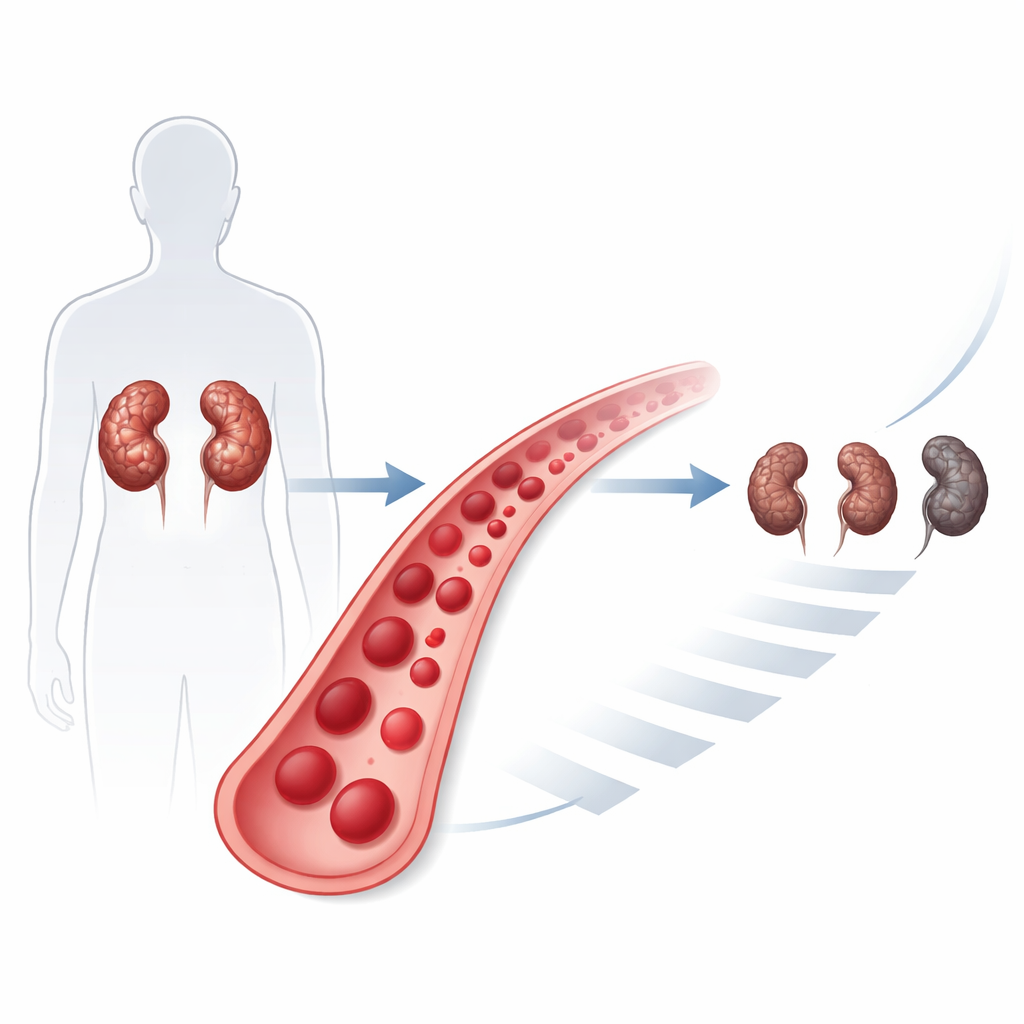
For people living with autosomal dominant polycystic kidney disease (ADPKD), a genetic illness that gradually fills the kidneys with fluid-filled sacs, one of the biggest worries is when and how fast kidney function will decline. This study explores a simple, widely measured signal in the blood—hemoglobin, the protein that carries oxygen—to see whether lower levels of it, a condition known as anemia, can reliably hint at a higher risk of long-term kidney failure in ADPKD. The findings suggest that paying attention to modest drops in hemoglobin, with different thresholds for men and women, may help doctors better gauge who is heading toward trouble sooner.
A common genetic kidney disease
ADPKD is one of the leading inherited causes of end-stage kidney disease worldwide. Because of mutations in the PKD1 or PKD2 genes, countless cysts slowly grow in both kidneys over decades. As these cysts enlarge and multiply, they crowd out healthy tissue and squeeze tiny blood vessels, so that kidney function often starts falling in middle age. About half of affected people reach kidney failure by their sixties, requiring dialysis or a transplant. Doctors have identified several warning signs for faster decline—such as larger kidney size, certain gene mutations, male sex, high blood pressure, and leakage of protein into the urine—but the role of anemia in this specific disease has been surprisingly unclear.
Looking at anemia in a new way
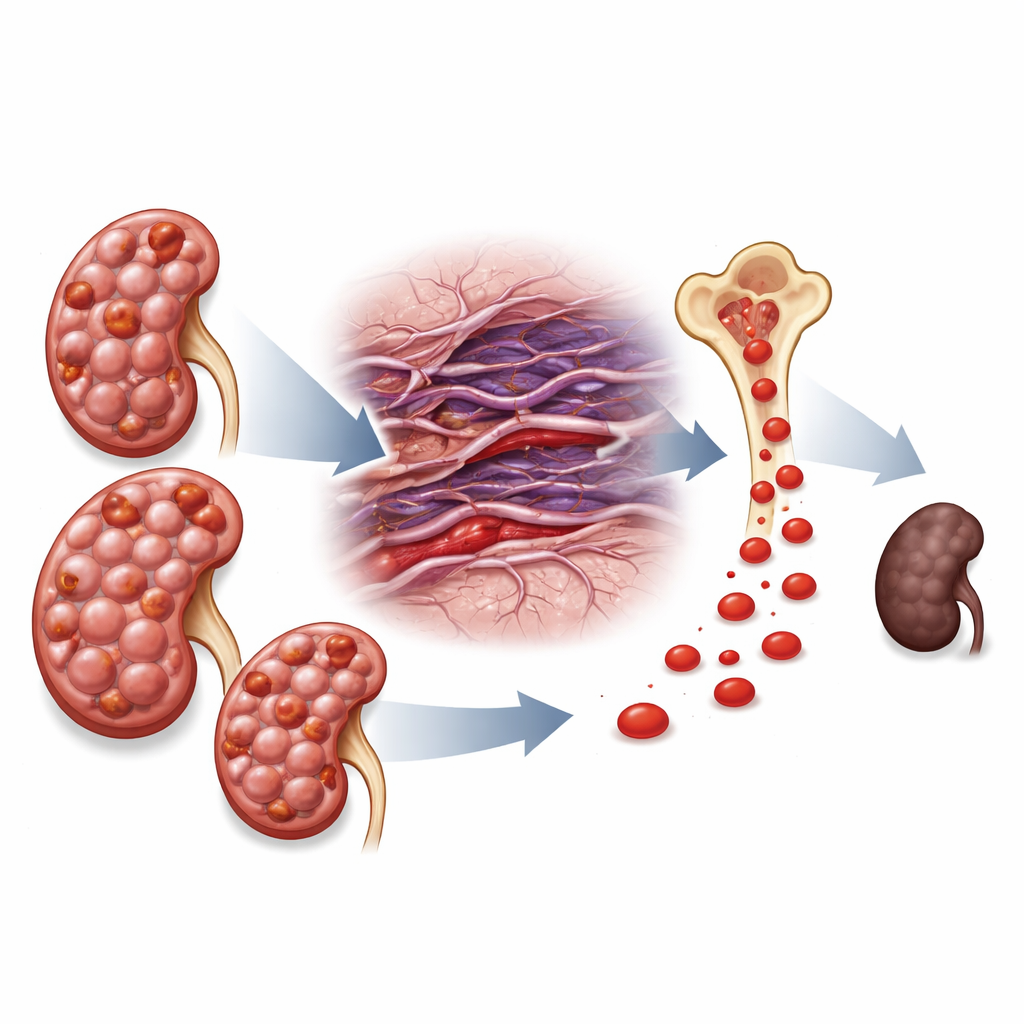
In most chronic kidney diseases, anemia is common and clearly linked to worse outcomes. ADPKD, however, is unusual: cysts in the kidneys can produce extra erythropoietin, a hormone that boosts red blood cell production, so many patients keep higher hemoglobin levels for longer. That has made it harder to tell whether anemia really signals danger in ADPKD. To address this, researchers in Japan followed 553 adults with ADPKD for a median of just over nine years. None were on dialysis at the start. They tracked who lost at least half of their kidney filtering capacity or needed dialysis or transplant, and they carefully compared several different cut-off points for defining anemia based on hemoglobin levels, from quite low to only mildly reduced.
Following risk over nearly two decades
Rather than relying on a single snapshot, the team used time-series analysis to see how strongly different anemia definitions were linked to kidney outcomes year by year over as long as 17 years. They summarized this strength using a goodness-of-fit measure called pseudo-R², which here serves mainly as a way to rank how informative each hemoglobin threshold was over time. Across the entire group, and in men and women analyzed separately, the pattern was consistent: hemoglobin levels just below the usual "normal" range—rather than only severe anemia—were most strongly and persistently associated with later kidney failure. The best-performing cut-offs were around 12 grams per deciliter overall, 13 in men, and 12 in women.
Men and women show different warning levels
To check these patterns with more familiar methods, the researchers also used survival models that estimate how much each factor raises the chance of reaching kidney failure over time. Lower hemoglobin as a continuous value independently predicted worse outcomes, even after accounting for age, starting kidney function, blood pressure, protein in the urine, and kidney size. When they used cut-offs, men with hemoglobin below 13 and women below 12 had notably higher risks than those above these levels, and these sex-specific thresholds did a better job than a single universal cut-off. The work fits into a broader idea called attribute-based medicine, which emphasizes tailoring risk assessment to key patient traits such as sex, age, and underlying disease type, rather than assuming that one threshold suits everyone.
What this means for people with ADPKD
The study does not claim that correcting anemia will slow ADPKD by itself, and it cannot prove cause and effect. Instead, the results suggest that in this disease, anemia is best viewed as a warning sign of advancing kidney damage and tissue stress, especially in men who normally have higher hemoglobin. When hemoglobin drifts below about 13 in men or 12 in women, it may indicate that the kidneys are losing their ability to support healthy red blood cell production and that the disease is entering a more dangerous phase. For patients and clinicians, this work highlights the value of regularly checking blood counts and interpreting them through the lens of sex and disease context, as one more piece of the puzzle in predicting and managing long-term kidney health in ADPKD.
Citation: Kataoka, H., Ushio, Y., Manabe, S. et al. Association of anemia with long-term renal prognosis in autosomal dominant polycystic kidney disease using time-series analysis. Sci Rep 16, 11277 (2026). https://doi.org/10.1038/s41598-026-40991-9
Keywords: autosomal dominant polycystic kidney disease, anemia, hemoglobin, kidney disease progression, renal prognosis