Clear Sky Science · en
Sustainable and scalable double slope solar still: a comprehensive experimental assessment of energy, exergy, economic, environmental, sensitivity and distillate performance
Turning Sunlight into Safe Drinking Water
For many coastal and dry regions, seawater is plentiful but drinkable water is scarce. Large desalination plants can turn salty water into fresh, yet they are expensive and often rely on fossil fuels. This study explores a small, low-tech device called a solar still that quietly uses sunshine to make clean water. The researchers redesigned a common type of still so that it not only produces more fresh water, but also stores heat and generates electricity at the same time, offering an appealing option for villages and off-grid homes.
A Simple Box That Mimics the Water Cycle
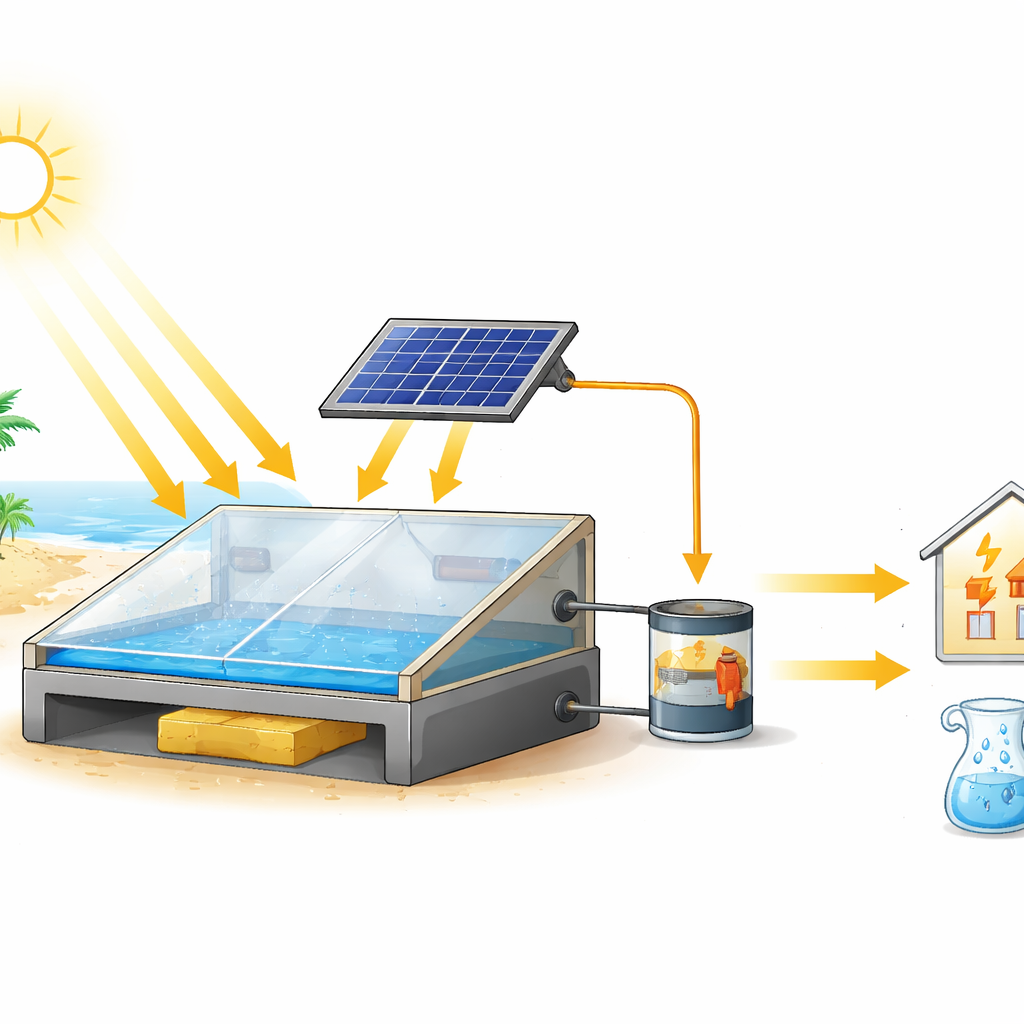
A basic solar still is essentially a shallow box filled with salty or dirty water, covered by a sloping sheet of glass. Sunlight heats the water, causing it to evaporate. The vapor condenses on the cooler underside of the glass and drips into a separate channel as purified water, much like natural rain. Double-slope solar stills, which have two slanted glass sides, collect more condensate but still waste a lot of incoming solar energy as unused heat. They also only work well in bright daytime sun, so their overall output is limited. The central question of this paper is how to capture more of that wasted energy and keep the still productive for longer hours without adding complicated machinery.
Upgrading the Still with Solar Panels and Thermal Storage
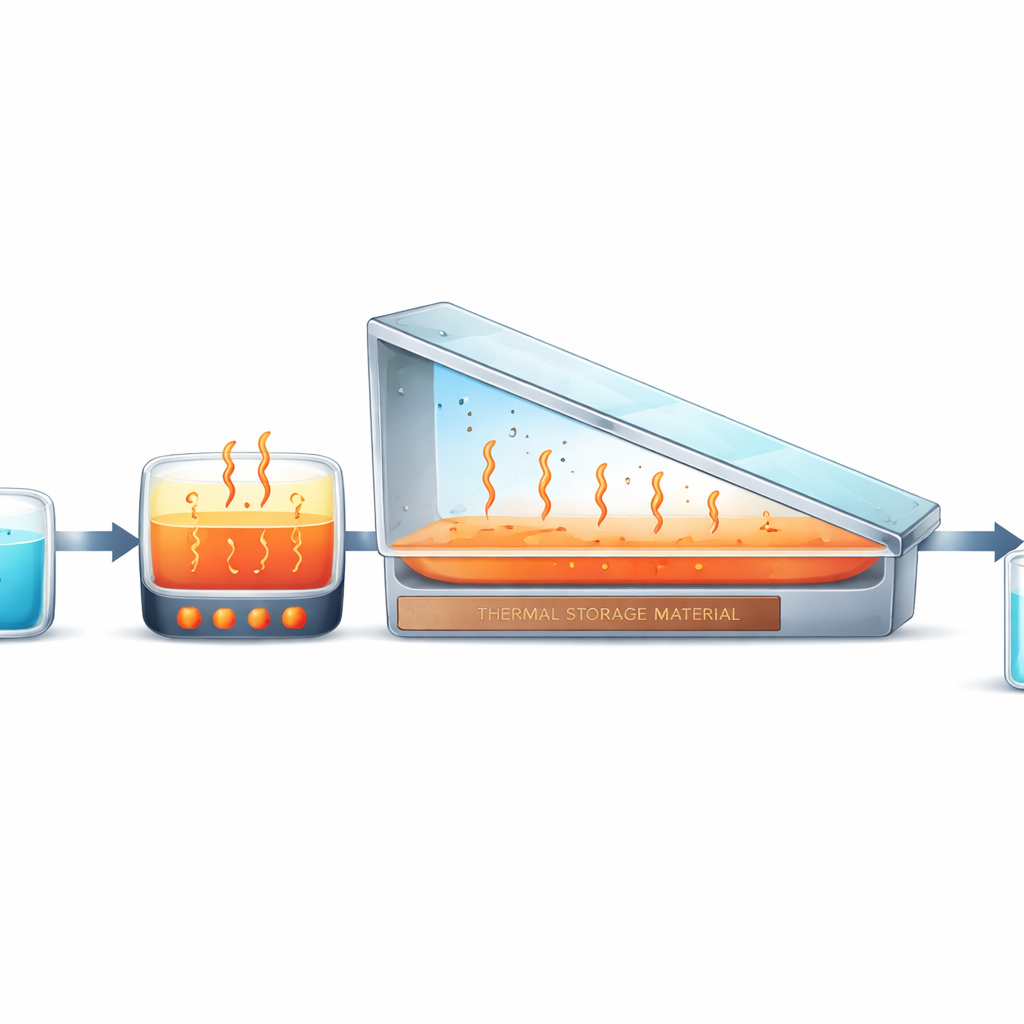
The team built two identical double-slope stills in southern India: one standard version and a rebuilt version they call the reconstructed double-slope solar still. On the upgraded unit, a small solar panel sits directly above one glass slope. That panel converts sunlight into electricity, which is immediately sent to a simple heating element placed in a nearby tank of salty feedwater. As the day progresses, this heater pre-warms the incoming water before it enters the basin. At the same time, a block of paraffin wax under the basin acts as a thermal battery. It melts as it absorbs surplus heat during the sunniest hours and then slowly releases that heat later in the afternoon and evening, keeping the basin water warm even as sunlight fades.
How the New Design Boosts Water Output
Mounting a solar panel on top of the still might seem counterproductive because it casts a shadow, reducing the light that reaches the basin. The researchers showed that the gains outweigh this drawback. The electricity from the panel is fed to the heater, which raises the temperature of the feedwater before it enters the basin. This hotter water evaporates more readily, and the paraffin wax underneath slows the cooling of the basin as the day ends. In tests from morning to evening, the upgraded still reached water temperatures over 60 °C and air–vapor temperatures above 63 °C, significantly higher than the standard design. As a result, the reconstructed still produced nearly twice as much fresh water—about 4.9 liters per square meter per day compared with 2.5 liters for the traditional unit.
Energy Savings, Lower Costs, and Cleaner Air
Beyond water output, the study tracked how effectively each device used the available sunlight. The upgraded still converted a larger fraction of the sun’s energy into useful evaporation and electricity, with overall energy performance improving by roughly 44% and a similar rise in thermodynamic quality. Economically, even though the new system costs more to build, its cost per liter of water was about 17% lower, and the payback period was shorter—just a few months under the test assumptions. Because the stills run on solar energy instead of grid power or diesel, the researchers also estimated how much carbon dioxide emissions could be avoided. Over a 10‑year life, the new design was projected to prevent nearly twice as much CO₂ as the standard still, and extending its life further made these environmental and financial gains grow dramatically.
From Salty Feedwater to Safe Drinking Water
Finally, the team analyzed the quality of the distilled water from both stills. Salty feedwater that started with high levels of dissolved salts and impurities was turned into very pure water, easily meeting international drinking standards. The reconstructed still produced slightly cleaner water than the standard version, confirming that the added heating and thermal storage did not compromise purity. Taken together, the results show that combining a simple basin still with a small solar panel, a basic electric heater, and a block of wax can turn more of the sun’s energy into clean water and useful power. For remote communities with abundant sunlight but limited infrastructure, such compact, low-maintenance systems could offer a practical path toward both safe drinking water and modest local energy generation.
Citation: Dhivagar, R., Jidhesh, P., Kim, S.C. et al. Sustainable and scalable double slope solar still: a comprehensive experimental assessment of energy, exergy, economic, environmental, sensitivity and distillate performance. Sci Rep 16, 11168 (2026). https://doi.org/10.1038/s41598-026-40989-3
Keywords: solar desalination, solar still, phase change material, off-grid water, renewable energy