Clear Sky Science · en
A delayed pharmacological treatment strategy attenuates noise-induced tinnitus in rats
Why Ringing Ears Matter
Many people leave a loud concert or job site with their ears ringing, only to have the noise fade by morning. For others, the phantom sound never stops. This chronic ringing, called tinnitus, can be deeply disruptive and currently lacks any approved drug treatment. This study explores whether a specific medicine, given weeks after loud noise exposure, can soften tinnitus-like symptoms and repair subtle damage in the inner ears and brains of rats. The work hints that even long after a noisy event, there may still be time to help the auditory system recover.
Hidden Damage After Loud Sound
Loud noise can injure the ear in ways that standard hearing tests miss. Even when hearing thresholds look normal, the connections between inner ear sensory cells and the hearing nerve can be permanently lost. This "hidden" damage is thought to push the brain to turn up its internal volume control, creating the perception of sound where none exists. In this study, rats were exposed to intense band-limited noise designed to cause temporary hearing shifts but lasting loss of these tiny synaptic connections, a condition linked to tinnitus. Importantly, the nerve cell bodies and their central projections can survive for months or years, suggesting a long window in which lost connections might be rebuilt.
A Delayed Treatment Bet
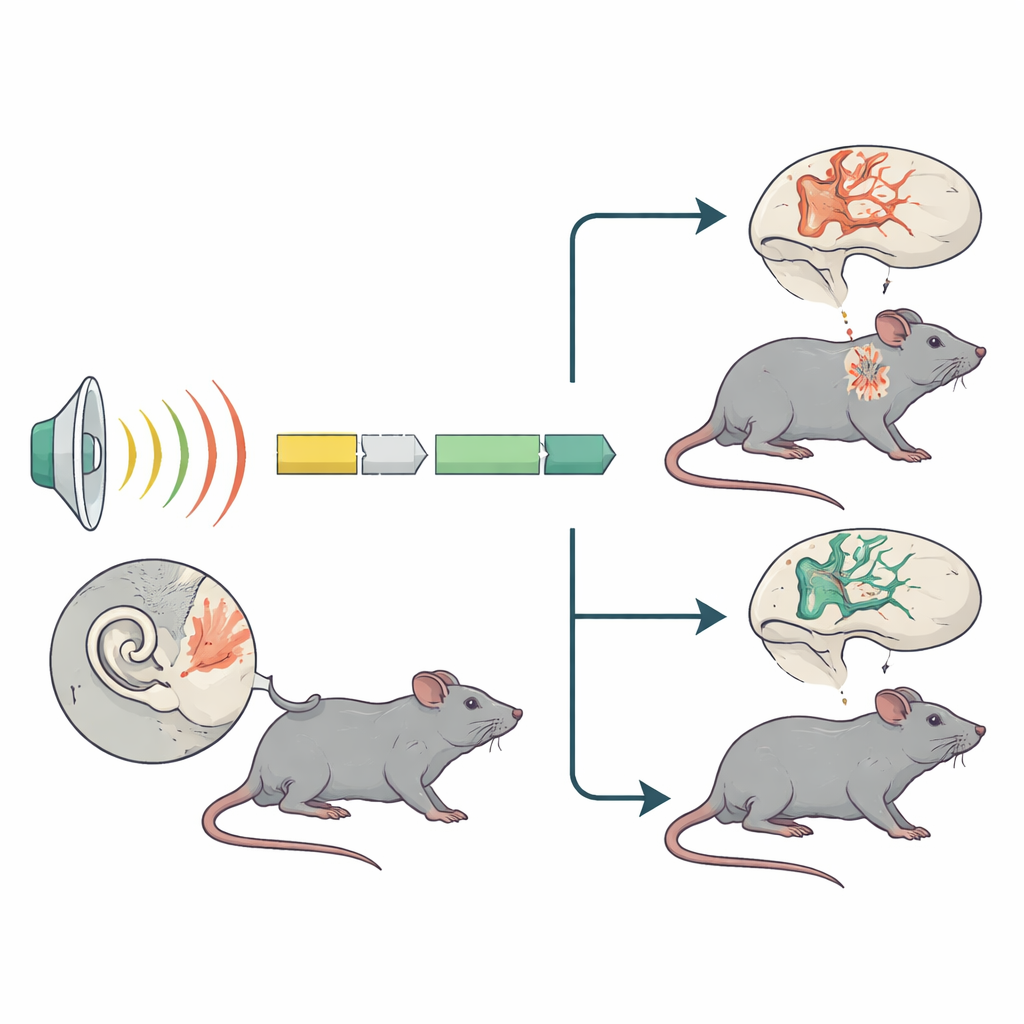
The researchers tested a drug combination called NHPN-1010, made of two antioxidant molecules that can protect and help regenerate nerve cells. Instead of giving the drug immediately after noise exposure, they waited four weeks—long enough for tinnitus-like behavior to become established. Rats were first screened for signs of tinnitus using a startle-based test: normally, a brief silent gap before a loud click reduces the animal’s startle response, but if a rat “hears” ongoing phantom noise, the gap becomes harder to detect and the startle remains strong. Animals showing these tinnitus-like responses were then randomly assigned to receive NHPN-1010 or saline for two weeks, and all were followed for another eight weeks with behavioral tests, hearing measurements, and tissue analysis.
Quieter Percepts and Clearer Signals
Rats treated with NHPN-1010 showed meaningful reductions in tinnitus-like behavior. Their startle responses became more strongly suppressed by the silent gaps, suggesting the phantom sound had faded or become less intrusive. The proportion of animals showing tinnitus at key high frequencies dropped after treatment, while it tended to rise in saline-treated rats. Hearing thresholds, measured by auditory brainstem responses, gradually returned close to baseline in both groups, but only the saline group retained a small permanent loss. More telling were the electrical signals traveling from ear to brain: in treated rats, the first wave of the brainstem response, reflecting activity of the hearing nerve, grew stronger, while a later wave, reflecting central processing, stayed stable. This pattern is consistent with restoring input from the ear and reducing the brain’s need to over-amplify its own activity.
Repairing Connections and Calming Circuits
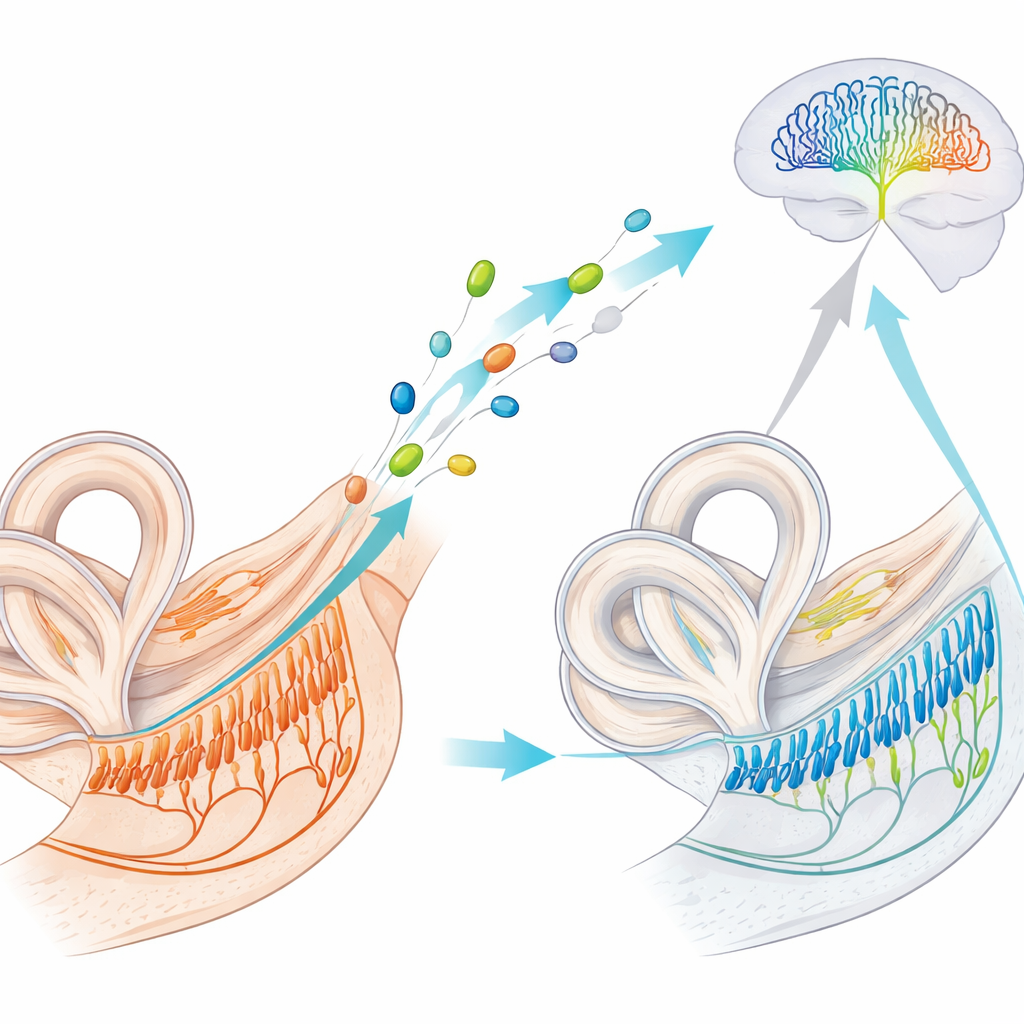
Microscopic examination of the inner ear revealed that NHPN-1010 boosted the number of specialized “ribbon” structures at the junctions between inner hair cells and auditory nerve fibers, particularly in high-frequency regions most vulnerable to the noise trauma. Earlier work showed that such synapses are rapidly and permanently lost after exposure; the new findings suggest that, even weeks later, the drug can help regenerate or replace missing connections. In the brainstem’s dorsal cochlear nucleus—a key early relay linked to tinnitus—the drug also increased the density of cells carrying a major type of inhibitory receptor. Because these receptors respond to the brain’s primary calming signal, their upregulation points to stronger braking on overactive circuits that are believed to generate phantom sounds.
What This Could Mean for People
For patients, the idea that a pill taken weeks after a damaging noise exposure might repair hidden inner ear injuries and quiet the brain’s overactive sound circuits is an appealing one. While this study was done in rats and much work remains before any human treatment is available, it shows that a delayed pharmacological strategy can lessen tinnitus-like behavior, restore nerve signaling from the cochlea, and enhance inhibitory control in the auditory brain. In simple terms, NHPN-1010 helped rebuild broken wiring in the ear while turning down the brain’s internal volume knob. If similar effects can be achieved safely in people, the long-standing belief that tinnitus is untreatable may one day be challenged.
Citation: Lu, J., Du, X., Yokell, Z. et al. A delayed pharmacological treatment strategy attenuates noise-induced tinnitus in rats. Sci Rep 16, 11790 (2026). https://doi.org/10.1038/s41598-026-40960-2
Keywords: tinnitus, noise exposure, hidden hearing loss, inner ear synapses, neuroplasticity