Clear Sky Science · en
NEAT1 drives SARS-CoV-2 N protein–induced inflammation, metabolic reprogramming, and mitochondria–ER stress crosstalk
Why this matters for our bodies under viral attack
COVID-19 is often described as a disease of the lungs and the immune system, but deep inside our cells the virus also rewires how we burn fuel and how tiny compartments called mitochondria and the endoplasmic reticulum (ER) talk to each other. This study reveals a hidden chain of events triggered by one of the virus’s core building blocks, the nucleocapsid or N protein. By switching on a long RNA molecule in our cells called NEAT1, the N protein pushes cells into an energy‑hungry state and strains their internal machinery, driving the kind of excessive inflammation linked to severe COVID-19.
A closer look at the virus’s inner helper
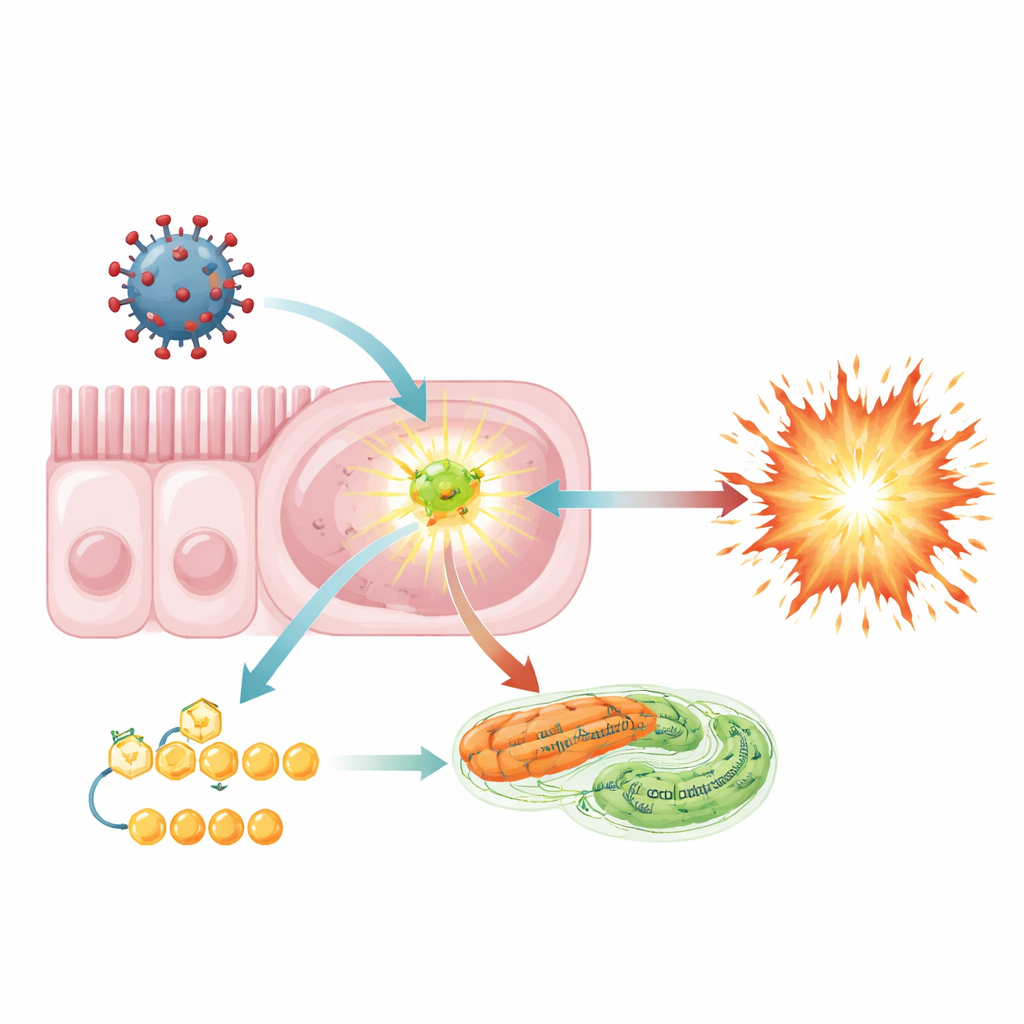
The researchers focused on the N protein, a structural component that wraps the viral genetic material. Beyond that basic role, earlier work showed N can tamper with immune sensors and fan inflammatory flames. Here, the team asked whether N also reshapes cell metabolism and organelle balance. They engineered human bronchial epithelial cells—similar to those lining our airways—to stably produce the N protein. Compared with control cells, N‑bearing cells released much higher levels of classic inflammatory messengers such as IL‑6 and TNF‑α, and they reacted even more strongly when exposed to an added bacterial stimulus. This showed that N alone can “prime” airway cells to over‑react, setting the stage for runaway inflammation.
Fuel burning shifts into high gear
When cells are stressed or infected, they often abandon their usual slow, efficient energy production and switch to a faster, less efficient mode resembling that used by cancer cells. The scientists found that N‑expressing airway cells showed exactly this shift: they made more lactate and displayed a higher extracellular acidification rate, both clear signs of turbocharged glycolysis, the pathway that breaks down glucose in the cell fluid. N also boosted levels of key gatekeeper proteins that pull sugar into cells and funnel it through glycolysis. This metabolic reprogramming likely supplies extra fuel and building blocks that support both viral needs and the production of inflammatory molecules.
Stress at the cell’s power and protein factories
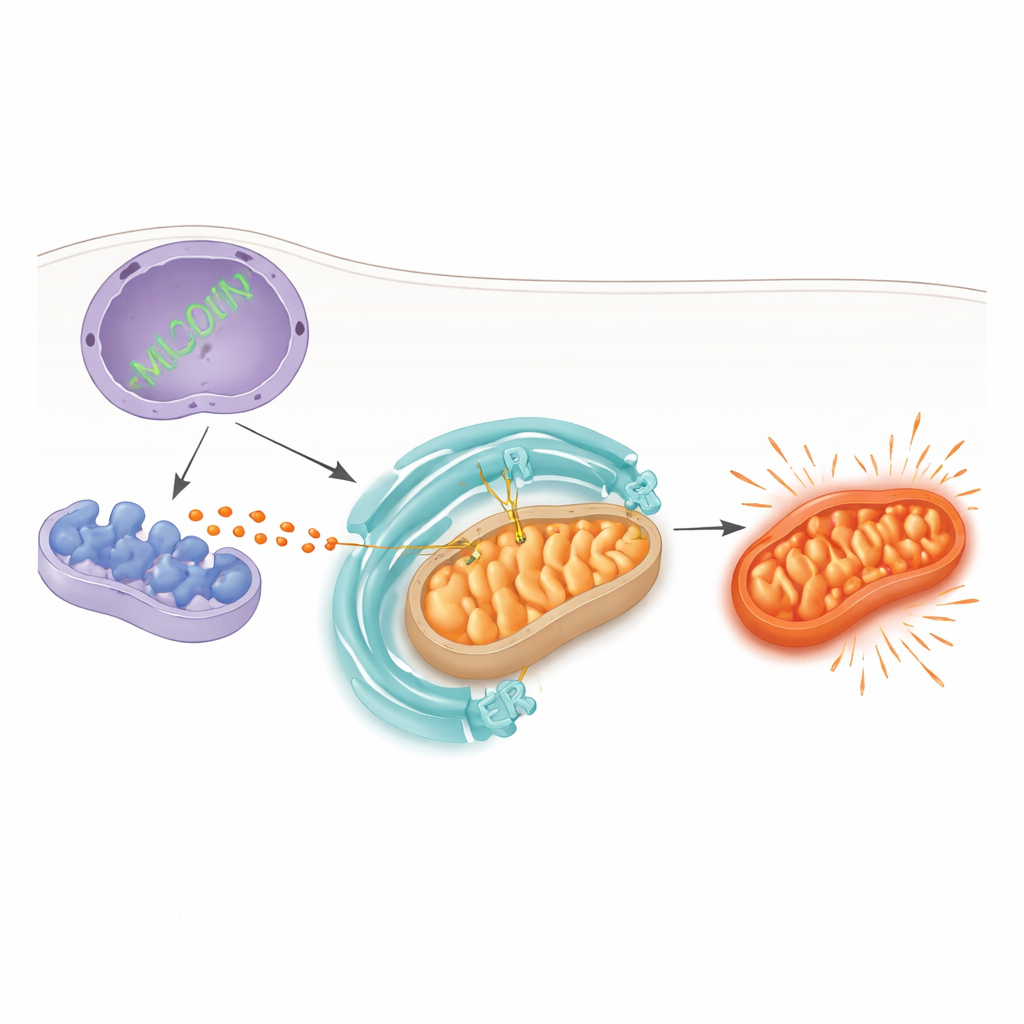
Metabolic changes did not occur in isolation. High‑resolution imaging revealed that N increased the number of contact sites between mitochondria, the cell’s power producers, and the ER, which helps fold proteins and store calcium. These junctions, called mitochondria‑associated membranes, are hubs for calcium and reactive oxygen species exchange. In the presence of N, cells accumulated more reactive oxygen species, suffered calcium overload inside mitochondria, and lost normal mitochondrial membrane potential—signals of power failure and early damage. At the same time, ER stress markers rose sharply, especially when N‑expressing cells faced an additional inflammatory challenge, suggesting a vicious cycle of stress spreading between organelles.
The surprising role of a long RNA switch
To find what links N to these broad changes, the team screened several long non‑coding RNAs—RNAs that do not make proteins but control many cell programs. One, NEAT1, stood out as strongly increased by N. When the researchers used small interfering RNAs to reduce NEAT1, the picture changed dramatically: inflammatory signals dropped, lactate production and glycolysis eased, and markers of mitochondrial and ER stress improved. Mitochondria‑ER contacts became less excessive, reactive oxygen species and calcium overload fell, and mitochondrial membrane potential partially recovered. At the molecular level, NEAT1 silencing restored the partnership between an enzyme called HK2 on the mitochondrial surface and a channel protein, VDAC1, and prevented VDAC1 from forming large clusters that are associated with membrane pore opening and cell injury. In essence, NEAT1 acted as a switch coupling high sugar burning to mitochondrial vulnerability.
What this means for future COVID-19 treatments
This work offers a unified view in which the SARS‑CoV‑2 N protein cranks up NEAT1, which in turn drives a shift toward fast sugar burning and destabilizes the delicate balance between mitochondria and the ER. The combined result is more cell stress, more reactive oxygen, more calcium overload, and intensified inflammatory signals—features that echo the damaging “cytokine storms” seen in severe COVID‑19. Although these experiments were done in cultured airway cells and need confirmation in animals and patients, they highlight NEAT1 and its control over mitochondrial gateways as potential targets. Calming this RNA switch could one day help dial down harmful inflammation without directly attacking the virus itself.
Citation: Qing, C., Chen, H., Huang, S. et al. NEAT1 drives SARS-CoV-2 N protein–induced inflammation, metabolic reprogramming, and mitochondria–ER stress crosstalk. Sci Rep 16, 11045 (2026). https://doi.org/10.1038/s41598-026-40957-x
Keywords: COVID-19 inflammation, SARS-CoV-2 nucleocapsid, cell metabolism, mitochondrial stress, NEAT1 lncRNA