Clear Sky Science · en
How does agricultural product quality and safety regulation drive agricultural economic growth: a quasi-natural experiment from China’s agricultural product quality and safety county pilot policy
Why safer farm products matter for everyone
From the vegetables in a city supermarket to the grain that anchors global food supplies, what happens on farms has a direct impact on public health, prices, and rural livelihoods. In China, rising incomes have pushed shoppers to demand not just full bowls, but food that is reliably safe, traceable, and high quality. This study asks a deceptively simple question with wide implications: when government pushes counties to tighten the safety and quality of what they grow, does it merely add red tape—or can it actually help local farm economies grow stronger?
A national effort to clean up the food chain
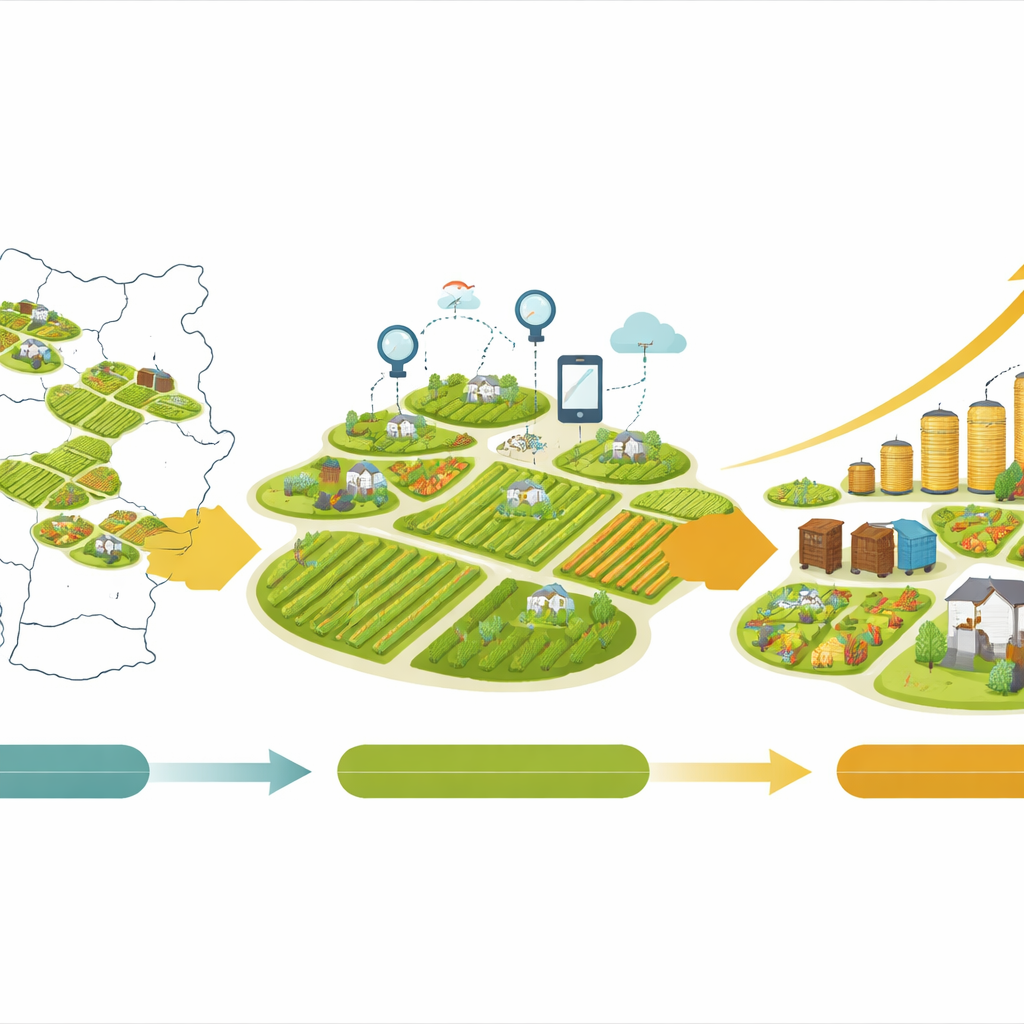
To tackle lingering worries about pesticide residues, soil pollution, and food scares, China’s Ministry of Agriculture and Rural Affairs launched a program in 2014 to create “Agricultural Product Quality and Safety Counties.” Counties that volunteered and passed strict checks—such as very high inspection pass rates and strong public satisfaction with oversight—received central funding and support. These pilot counties were expected to build full-chain supervision systems, from farm inputs to market stalls, and to adopt digital tools like sensors and traceability platforms. The aim was not only to reassure consumers, but also to push local agriculture away from a low-cost, high-chemical model toward more careful, standardized production.
Turning a policy experiment into evidence
The authors treat this national rollout as a large, real-world experiment. They compile detailed data from 1,609 counties between 2010 and 2023, tracking how agricultural output per worker in farming and related activities changed over time. Using an econometric technique called difference-in-differences, they compare trends in counties that became safety pilots with otherwise similar counties that did not, before and after the policy took effect. They also run a battery of checks—such as placebo tests, matching methods, and alternative measures of farm output—to make sure the results are not driven by chance, outliers, or overlapping reforms.
Where the benefits are strongest
The analysis shows that becoming a quality-and-safety pilot county significantly boosts local agricultural economic growth, and that this positive effect grows over time as the new systems take root. But the gains are not spread evenly. The impact is clearly stronger in China’s central and eastern regions, in major grain-producing zones, and in counties with higher income levels, better digital connectivity, and denser road networks. In these places, flat terrain, richer resources, stronger farm services, and easier access to markets make it simpler to meet stricter standards and to turn better quality into better prices. In contrast, some western counties, with harsher environments and weaker infrastructure, see little short-term boost, suggesting that tighter controls can initially constrain output where farming conditions are already tough.
How bigger farms and local brands power growth
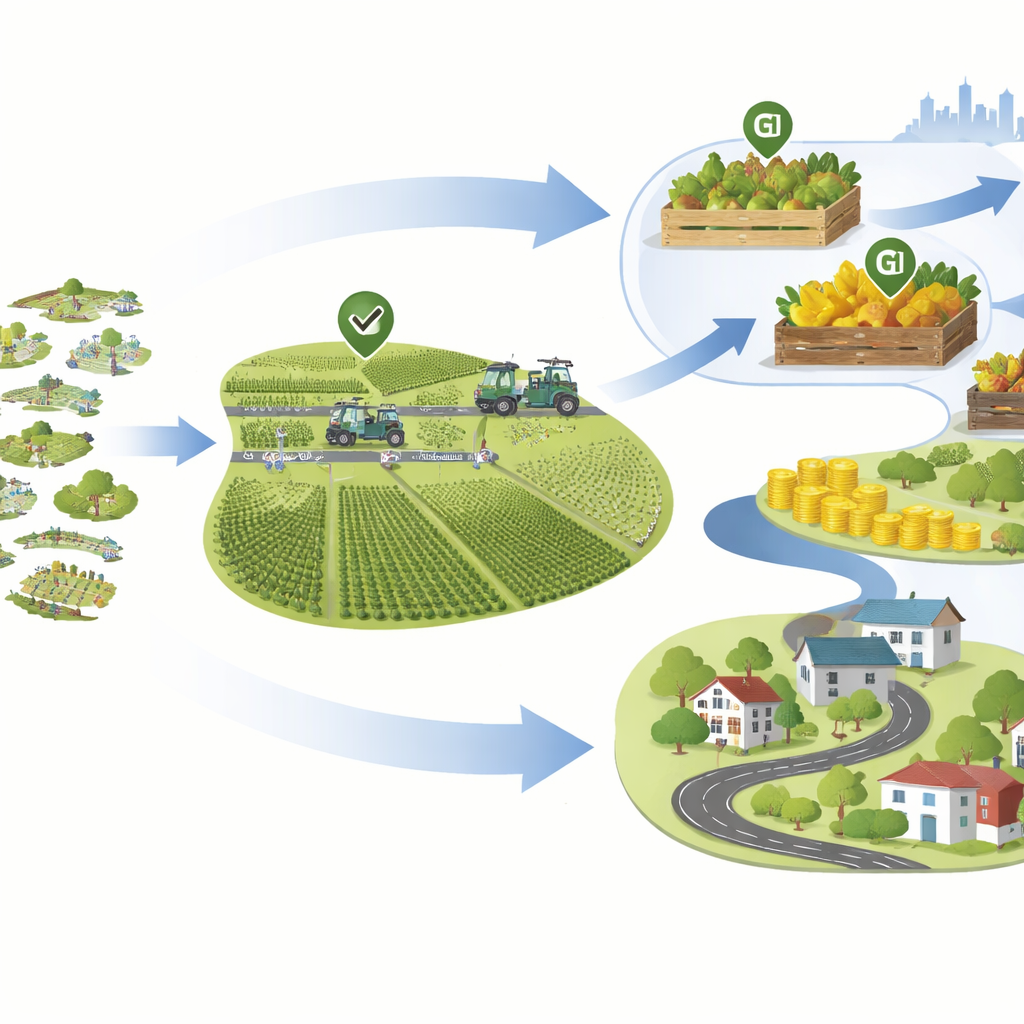
The study then asks how, exactly, safer food rules translate into more money for rural areas. Two main pathways stand out. First, higher standards raise the bar for farming skills, equipment, and record-keeping. Many very small, scattered farms find it hard to meet these demands on their own, so land begins to be pooled into larger operations or cooperatives. These bigger units can invest in modern machinery, manage inputs more efficiently, and follow standardized production practices, cutting waste and boosting productivity. Second, once quality is reliably controlled, counties are better positioned to register and promote geographical indication products—foods closely linked to a particular place, such as specialty grains or fruits. These local brands fetch price premiums, attract agribusinesses, encourage processing and logistics clusters, and help more of the value stay in farming communities.
What this means for future food policy
In plain terms, the research suggests that strict, well-designed food safety rules need not be a drag on farmers—they can be a growth engine, if paired with investments in infrastructure, digital tools, and support for larger, more professional farm operations. In China’s case, counties that embraced the Agricultural Product Quality and Safety program generally saw faster growth in their farm economies, especially where roads, networks, and market access were already in place. By nudging agriculture toward safer practices, larger scale, and distinctive local brands, the policy offers a roadmap for how countries can move from a focus on sheer output to a more sustainable model built on quality, trust, and higher rural incomes.
Citation: Zhang, L., Zhang, H. How does agricultural product quality and safety regulation drive agricultural economic growth: a quasi-natural experiment from China’s agricultural product quality and safety county pilot policy. Sci Rep 16, 10282 (2026). https://doi.org/10.1038/s41598-026-40954-0
Keywords: food safety, agricultural growth, China rural policy, geographical indications, farm modernization