Clear Sky Science · en
Maintaining a 2170 lithium-ion battery’s operating temperature in freezing climates using preheating and an alumina foam PCM structure
Why Cold Batteries Are a Big Deal
Electric cars, laptops, and home batteries all rely on lithium-ion cells that work best in a fairly mild temperature band. In deep winter, however, these batteries struggle to wake up, lose usable range, and can even age faster if used the wrong way. This study looks at how to keep a popular cylindrical cell type, the 2170 battery, in its comfort zone during harsh cold starts, using a smart combination of gentle preheating and a special heat-storing shell.
Keeping Power Packs Comfortable
Most lithium-ion batteries prefer to operate between about 15 and 35 degrees Celsius. Below that, their internal reactions slow down and resistance rises, which means less power and more stress during charging. Above that, they age faster and may face safety issues. The authors focus on what happens when a 2170 cell starts at temperatures as low as minus 40 degrees, a level typical of severe winter climates, and ask how to warm it up quickly and then keep it from overheating once it begins working hard.
A Heat-Storing Jacket Around the Cell
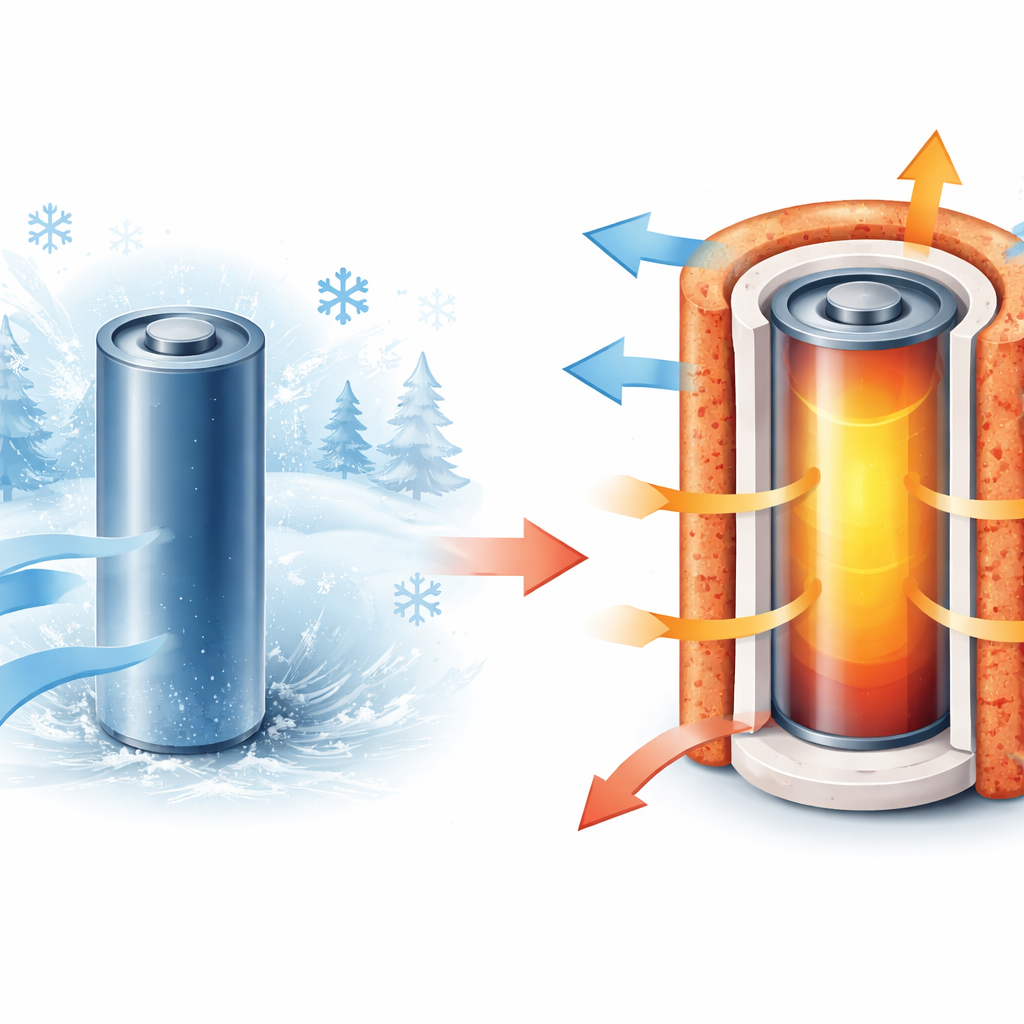
The proposed solution wraps the cylindrical cell in a rectangular housing made from a highly porous alumina foam soaked with a wax-like material called hexadecane. This material melts near 18 to 22 degrees Celsius, very close to the ideal operating range of the battery. When the battery warms and begins to generate heat, the wax absorbs that energy as it melts instead of letting the cell temperature shoot upward. The alumina foam, with its high thermal conductivity and strong structure, spreads heat quickly through the shell, speeds the melting process, and protects the cell mechanically at the same time.
Simulating Extreme Winter Starts
To test the idea without costly and difficult experiments, the researchers built a detailed computer model of heat and fluid flow in and around the battery and its shell. They simulated how the system behaves at ambient temperatures from minus 40 to 0 degrees Celsius and at different discharge rates, from fairly gentle use (1C) to heavy demand (4C). Before each discharge, an external 20-watt preheating source warms the cell from the frozen starting point up to 15 degrees, so it can begin operating in a safer region. The model tracks average and peak cell temperature, how much of the wax has melted, how evenly heat is spread, and how much energy the preheater consumes.
How the System Shares and Stores Heat
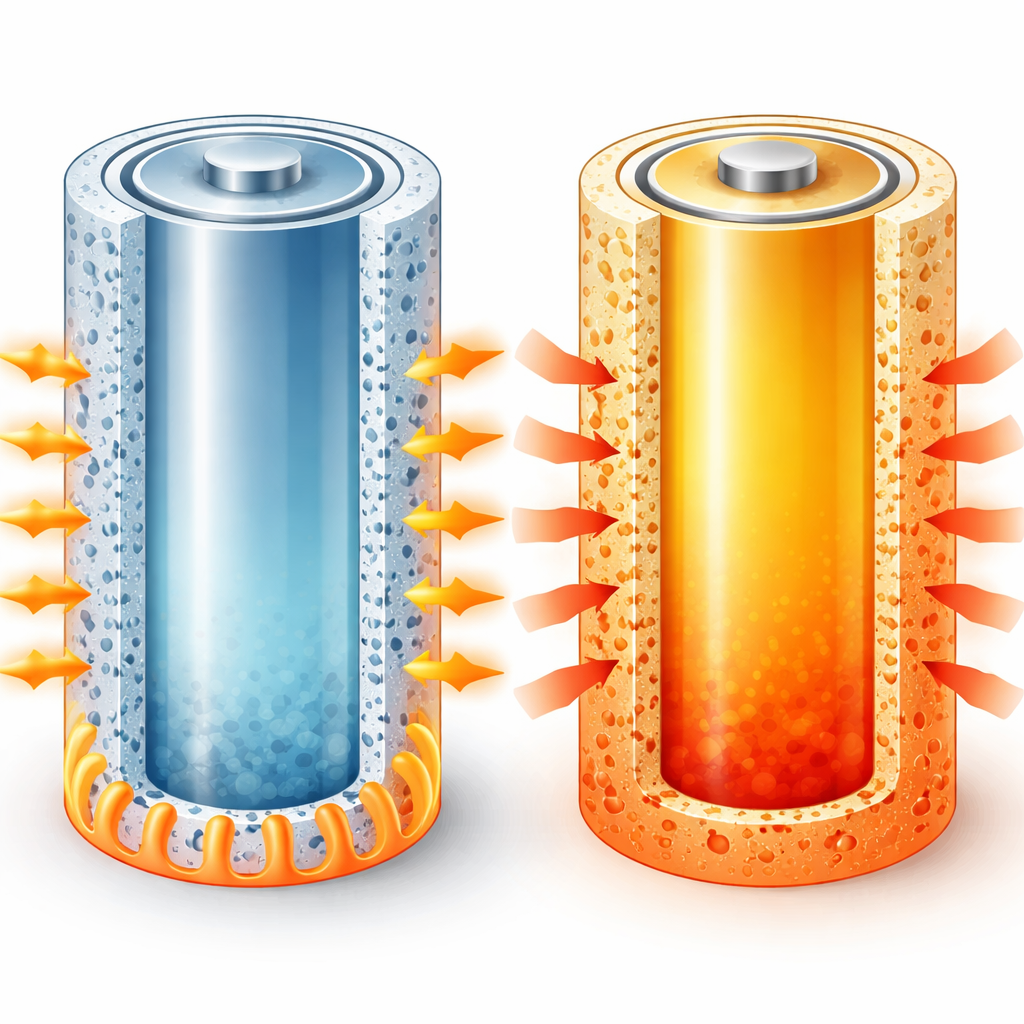
The simulations show that preheating reliably brings the cold-soaked cell up to 15 degrees within roughly 10 to 53 minutes, depending on how hard the battery will then be used and how cold the surroundings are. Once discharge begins, at low and moderate power levels the wax layer steadily melts and holds the cell near about 20 degrees, preventing sharp temperature swings. At higher power, the battery heats more quickly and can fully melt the wax before the end of discharge, after which temperatures climb but still remain below about 42 degrees, even in the warmest ambient case studied. The shell also keeps temperature differences within the cell at moderate levels, limiting hot spots that can shorten life.
Balancing Warm-Up Time and Energy Use
An important practical question is how much extra energy the preheater needs. The model finds that, at the coldest condition of minus 40 degrees, a low-power discharge (1C) requires the longest heating time and therefore the most energy. As the discharge rate rises, the battery’s own waste heat helps with warming, so the external heater can turn off earlier and energy use drops by more than half. In milder cold, closer to 0 degrees, the cell can often reach the target temperature largely through self-heating, further reducing the demand on the preheater.
What This Means for Real Vehicles
Overall, the combined preheating and wax-filled foam jacket keeps this common battery type within a safe, effective temperature zone even under severe winter starts. It offers a largely passive way to smooth out temperature spikes and hot spots while shaving the extra energy needed to warm frozen packs. For drivers, this could translate into better cold-weather range, faster readiness, and improved long-term safety. Before such systems reach commercial packs, engineers will still need to study long-term durability of the foam-wax composite and how best to integrate this strategy with existing battery control electronics, but the work points to a practical path for winter-proofing next-generation electric-vehicle batteries.
Citation: Alkhatib, O.J., Ali, A.B.M., Tursunzoda, F. et al. Maintaining a 2170 lithium-ion battery’s operating temperature in freezing climates using preheating and an alumina foam PCM structure. Sci Rep 16, 10330 (2026). https://doi.org/10.1038/s41598-026-40953-1
Keywords: lithium ion batteries, cold climate, thermal management, phase change materials, electric vehicles