Clear Sky Science · en
The effect of biological control on mycotoxin concentrations and the mycobiome in durum wheat grain and stems
Why this matters for your dinner plate
Durum wheat is the backbone of pasta, couscous, and many staple foods, but it is constantly under attack from microscopic fungi that can spoil harvests and lace grain with toxic compounds. This study explores whether a naturally occurring yeast, sprayed onto wheat plants, can help keep these fungi and their toxins in check. The work matters not only for farmers trying to protect yields, but also for anyone concerned about the safety and quality of wheat-based foods.
Tiny attackers on wheat plants
Durum wheat in the field is surrounded by a rich community of fungi, some harmless and some decidedly not. Among the most damaging are Fusarium species, which cause a disease called Fusarium head blight. Infected wheat heads turn pale and shriveled, and the fungi produce mycotoxins—small molecules that can harm animals and humans and also suppress competing microbes. Other fungi, such as Alternaria, stain kernels and add their own mix of worrisome toxins. Because these organisms can infect plants from early growth through ripening, farmers face a long window of risk during each growing season.
Testing a friendly yeast as a living shield
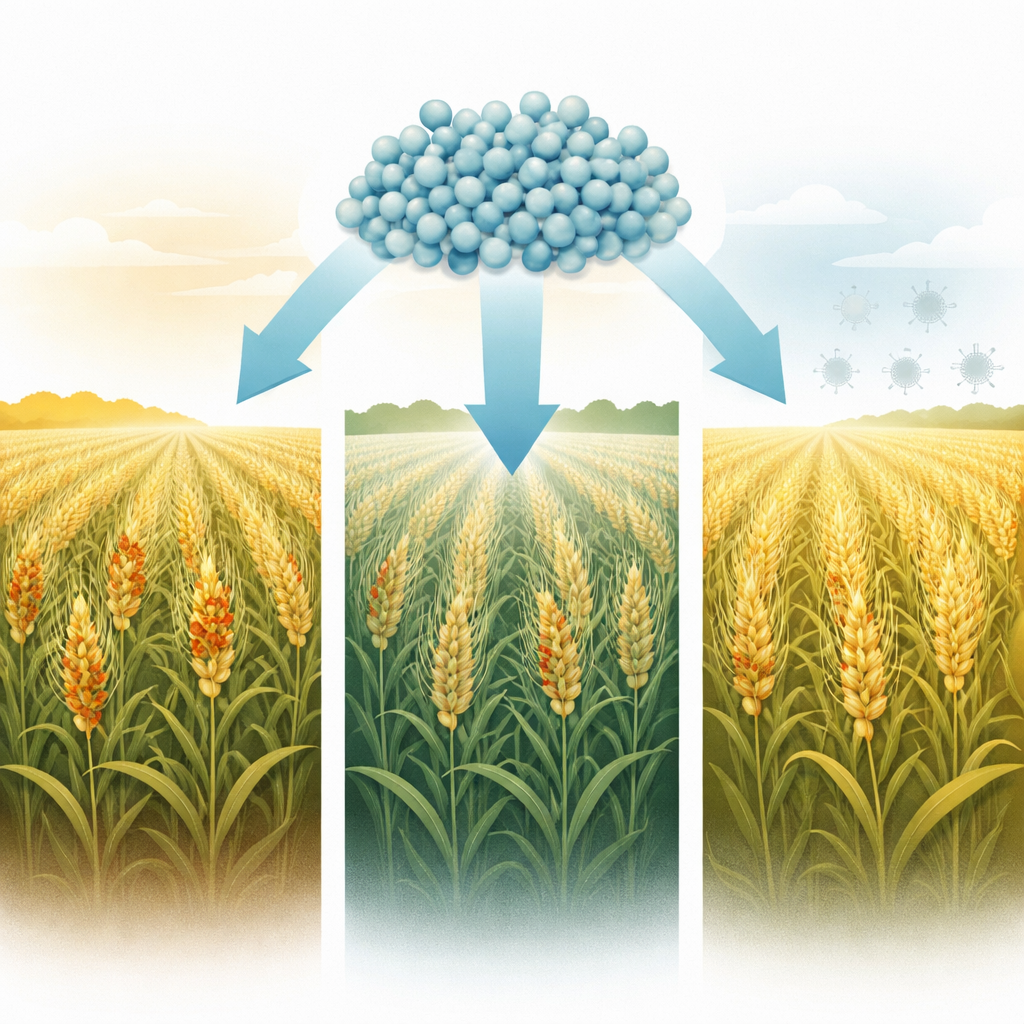
The researchers set up field plots in north-eastern Poland over two years to test a biological control approach. They sprayed wheat at flowering with different doses and timings of a beneficial yeast, Debaryomyces hansenii, and in some plots they added an aggressive Fusarium strain to intensify disease pressure. Plant health, grain yield, and fungal infections were carefully scored. The scientists also used advanced DNA sequencing to map which fungal species were living in the grain and stems, and state-of-the-art chemical analysis to measure dozens of mycotoxins. This combination allowed them to see not just whether the wheat looked healthier, but how the entire microscopic community and its chemical footprint changed.
What the yeast could and could not do
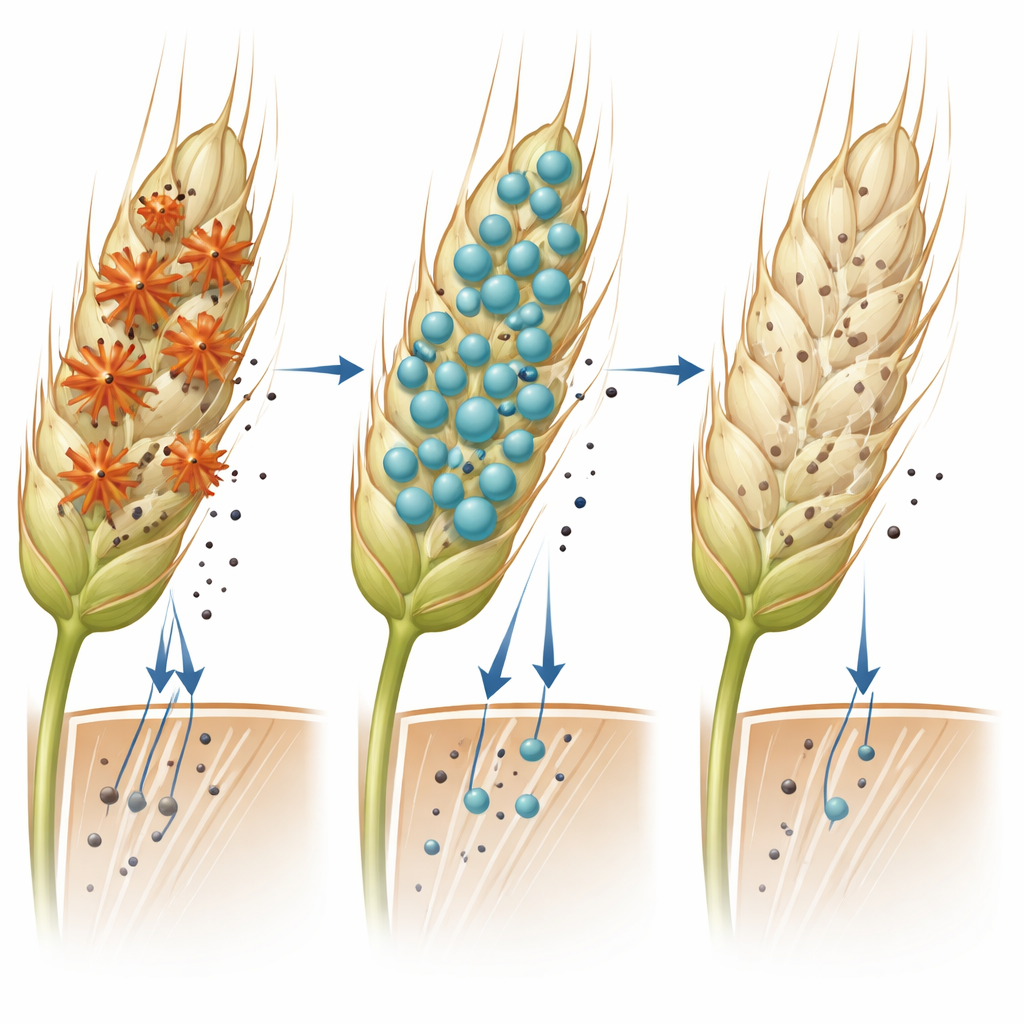
Spraying the yeast did help in important ways. The most intensive treatment—two applications of a higher dose—cut the severity of Fusarium head blight on wheat spikes by almost 80 percent in the worst year. Levels of several key Fusarium toxins in grain, especially deoxynivalenol (often called DON) and related compounds, dropped by roughly half compared with untreated, infected plants. Some other Fusarium-made chemicals and certain Alternaria toxins were also reduced. However, the yeast did not prevent Fusarium fungi from colonizing the grain; the harmful species were still present at similar frequencies. In the stems and root zone of plants that later turned necrotic, Fusarium species remained abundant, and toxin levels in stem tissues were far higher in sick plants than in healthy ones.
Shifting the hidden fungal community
By looking at fungal DNA, the team found that pathogenic fungi dominated the wheat’s microscopic community, both in grain and stems. Alternaria species were especially common, and multiple Fusarium and closely related species were also present. The yeast treatment did not strongly reduce the overall share of major pathogens like Fusarium and Alternaria. Instead, it noticeably boosted the diversity and abundance of naturally occurring yeasts on the grain. In stems, pathogenic fungi still made up about two-thirds of all detected fungal units, especially in upper stem segments of diseased plants, while yeasts were much more common on the upper stems than near the base. These patterns suggest that the introduced yeast is joining a crowded and competitive ecosystem where many residents—and the toxins they make—can blunt its impact.
Why rotation and early infections still matter
The study also showed that growing durum wheat after durum wheat made things worse. Under this repeated-crop scenario, infections in roots and lower stems increased, particularly from Fusarium avenaceum, leading to extensive necrosis and crown rot symptoms. Once these early infections took hold, the later foliar yeast treatment was unable to rescue the plants from stem disease, even though it improved the health of the heads and reduced toxins in the grain. This highlights that any biological spray on spikes is only one piece of the puzzle, and that crop rotation and management of soil-borne fungi remain essential.
Take-home message for food safety and farming
For non-specialists, the main conclusion is that a friendly yeast can meaningfully reduce certain toxins and visible disease in wheat heads, but it does not fully displace harmful fungi from the plant. Think of it as a partial biological filter rather than a complete shield. The yeast helps make grain somewhat safer by lowering toxin loads, yet early root and stem infections and the resident fungal community still strongly shape plant health. To keep pasta wheat both productive and safe, farmers will likely need to combine such biological treatments with smart crop rotations and other disease-management tools that address the whole life cycle of the pathogens.
Citation: Wachowska, U., Sulyok, M., Wiwart, M. et al. The effect of biological control on mycotoxin concentrations and the mycobiome in durum wheat grain and stems. Sci Rep 16, 10197 (2026). https://doi.org/10.1038/s41598-026-40947-z
Keywords: durum wheat, Fusarium head blight, mycotoxins, biological control, yeast treatment