Clear Sky Science · en
Polyphenol-rich Cucurbita formulation mitigates doxorubicin-induced cardiotoxicity in rats: biochemical, histological, and molecular docking insights
Why Pumpkins and Cancer Drugs Matter for the Heart
Chemotherapy drugs like doxorubicin can save lives, but they often come with a hidden cost: lasting damage to the heart. This study asked a surprisingly down‑to‑earth question: could natural compounds found in common pumpkin species help shield the heart from this harm? By mixing extracts from three types of Cucurbita (pumpkin and squash) and testing them in rats, the researchers explored whether a polyphenol‑rich formulation could blunt drug‑induced heart injury through its antioxidant and anti‑inflammatory powers.
What Happens When Cancer Drugs Hurt the Heart
Doxorubicin is widely used against cancer, but it can also injure heart muscle. It promotes the formation of highly reactive molecules that damage fats, proteins, and DNA inside heart cells, and it stirs up inflammation that further weakens the tissue. Over time, this can disturb blood fats, raise markers of heart risk, and alter the microscopic structure of the heart and blood vessels. Because these early biochemical and structural changes come before obvious heart failure, they are ideal targets for testing protective strategies.
Pumpkin Compounds Packed into a Heart Shield
The team prepared an ethanol extract from three edible and medicinal pumpkins—Cucurbita pepo, C. moschata, and C. maxima—and blended them in equal parts to make a polyphenol‑rich Cucurbita formulation (PRCF). Using high‑performance chromatography, they identified 24 distinct polyphenols, including high levels of gallic acid and notable amounts of resveratrol, hesperetin, catechin, and epicatechin—molecules already known for antioxidant and heart‑friendly effects. In test‑tube assays, these extracts strongly neutralized free radicals and slowed the oxidation of fatty acids, confirming that the mixture had robust antioxidant capacity before it was ever given to animals. 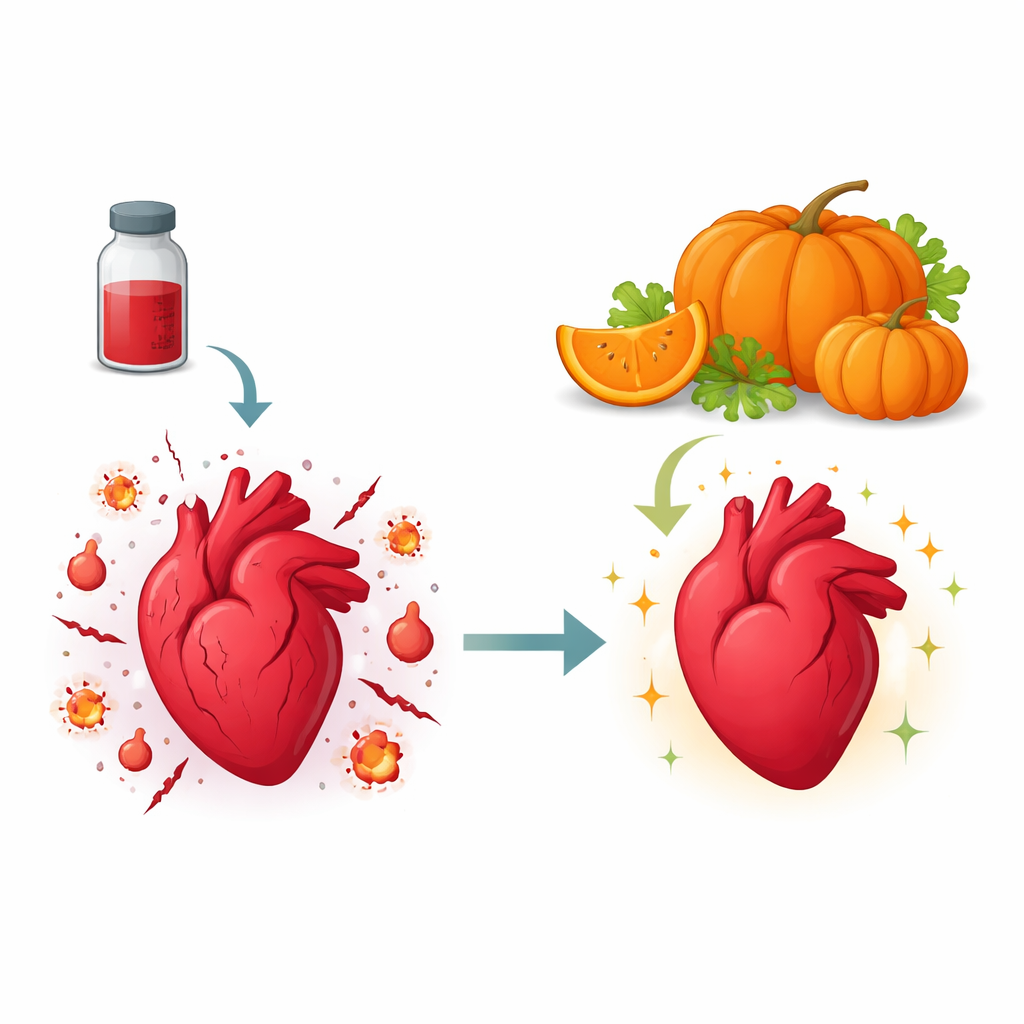
Testing the Formula in a Rat Heart Injury Model
To see whether this laboratory promise translated into living systems, the researchers used male rats and divided them into five groups: healthy controls, a doxorubicin‑only group, a positive control given the known antioxidant quercetin, and two PRCF groups receiving either a lower or higher daily dose. All but the healthy group received a single substantial dose of doxorubicin on day 14 to trigger heart injury. Over 21 days, the scientists tracked blood fats, heart‑risk indices, liver enzymes, and classic markers of oxidative stress and inflammation in heart tissue and blood.
Healthier Blood Fats, Fewer Free Radicals, Calmer Inflammation
Rats treated with doxorubicin alone developed a clearly unhealthy profile: total and “bad” cholesterol, triglycerides, and calculated atherogenic indices all rose, while “good” HDL cholesterol fell. Levels of a heart‑damage marker (troponin I), liver enzymes, and breakdown products of fat oxidation (malondialdehyde) also climbed, while natural defenses such as superoxide dismutase, catalase, glutathione, and glutathione peroxidase dropped. In contrast, rats that received PRCF—especially the higher dose—showed marked improvement. Their lipid profiles shifted toward safer levels, heart‑risk ratios decreased, antioxidant defenses rebounded, and malondialdehyde fell close to normal values. Blood levels and heart‑tissue gene activity of inflammatory messengers TNF‑α and IL‑6, which spiked after doxorubicin, were significantly suppressed by PRCF treatment.
Seeing the Protection Under the Microscope and in Molecular Models
Microscopic examination told the same story. Hearts from doxorubicin‑only rats showed disrupted muscle fibers, swelling, fibrous scarring, and immune‑cell invasion, while their main artery walls thickened and lost their orderly structure. In animals given PRCF, particularly the higher dose, heart muscle fibers appeared more regular, scarring and cell infiltration were reduced, and the aortic wall layers looked closer to normal. The authors also ran computer docking studies showing that several major pumpkin polyphenols fit snugly into the active pocket of an enzyme linked to energy use in heart cells (malonyl‑CoA ligase), hinting that these compounds might help steady cellular energy pathways in addition to quenching oxidative stress. 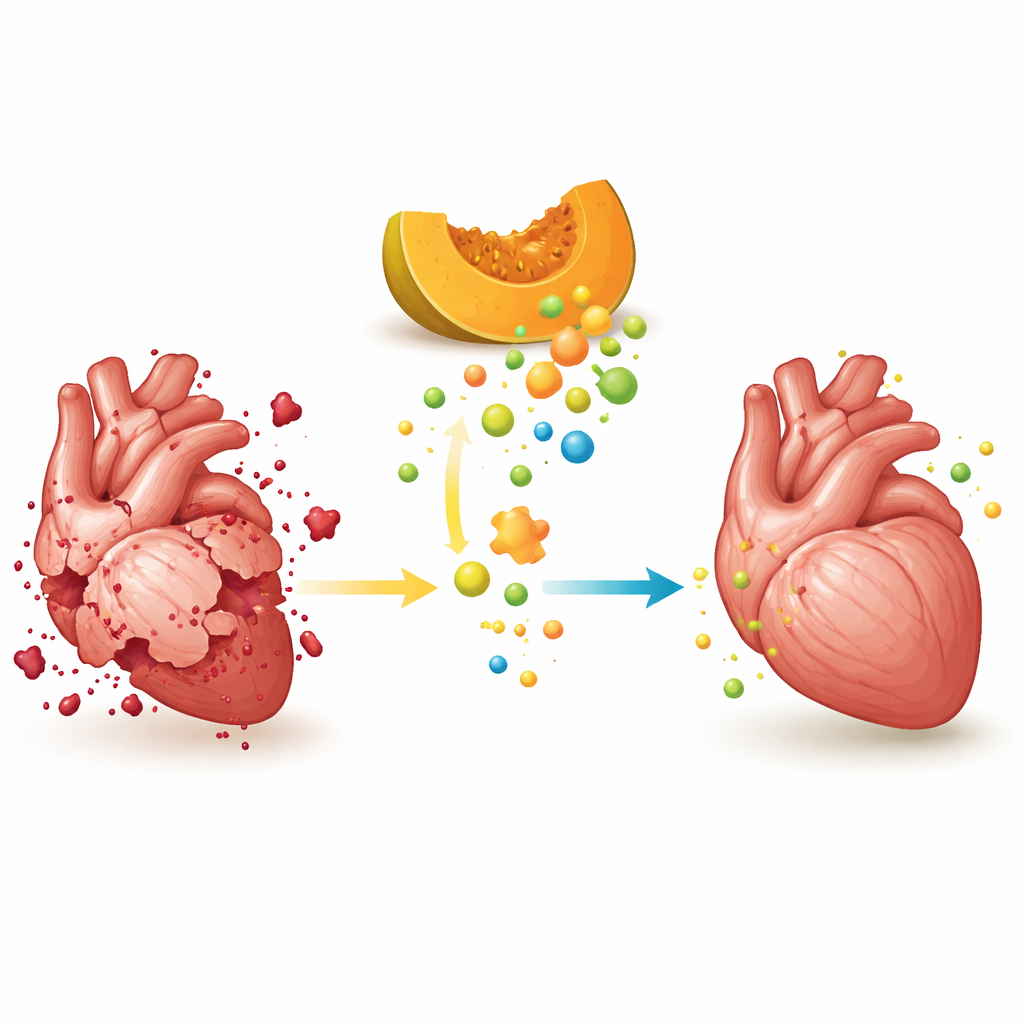
What This Could Mean for Future Heart‑Safe Therapies
Taken together, the findings suggest that a carefully designed, polyphenol‑rich pumpkin formulation can soften the blow of doxorubicin on the heart in rats. By improving blood fats, strengthening antioxidant defenses, damping inflammatory signals, and preserving tissue structure, PRCF acted as a multi‑layered shield rather than a single‑target drug. While the study stops short of measuring heart pumping function directly or testing in humans, it supports the idea that familiar food plants can be refined into adjunct “heart guards” for people receiving harsh but necessary cancer treatments—pending rigorous clinical trials to confirm safety, dosing, and real‑world benefit.
Citation: Iftikhar, N., Hussain, A.I., Fatima, T. et al. Polyphenol-rich Cucurbita formulation mitigates doxorubicin-induced cardiotoxicity in rats: biochemical, histological, and molecular docking insights. Sci Rep 16, 11143 (2026). https://doi.org/10.1038/s41598-026-40941-5
Keywords: doxorubicin cardiotoxicity, pumpkin polyphenols, antioxidant therapy, natural cardioprotection, chemotherapy side effects