Clear Sky Science · en
Grifola frondosa as a natural additive enhancing antioxidant activity and nutritional value in gluten-free bread
Bread That Is Kinder to Sensitive Stomachs
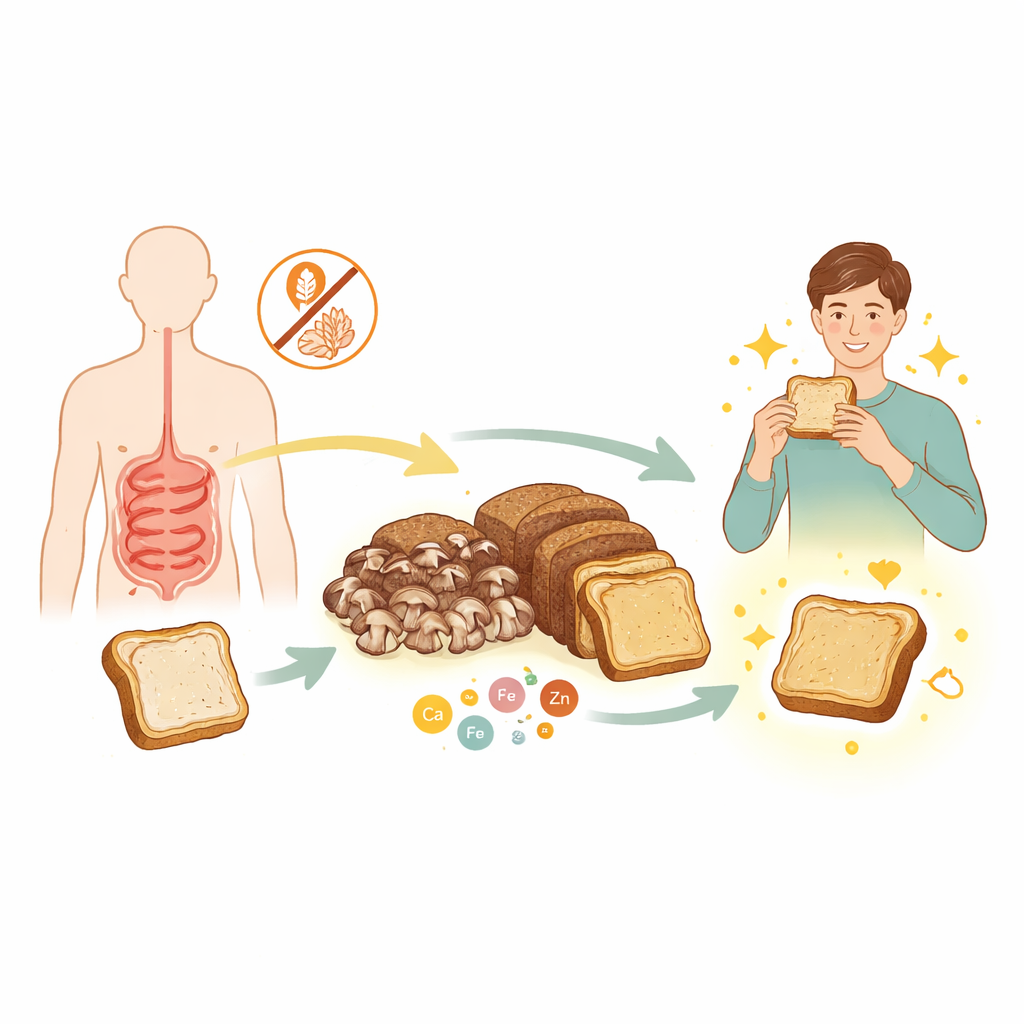
For people who must avoid gluten, finding bread that is both tasty and nourishing can feel like an endless compromise. This study explores an inventive twist: using a popular medicinal mushroom, maitake (also called hen-of-the-woods), as a natural booster for gluten-free bread. The researchers asked a simple but important question—can adding this mushroom make gluten-free bread healthier and still pleasant to eat?
Why Gluten-Free Bread Needs Help
Gluten-free bread is a lifeline for people with celiac disease or gluten sensitivity, yet it is often dry, bland, and nutritionally modest. Standard recipes rely on rice and corn flours plus starches to replace wheat, but these ingredients are relatively low in protein and health-promoting compounds. At the same time, interest is growing in foods that do more than fill us up, especially those rich in natural substances that may help protect our bodies from everyday damage caused by oxidation. Edible mushrooms are packed with fiber, protein, minerals, and antioxidant compounds, making them attractive candidates to upgrade gluten-free staples.
The Mushroom Makeover for Everyday Bread
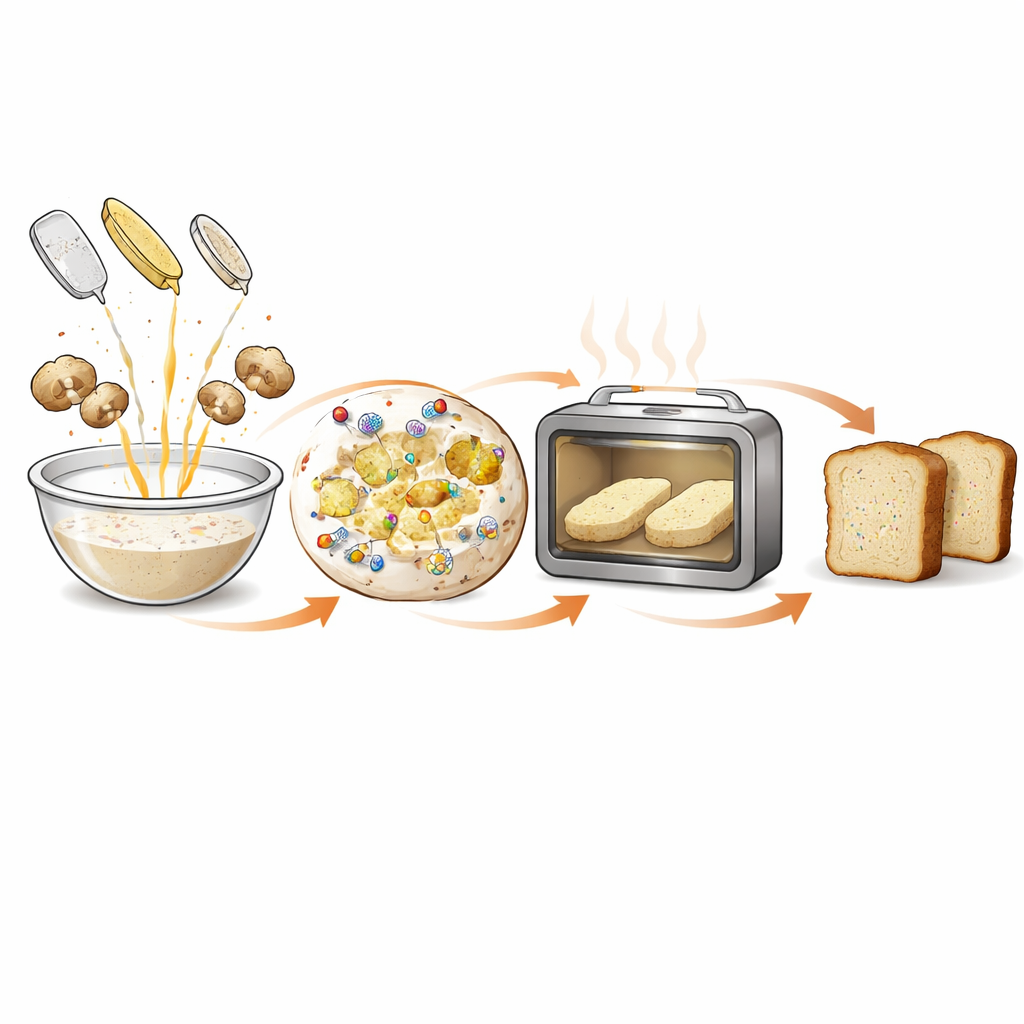
The team baked a series of gluten-free loaves using rice flour, corn flour, and potato starch, replacing part of the flour with dried, finely ground maitake mushroom. They tried five versions containing 0%, 5%, 10%, 15%, or 20% mushroom, all prepared and baked under the same conditions. They then measured basic baking performance—how big and light the bread was, how much water it held, and how much weight it lost during baking—alongside color, texture, and detailed chemical properties. Finally, a group of adult tasters rated how much they liked the look, smell, taste, and feel of each bread.
More Nutrition and Antioxidants in Each Slice
Adding maitake clearly boosted the bread’s nutritional value. As the mushroom level rose, protein content increased by about half and fat content rose modestly, reflecting the rich composition of maitake. Even more striking were the gains in health-related plant compounds: total phenolics and flavonoids—as well as overall antioxidant activity—more than doubled or even tripled in the highest-mushroom loaves. The mushroom also contributed important minerals such as potassium, phosphorus, magnesium, iron, and zinc; in the 20% bread, potassium and zinc reached more than three times the amounts found in the plain loaf. Infrared spectroscopy, a technique that reads molecular “fingerprints,” showed that mushroom components interacted closely with starches and proteins in the dough, helping the bread hold more water and subtly reshaping its internal structure.
How the Bread Looked, Felt, and Tasted
The changes were not just on paper. Loaves with maitake were slightly smaller but heavier and moister than the control bread, and total baking loss went down. Inside, the crumb became noticeably darker and more reddish as more mushroom was added, though yellowness stayed about the same. Objective texture tests showed that hardness stayed similar to the control up to 15% mushroom and increased only at 20%, while springiness (the bread’s ability to bounce back after being pressed) declined at higher levels. In sensory tests, tasters preferred the control and the 5% mushroom bread, giving good marks for appearance, aroma, taste, and overall acceptability. Breads with 10% mushroom were still generally liked, but higher levels (15–20%) brought comments of bitterness and an overly firm texture, which lowered overall scores.
Finding the Sweet Spot
Putting all the evidence together, the study shows that maitake is a powerful natural enhancer for gluten-free bread: it raises protein, minerals, and antioxidants, helps the bread retain more moisture, and reshapes its inner structure in ways that could support better texture and shelf life. However, this comes with visible darkening and, at high doses, a stronger mushroom flavor and firmer crumb that many people find less appealing. For everyday use, the authors conclude that using around 5–10% maitake strikes the best balance—yielding a darker but still attractive loaf with a noticeable nutritional upgrade and good eating quality that could make life a bit easier, and tastier, for those living gluten-free.
Citation: Kobus, Z., Krzywicka, M., Blicharz-Kania, A. et al. Grifola frondosa as a natural additive enhancing antioxidant activity and nutritional value in gluten-free bread. Sci Rep 16, 11056 (2026). https://doi.org/10.1038/s41598-026-40938-0
Keywords: gluten-free bread, maitake mushroom, functional foods, antioxidant activity, food fortification