Clear Sky Science · en
Effects of UV-C irradiation and Spirulina priming on physiology and sanitary quality in creole maize
Helping Corn Thrive in Salty Soils
Across the world, more and more farmland is becoming salty, making it harder for crops like maize (corn) to sprout, grow, and feed people. This study explores an eco-friendly way to give seeds a “head start” before planting by briefly bathing them in germ-killing UV-C light and then soaking them in a nutrient-rich solution made from Spirulina, a blue-green microalga used as a health supplement. The work asks a simple but crucial question: can a short, carefully tuned pre-planting treatment turn fragile maize seeds into tougher starters that resist salt and fungi without using harsh chemicals?
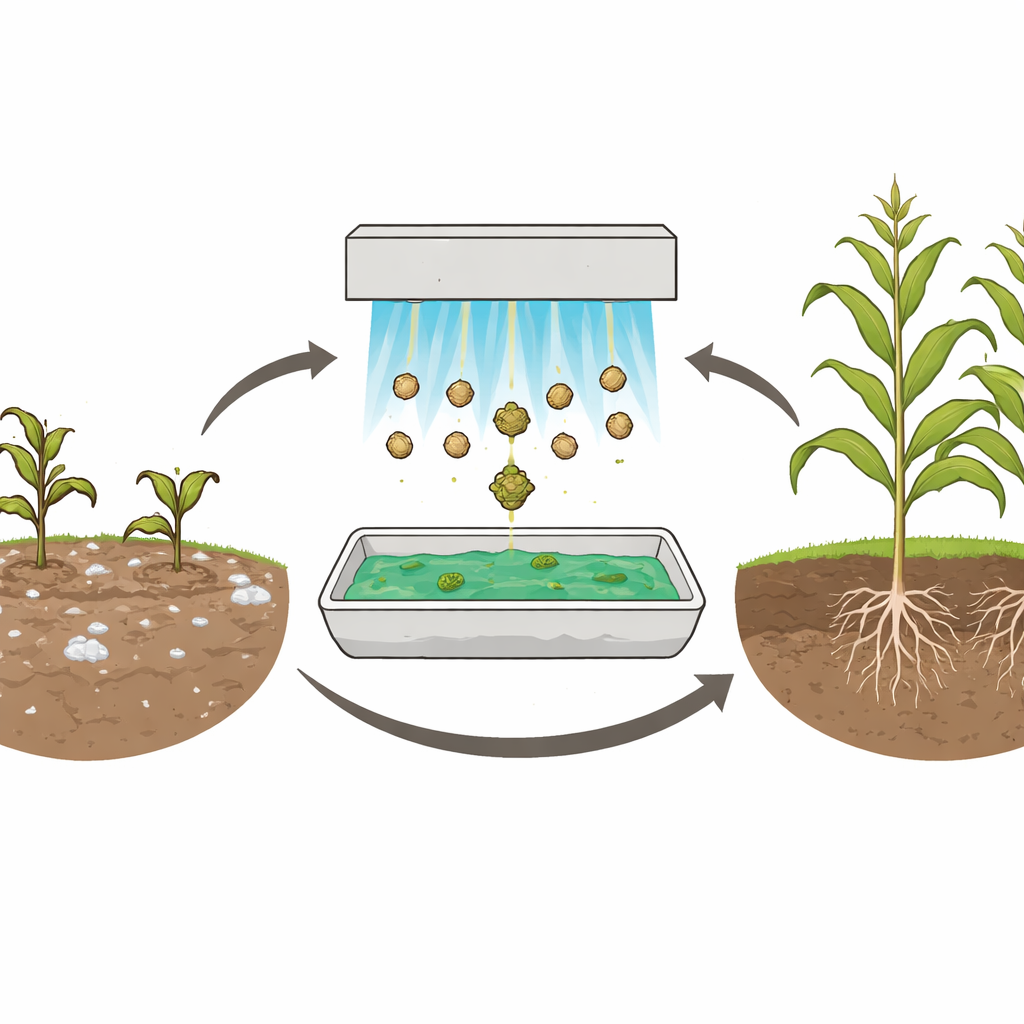
A New Kind of Seed Preparation
The researchers worked with creole (native) white maize from a farming community in central Mexico. Before sowing, they tried several ways of preparing the seeds. First, they exposed dry seeds to UV-C light, the same germicidal band used to disinfect water and surfaces, using different lamp setups and exposure times. UV-C can both sanitize the seed surface and trigger a mild stress that “wakes up” protective systems inside the seed. Second, they combined this light treatment with priming in water or water enriched with low doses of Spirulina powder, which contains proteins, vitamins, minerals, pigments, and hormone-like compounds known to stimulate plant growth. Prepared and unprepared seeds were then tested under normal conditions and in salty water to mimic degraded soils.
Testing Seeds Under Stressful Conditions
To see which combinations worked best, the team tracked how quickly and how many seeds germinated, how long the roots and shoots grew, how heavy the seedlings became, and how well they tolerated salt. They also measured how many seeds were naturally infested with fungi. In one set of experiments, they compared four different UV-C devices to find which design delivered a helpful dose without harming germination. Another set examined how various Spirulina concentrations in the irrigation water influenced germination under salt stress. In the final phase, they combined UV-C with two kinds of priming—simple soaking in water and soaking in a dilute Spirulina solution—then tested both salty and non-salty conditions while also scoring seed health.
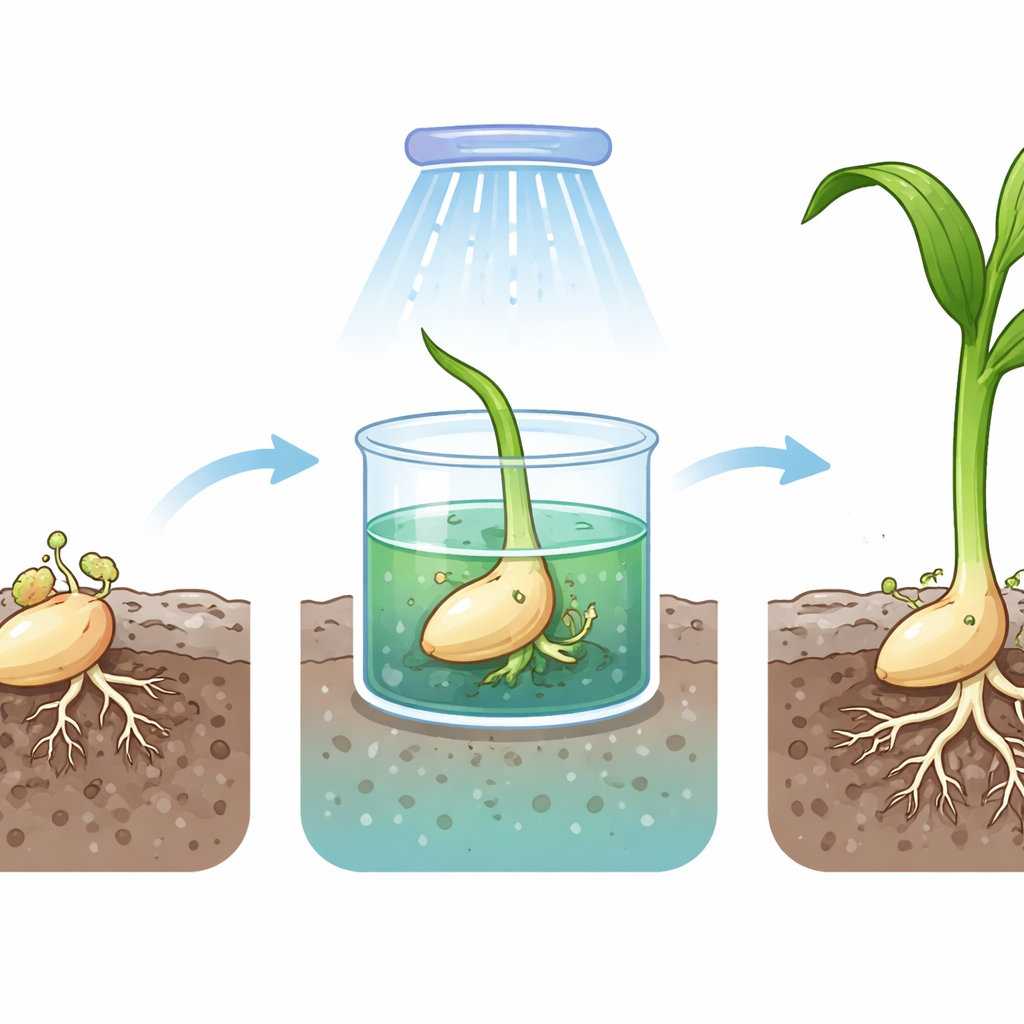
Finding the Sweet Spot for Light and Algae
The results showed that both UV-C and Spirulina need to be used in moderation. Very high light intensity or too much Spirulina tended to slow germination or reduce seedling vigor, while carefully chosen levels did the opposite. The most successful treatment was a short, 10-minute UV-C exposure with a well-designed lamp chamber, followed by priming in a low Spirulina dose of 0.5 g per liter. Under non-salty conditions, this combination pushed germination close to 99%, sped up emergence by nearly 40%, and produced sturdy seedlings. Under salty conditions, the same approach boosted a salt-tolerance index by about 86% and cut germination losses by roughly half compared with untreated controls. Analyses that considered all variables together confirmed that early germination, stronger seedlings, and better sanitary quality tended to rise and fall as a group when UV-C and Spirulina were optimized.
Cleaner Seeds With Fewer Fungi
Beyond helping seeds withstand salt, the treatments improved sanitary quality. UV-C alone reduced the proportion of seeds infested with fungi, and when it was followed by Spirulina-based priming, the effect was even stronger under normal (non-saline) conditions. In the best cases, fungal infestation dropped by about two-thirds compared with untreated seeds. The researchers also noticed subtle color changes in the seed coat after UV-C exposure, which they interpret as signs that the surface structure has been modified—possibly making it easier for water and the priming solution to penetrate, while also damaging microbes on the outside of the seed. These surface shifts matched changes in how the seeds reflected light, hinting at physical as well as biological alterations caused by the brief radiation.
What This Means for Farmers
To a non-specialist, the takeaway is straightforward: by giving maize seeds a carefully controlled “light shower” and a gentle soak in a dilute Spirulina solution before planting, it is possible to get more seeds to sprout quickly, grow stronger seedlings in salty soils, and reduce fungal problems without relying on synthetic chemicals. The method uses low energy, small amounts of a renewable biological input, and can be adapted to simple seed-treatment boxes that serve many farmers. While field trials and local fine-tuning are still needed, this hybrid strategy points toward a practical, sustainable tool to keep maize productive as salinization and disease pressure increase.
Citation: Hernández-Aguilar, C., Méndez, J.I., Romero-Galindo, R. et al. Effects of UV-C irradiation and Spirulina priming on physiology and sanitary quality in creole maize. Sci Rep 16, 13687 (2026). https://doi.org/10.1038/s41598-026-40934-4
Keywords: maize, seed priming, UV-C treatment, Spirulina, salinity stress