Clear Sky Science · en
Influence of fruit maturity and slimy seed coat on seed traits and germination of horned melon (Cucumis metuliferus E. Mey. Ex Schrad.)
Why a spiky fruit matters for future food
Horned melon, a bright orange spiky fruit also called kiwano, is gaining attention on supermarket shelves and in rural African communities alike. It is rich in nutrients and can be stored for long periods without special equipment, making it valuable where food and electricity are scarce. Yet farmers who want to grow this fruit at scale still rely on seeds scooped from wild or home‑grown fruits, often with poor and unpredictable germination. This study asks a simple but crucial question: when should horned melon fruits be harvested for seed, and should the slippery jelly around each seed be removed to get strong, reliable seedlings?
From wild snack to dependable crop
In many parts of Africa, people collect horned melons from the wild for food, medicine, and income. The fruit is praised for its vitamins, minerals, and possible health benefits, yet it remains an “orphan crop” with little formal research. To turn horned melon into a dependable farm crop, growers need clear guidance on seed quality—especially for communities that save their own seed. Today, seeds are usually squeezed out of fruits being eaten, dried with their natural jelly coating still attached, and stored for later planting. Because fruits are eaten at different stages of ripeness, this casual practice may mix immature and mature seeds and leave a slimy barrier around them, both of which might hold back germination.
Testing fruit ripeness and seed strength
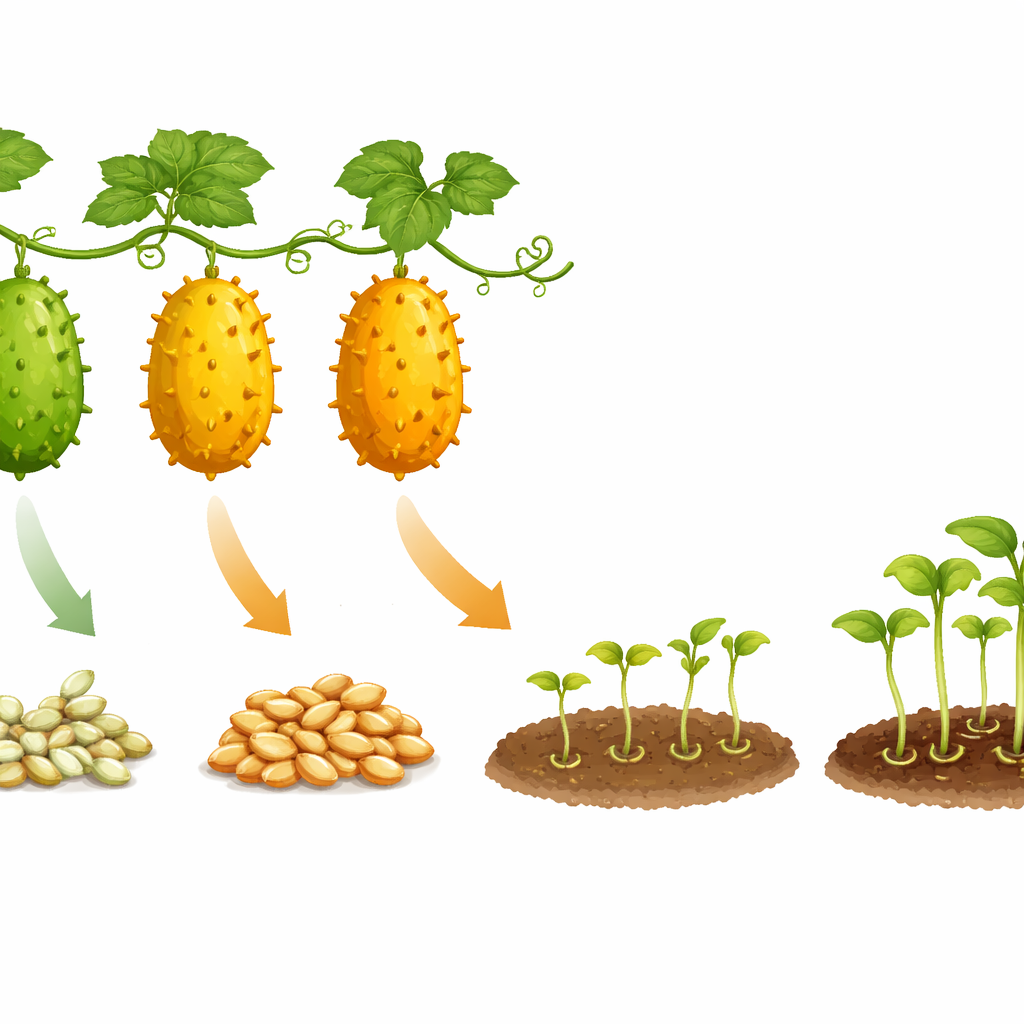
The researchers collected horned melons from rural suppliers near Gweru, Zimbabwe, and sorted them into three easy‑to‑see stages: fully green but full‑sized fruits; “colour break” fruits just starting to turn yellow; and fully yellow ripe fruits. They measured fruit size, sweetness (using the sugar dissolved in the pulp as an indicator), and seed weight. As fruits ripened, the pulp became much sweeter and the seeds grew heavier, suggesting that the embryos inside were filling and maturing. Seeds from each stage were then dried and tested in controlled laboratory conditions to see how many would sprout and how quickly.
When fruit is eaten too early
The results were stark. Seeds from the green fruits did not germinate at all, even after 12 days under ideal conditions. Seeds from the colour‑break fruits showed only modest germination, while seeds from fully ripe yellow fruits reached about half of the batch sprouting, and did so in the shortest time. This means that the salad‑ready green fruits enjoyed by consumers are poor sources of planting seed: the embryos inside are still immature. Waiting until fruits are at least turning yellow, and ideally fully yellow, gives heavier, better‑filled seeds that are more likely to grow into seedlings.
The hidden grip of the slimy seed coat
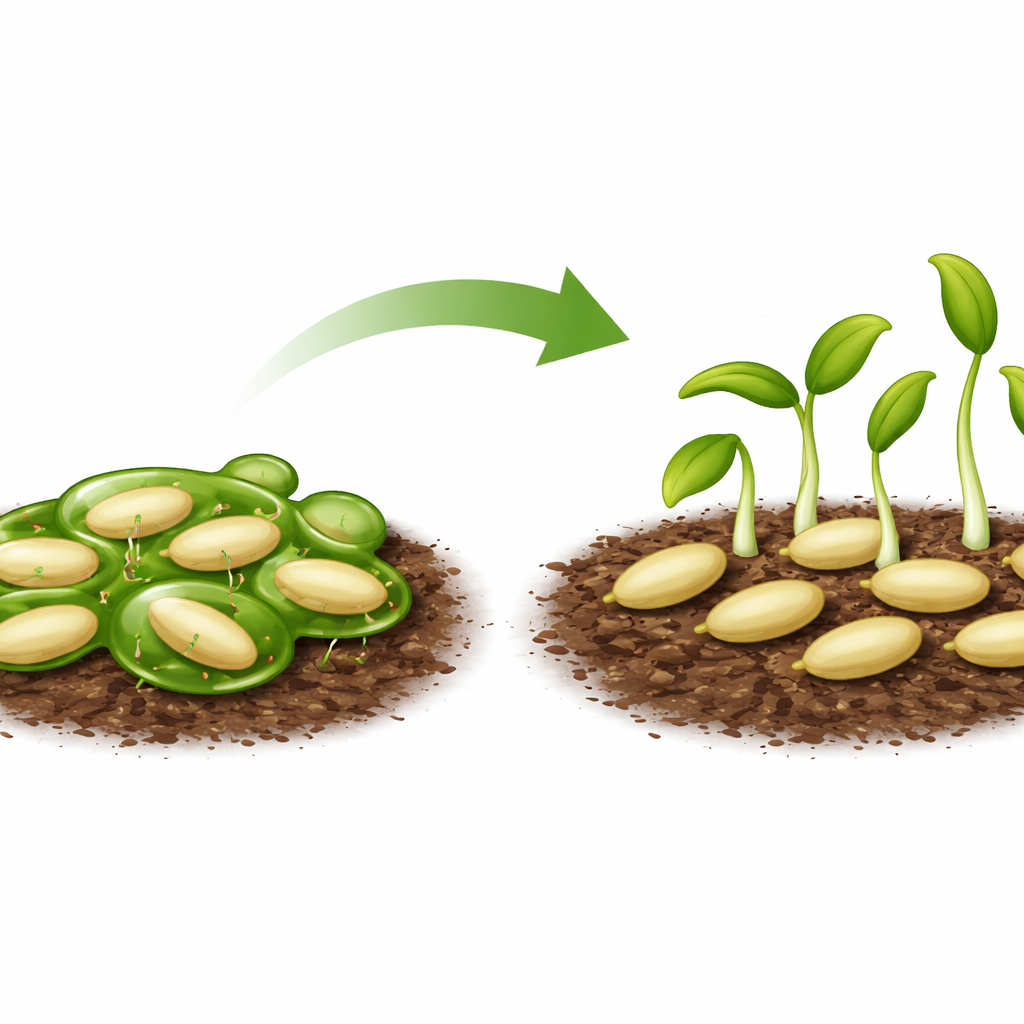
The team then turned to the slippery jelly that surrounds each horned melon seed. In new experiments, they compared seeds kept in this gel with seeds from which the gel was washed off by whisking in water. In both lab dishes and soil‑filled pots in a greenhouse, cleaned seeds consistently outperformed slimy ones. In the lab, removing the jelly raised germination from about six in ten seeds to nearly nine in ten. Similar gains appeared in the pot trials. The findings suggest that the jelly acts as an extra shield, slowing the entry of water and air that seeds need to wake up, and reinforcing a kind of built‑in delay that likely helps the plant survive dry years in its natural riverbank habitats.
Simple steps for better harvests
For farmers and seed producers, the message is refreshingly practical. To obtain strong, reliable horned melon seedlings, fruits should be left on the vine until at least the colour‑break stage—and preferably until they are fully yellow—and the slimy coating around each seed should be removed during seed processing. These two low‑cost steps turn a wild, unpredictable resource into a more dependable crop, improving the chances that every seed planted will become a healthy plant. As interest grows in underused fruits that can bolster food and nutrition security, such straightforward guidance can help horned melon move from forest margins and market stalls into planned fields and gardens.
Citation: Mlambo, N., Chifamba, M., Mhlahlayazi, T. et al. Influence of fruit maturity and slimy seed coat on seed traits and germination of horned melon (Cucumis metuliferus E. Mey. Ex Schrad.). Sci Rep 16, 11444 (2026). https://doi.org/10.1038/s41598-026-40932-6
Keywords: horned melon, seed germination, fruit maturity, seed dormancy, underutilized crops