Clear Sky Science · en
Unravelling complex interactions during Toxoplasma, Plasmodium, and Leishmania co-infections in French Guiana
Why several parasites matter for everyday health
In many tropical regions, people are exposed not to one germ at a time, but to several. This study looks at three microscopic parasites—those causing malaria, toxoplasmosis, and cutaneous leishmaniasis—in French Guiana, a French territory in the Amazon. By tracking how often these infections occur together and how they shape the body’s defenses, the researchers show that “hidden” co-infections are common and can subtly change how sick people become, which has important consequences for diagnosis, treatment, and public health.
Life at the crossroads of three tropical diseases
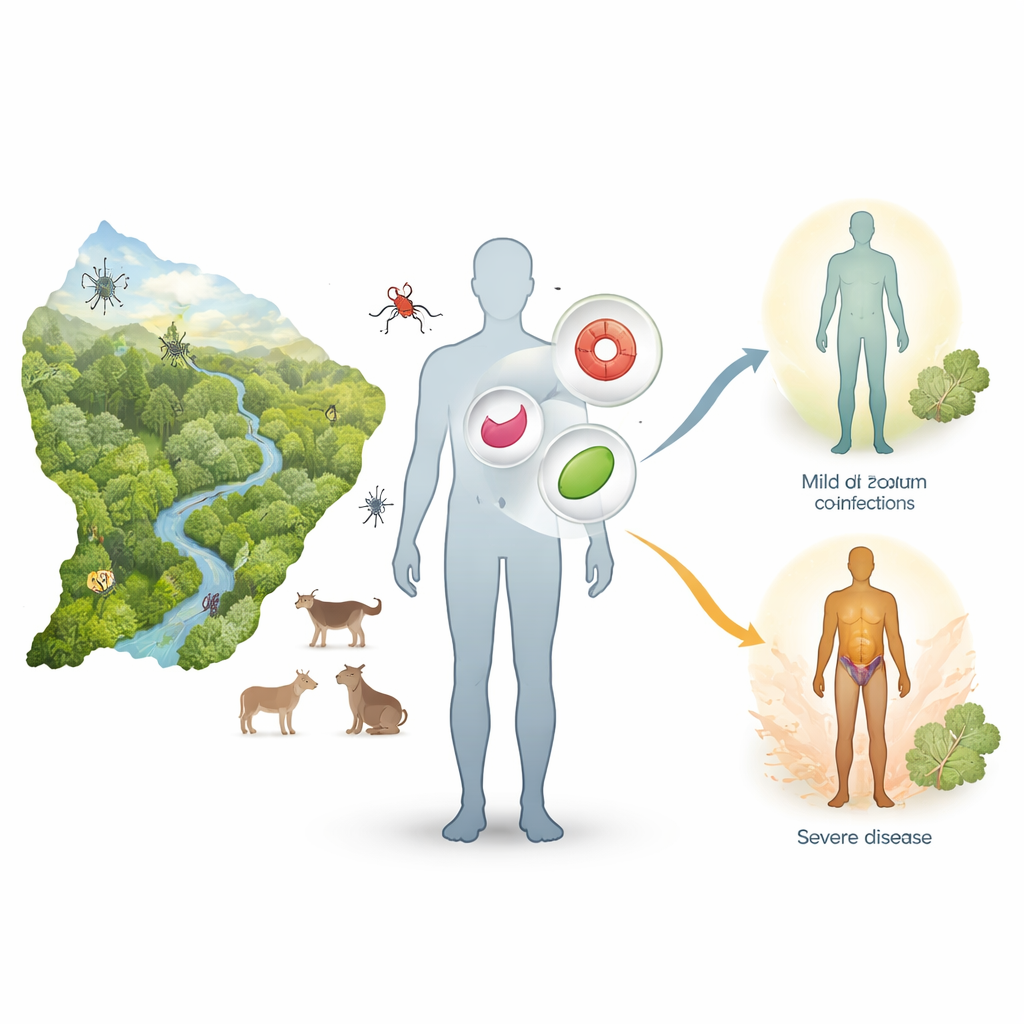
French Guiana is a place where forest, rivers, and human activity bring people into frequent contact with parasites. Malaria parasites are spread by mosquitoes, leishmaniasis by tiny sand flies, and toxoplasma often through contaminated food or water. Although these infections have different sources, people living or working deep in the forest, in mining camps, or along river borders can encounter all three. To understand what this means for real patients, the authors examined medical records and blood samples from 253 adults treated at Cayenne Hospital between 2012 and 2022, alongside healthy local controls. They measured antibodies showing past or present infection, standard blood and organ function tests, and a panel of immune signaling molecules in the blood.
How common are multiple infections?
The researchers found that overlapping infections were the rule rather than the exception. Only a small fraction—about 2.4%—had two diseases at exactly the same time, such as malaria plus acute toxoplasmosis or leishmaniasis. But blood tests revealed that roughly 60% of patients had been exposed to at least two of the three parasites over their lifetime, and nearly one in ten had markers of contact with all three. More than half of patients with malaria or leishmaniasis had antibodies suggesting longstanding toxoplasma infection, and many people diagnosed with acute toxoplasmosis also showed signs of past malaria. These “sequential” co-infections, even when not obvious clinically, meant that the immune system had to juggle several parasite histories at once.
What the blood reveals about organ stress
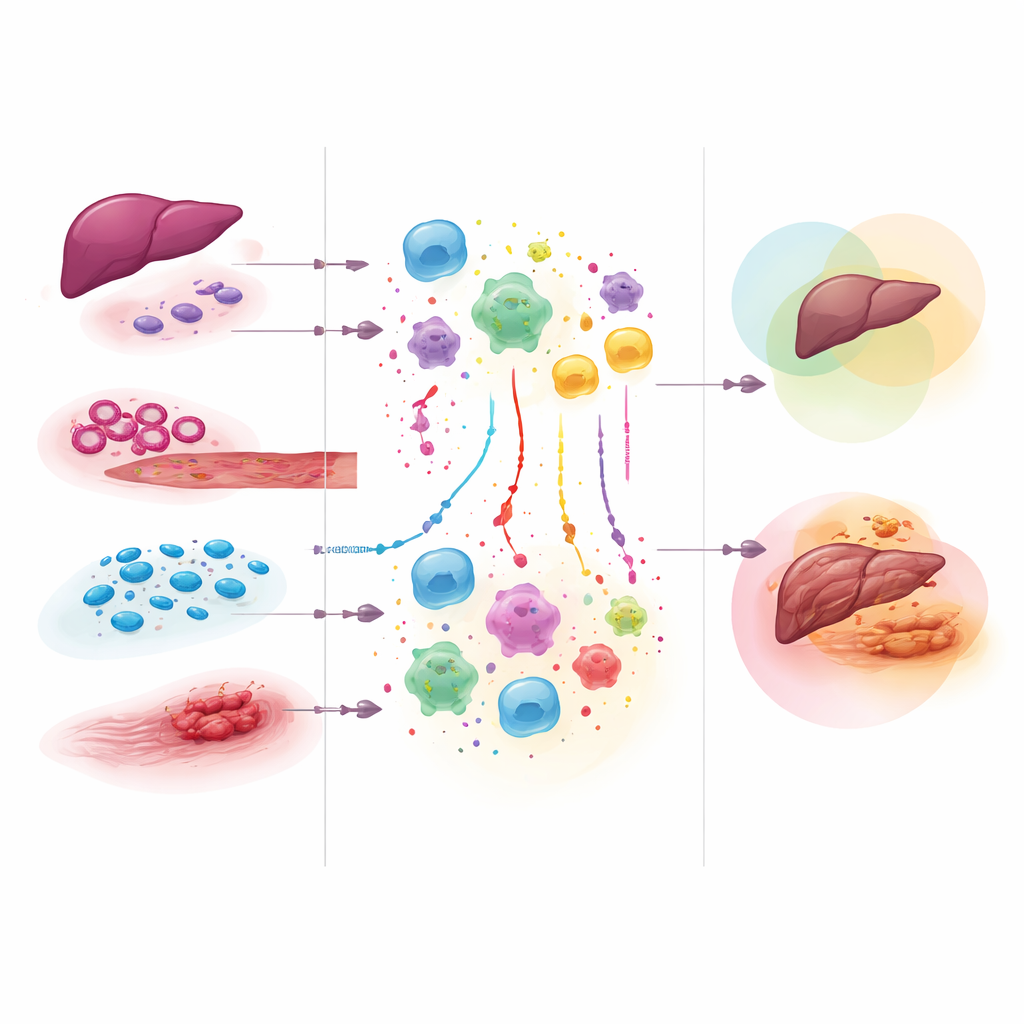
To see how different infections strain the body, the team compared standard laboratory markers such as liver enzymes, bilirubin, and inflammation proteins. Malaria patients showed clear signs of liver stress and inflammation, with higher levels of bilirubin, certain fibrosis scores, and C-reactive protein. People with acute toxoplasmosis also had raised liver enzymes, especially in more severe cases, and imbalances in electrolytes like sodium and calcium. By contrast, most leishmaniasis patients had liver markers closer to healthy controls, even when they had many skin sores. When earlier infections were taken into account, some patterns shifted: prior toxoplasma exposure sometimes seemed to blunt the liver damage usually seen in malaria, while combined histories of malaria and leishmaniasis were linked to signs of increased scarring and subtle blood changes.
Immune signals as fingerprints of each disease
Beyond routine tests, the scientists measured 15 cytokines and chemokines—small proteins that immune cells use to communicate. Each disease showed a distinct “fingerprint.” Malaria was linked to a strong inflammatory burst involving factors that recruit white blood cells and can damage tissues if not controlled. Acute toxoplasmosis showed a different mix, including molecules that drive both attack and regulation, with some signals increasing as disease became more severe. Leishmaniasis displayed a blend of patterns seen in the other two diseases, reflecting a tug-of-war between immune responses that help clear parasites and those that may slow healing of skin lesions. Using statistical models and decision trees, the authors identified combinations of these signals that could reliably distinguish malaria, toxoplasmosis, and leishmaniasis, and in some cases separate patients with simple infections from those with layered infectious histories.
Why these findings matter for care and prevention
For people living in regions like French Guiana, the study suggests that carrying more than one parasite over time is common and may actually soften the severity of later infections in some cases, while complicating others. The overall picture is that the main disease usually dominates the symptoms, but past infections leave an imprint on the immune system and organs that can sway outcomes. By combining classical lab tests with immune signal profiles, doctors and public health workers could better recognize who is at risk of severe disease, who might be harboring silent parasites, and how treatment strategies should adapt in areas where multiple tropical infections overlap.
Citation: Néron, K., Fesel, C., Demar, M. et al. Unravelling complex interactions during Toxoplasma, Plasmodium, and Leishmania co-infections in French Guiana. Sci Rep 16, 13717 (2026). https://doi.org/10.1038/s41598-026-40930-8
Keywords: protozoan co-infection, malaria, toxoplasmosis, cutaneous leishmaniasis, immune response