Clear Sky Science · en
Colorimetric detection of edible oil oxidation using PAN–Congo red nanofiber mats
Why watching your cooking oil matters
Anyone who fries food at home or eats in restaurants depends on cooking oils that are safe and fresh. When oils are used for too long or stored badly, they slowly turn rancid, forming unseen compounds that can spoil flavor and may harm health. Yet the tools used in industry to check oil quality are often slow, expensive, and locked away in laboratories. This study explores a simple, low-cost strip made of tiny fibers that visibly change color as oil goes bad, pointing toward smarter, more transparent food packaging and kitchen monitoring.
A simple idea: a color-changing oil freshness strip
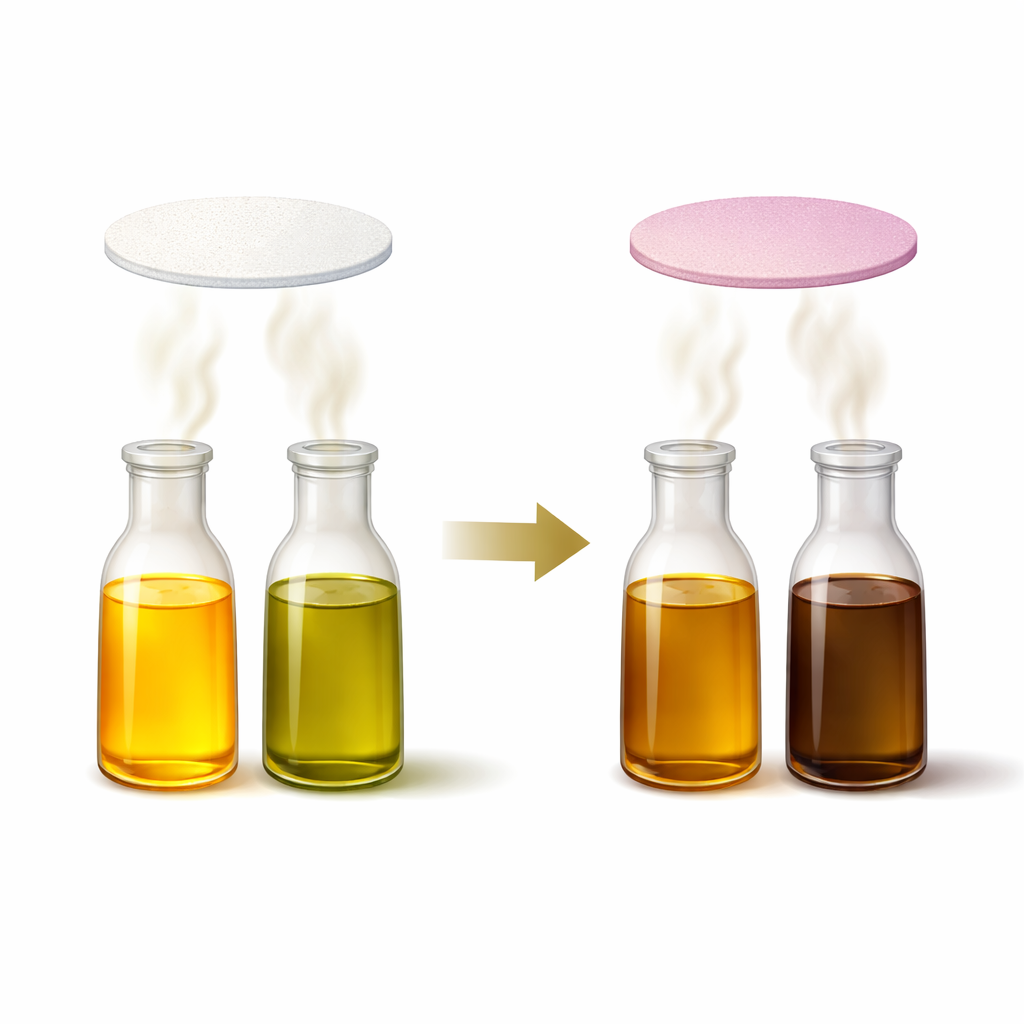
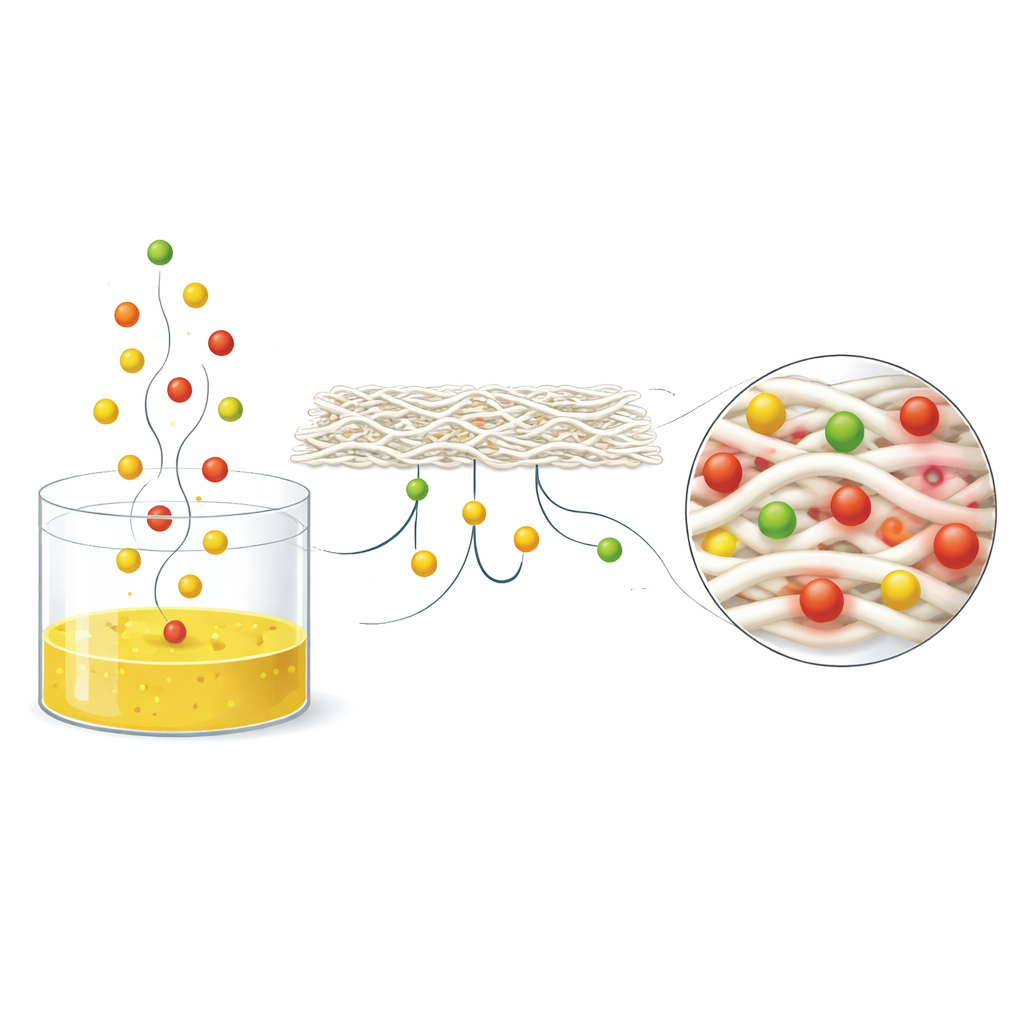
The researchers developed thin mats made from a common plastic, polyacrylonitrile, loaded with a dye called Congo red. These mats look like small, flexible disks of tangled nanofibers—threads so fine that thousands could fit across a human hair. When exposed to vapors rising from heated oils, the dye within the fibers reacts with compounds produced during oxidation, leading to a clear color shift that can be seen with the naked eye. Instead of dipping a test strip into the oil, the mats are suspended in the space above the liquid, where they respond to the fumes produced as the oil breaks down.
Putting the strips to the test in everyday oils
To see how well the mats worked, the team tested two widely used edible oils: soybean oil and extra virgin olive oil. Both were stored at a high temperature, similar to long-term heating, for 35 days. At regular intervals, the scientists measured how far the oils had oxidized using standard methods, such as tracking early breakdown products (called conjugated dienes and trienes), total polar compounds, and volatile molecules like aldehydes that give rancid oil its off-smell. They also measured the oils’ resistance to oxidation over time using a standard stability test. In parallel, they exposed the nanofiber mats to the same oils and recorded how quickly and how strongly the mats changed color.
What the color changes reveal about oil freshness
The mats were made with three different dye levels, and the one with the highest Congo red content showed the clearest and fastest response. For soybean oil, which is rich in easily oxidized polyunsaturated fats, the color difference in this mat grew large enough to be obvious after exposure to vapors from heavily degraded oil. The response time was just a few seconds. Extra virgin olive oil, naturally protected by antioxidants and richer in more stable monounsaturated fats, oxidized more slowly. Its fumes still triggered a noticeable color change, but to a lesser extent and over a longer time. Across all tests, the strongest color shifts lined up well with the chemical markers of oxidation, meaning the strip’s visual cue reliably reflected the true state of the oil.
Safety and structure behind the tiny fibers
Beyond showing that the mats work, the researchers examined their structure and safety. Microscopy images revealed that adding more dye slightly thickened and curled the nanofibers, creating a denser network without defects. Infrared spectroscopy confirmed that the dye was firmly integrated into the plastic, with strong interactions that help stabilize it inside the fibers. To check that the material would be safe in contact with food-related environments, the team tested the mats directly on normal skin and kidney cells in the lab. Cell survival stayed high over 24 hours, indicating that the fibers themselves are not acutely toxic under the tested conditions.
What this means for everyday cooking and food packaging
In plain terms, the study shows that a small, inexpensive, color-changing pad could serve as a real-time freshness indicator for frying oils or oil-rich foods. A clear visual signal—without instruments or trained staff—could tell workers or consumers when an oil has passed its safe useful life, potentially reducing both health risks and waste. The authors note that more work is needed before such strips reach store shelves, including long-term stability tests and checks to ensure no dye migrates into food. Still, the concept of a safe, responsive nanofiber mat that darkens as oil deteriorates points toward a future where food packaging itself helps guard against rancidity and improves confidence in what we eat.
Citation: Hashim, A.F., Zahran, H.A., Afifi, S.M. et al. Colorimetric detection of edible oil oxidation using PAN–Congo red nanofiber mats. Sci Rep 16, 9679 (2026). https://doi.org/10.1038/s41598-026-40928-2
Keywords: edible oil oxidation, colorimetric sensor, nanofiber mats, food packaging, oil quality monitoring