Clear Sky Science · en
An interdisciplinary machine learning-based approach for predicting corn grain yield under biofertilizer applications
Why smarter corn fields matter
Feeding a growing global population on a warming planet means squeezing more food from every drop of water and handful of soil. Corn, one of the world’s most important crops, is especially vulnerable to heat, drought, and poor soils. This study explores how a combination of helpful soil microbes and modern machine learning can help farmers predict corn yields more accurately, opening the door to smarter fertilizer use, better irrigation planning, and more resilient harvests.
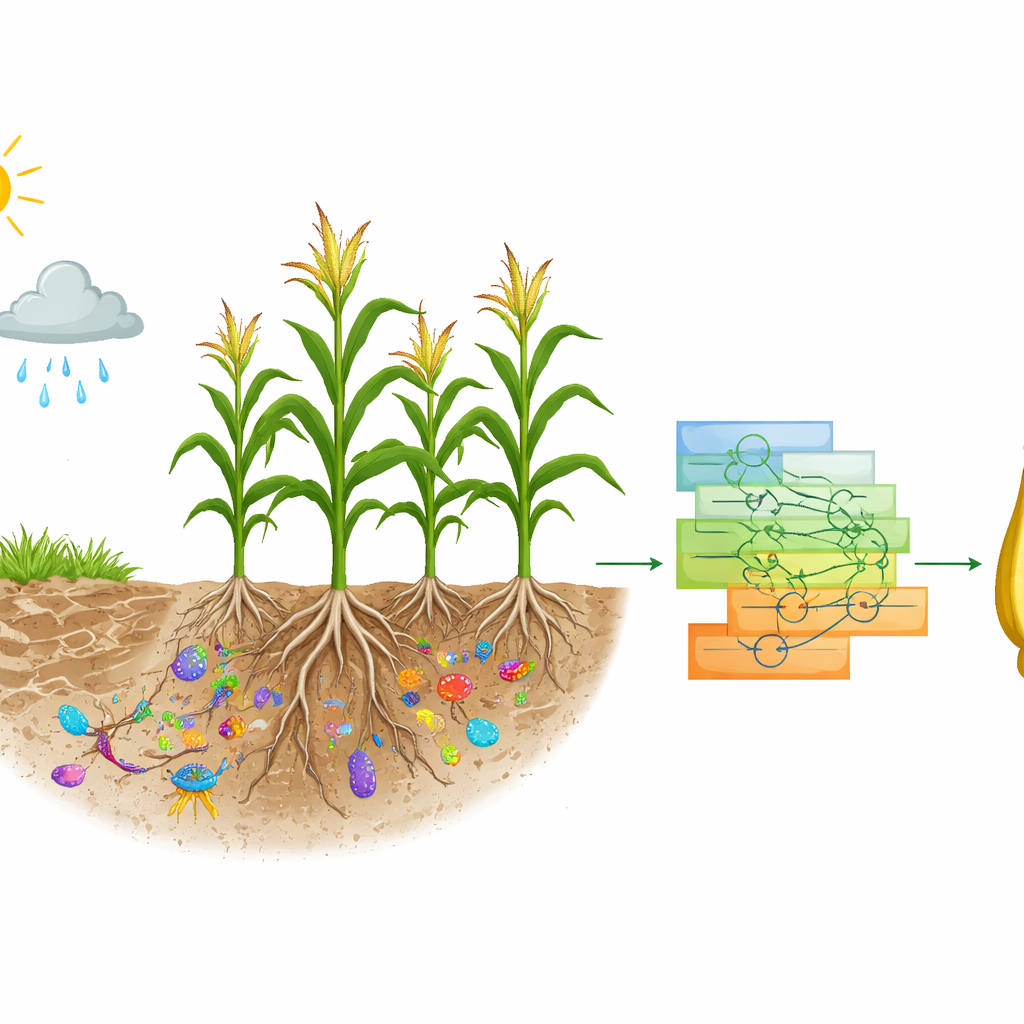
Healthy roots, helpful microbes, and stressed plants
The research begins with a simple idea: corn yield is shaped not just by weather and fertilizer, but by a web of interactions inside the plant and underground. The authors worked for two years on a research farm in semi-arid northeast Iran, where water is limited and heat is common. Corn seeds were either left untreated or coated with beneficial fungi and bacteria that live around roots and help plants absorb nutrients like phosphorus and nitrogen. Throughout the growing season, the team measured dozens of traits, from leaf color and height to root colonization and canopy temperature, building a detailed picture of how plants responded to these biofertilizers and to the challenging environment.
Turning field measurements into smart signals
Rather than relying only on traditional averages or simple trends, the researchers created 73 different “signals” from their measurements, including 32 direct traits and 41 combinations that captured how two features work together. For example, they considered how canopy temperature interacts with root colonization, or how leaf area combines with dry matter production. A first pass using a careful regression method narrowed these down to 13 key signals strongly linked with grain yield, such as canopy temperature during flowering, plant phosphorus and nitrogen levels, and several root- and leaf-related combinations. This step showed that yield depends on intertwined physiological and soil processes, not on single factors in isolation.
Putting eight learning machines to the test
To see which tools best captured these tangled relationships, the team compared eight machine learning approaches, ranging from tree-based models to several types of neural networks and a hybrid neuro‑fuzzy system. They split their 96 field samples into training, validation, and test sets, standardized all variables, and used techniques like cross-validation and early stopping to avoid overfitting. Overall, models built on neural networks—especially those using attention mechanisms and TensorFlow—performed best, achieving moderate accuracy in predicting yield from the measured traits. In contrast, more rigid methods like basic support vector machines struggled to model the complex, nonlinear patterns in the data.
What the models say about how corn really grows
One of the strengths of this work is that the authors did not treat their models as mysterious black boxes. Using interpretation tools based on game theory, they examined which features most strongly drove predictions. Canopy temperature during grain filling emerged as a consistently powerful signal: cooler canopies tended to be associated with better yields, likely reflecting plants that transpire efficiently and avoid heat stress. Interactions between plant nitrogen content and root length, between leaf area and leaf greenness, and between plant height and ear number were also highlighted across the best models. These patterns point to the central role of nutrient uptake and an efficient photosynthetic canopy, heavily influenced by how well beneficial microbes colonize roots and improve access to soil nutrients.
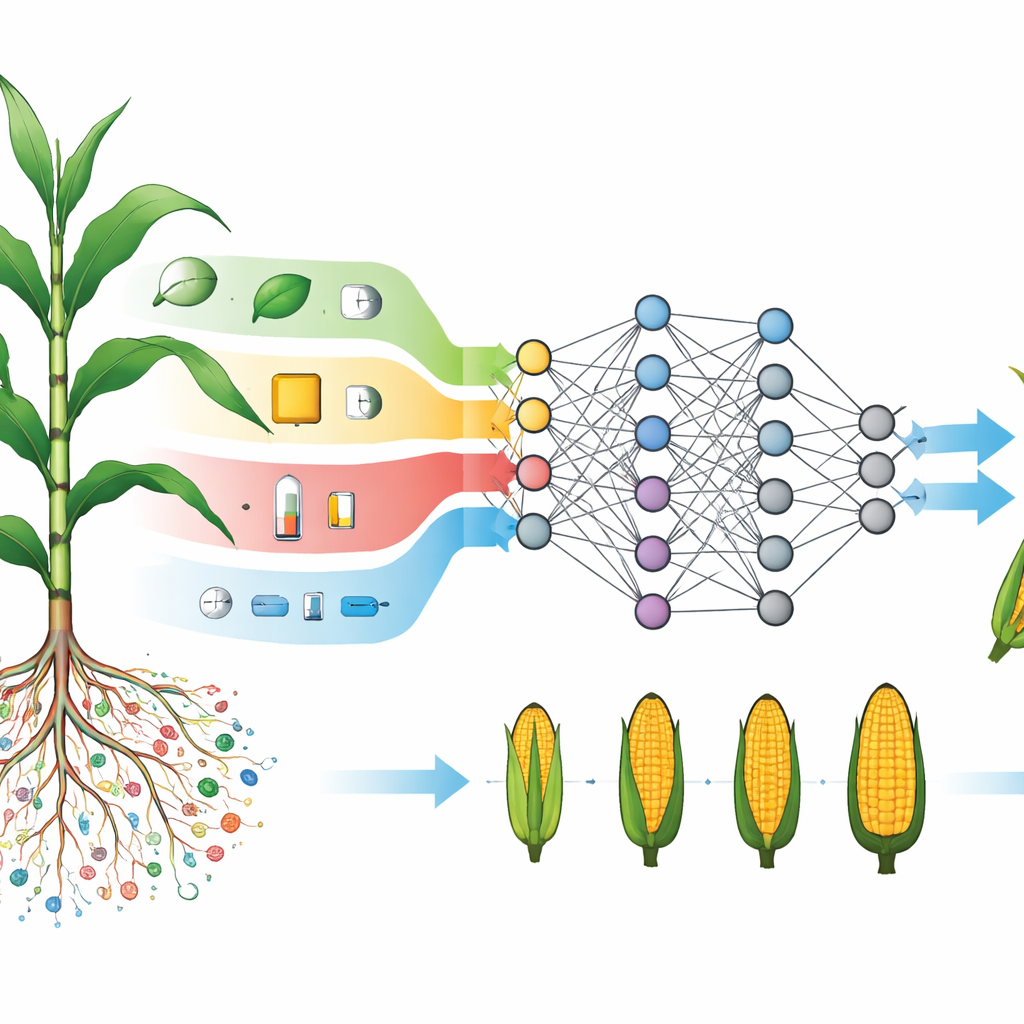
From data patterns to smarter farming
To a non-specialist, the bottom line is that combining biofertilizers with advanced data analysis can turn scattered field measurements into actionable insight. Although the dataset was modest and drawn from a single region, the study shows that neural network models can learn the subtle links between root health, leaf behavior, temperature stress, and final grain yield. By revealing which plant and soil traits matter most, these models can guide precision agriculture: farmers and advisors can focus on keeping canopies cool, roots well colonized by helpful microbes, and nutrient uptake finely balanced. In the long run, such approaches could help design cropping systems that produce more corn with fewer chemical inputs, while coping better with drought and climate change.
Citation: Jahan, M., Nassiri-Mahallati, M. An interdisciplinary machine learning-based approach for predicting corn grain yield under biofertilizer applications. Sci Rep 16, 9912 (2026). https://doi.org/10.1038/s41598-026-40919-3
Keywords: corn yield prediction, biofertilizers, machine learning in agriculture, root–microbe interactions, sustainable crop management