Clear Sky Science · en
Metagenomic analysis of bacterial diversity, antibiotic resistance, and functional profiles in the ice core samples from two glaciers of Sikkim Himalaya
Hidden Life in Himalayan Ice
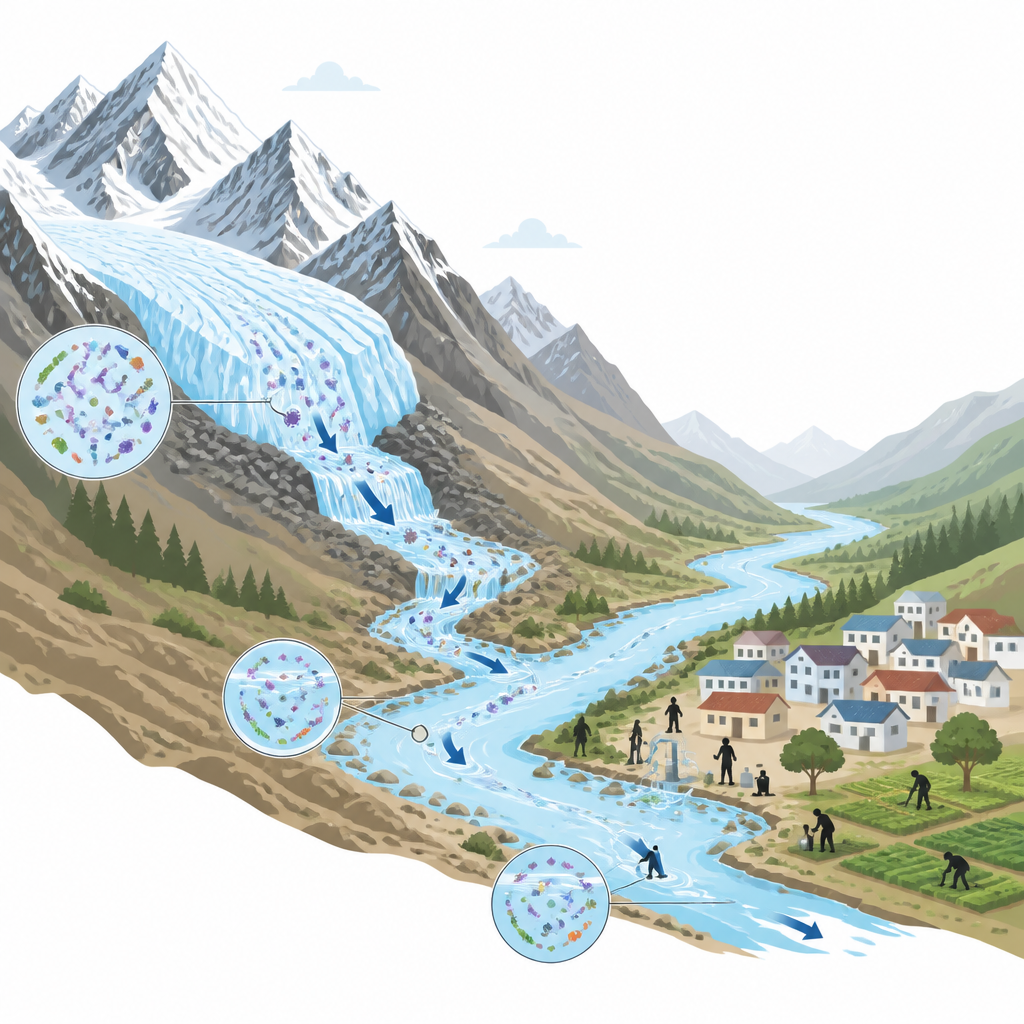
High in the Sikkim Himalaya, glaciers that look like lifeless rivers of ice actually hold bustling microscopic communities. This study explores what kinds of bacteria live frozen inside two Himalayan glaciers, what they are doing chemically, and whether they carry antibiotic resistance genes that could matter once the ice melts into rivers that supply water to people downstream.
Two Glaciers Under the Microscope
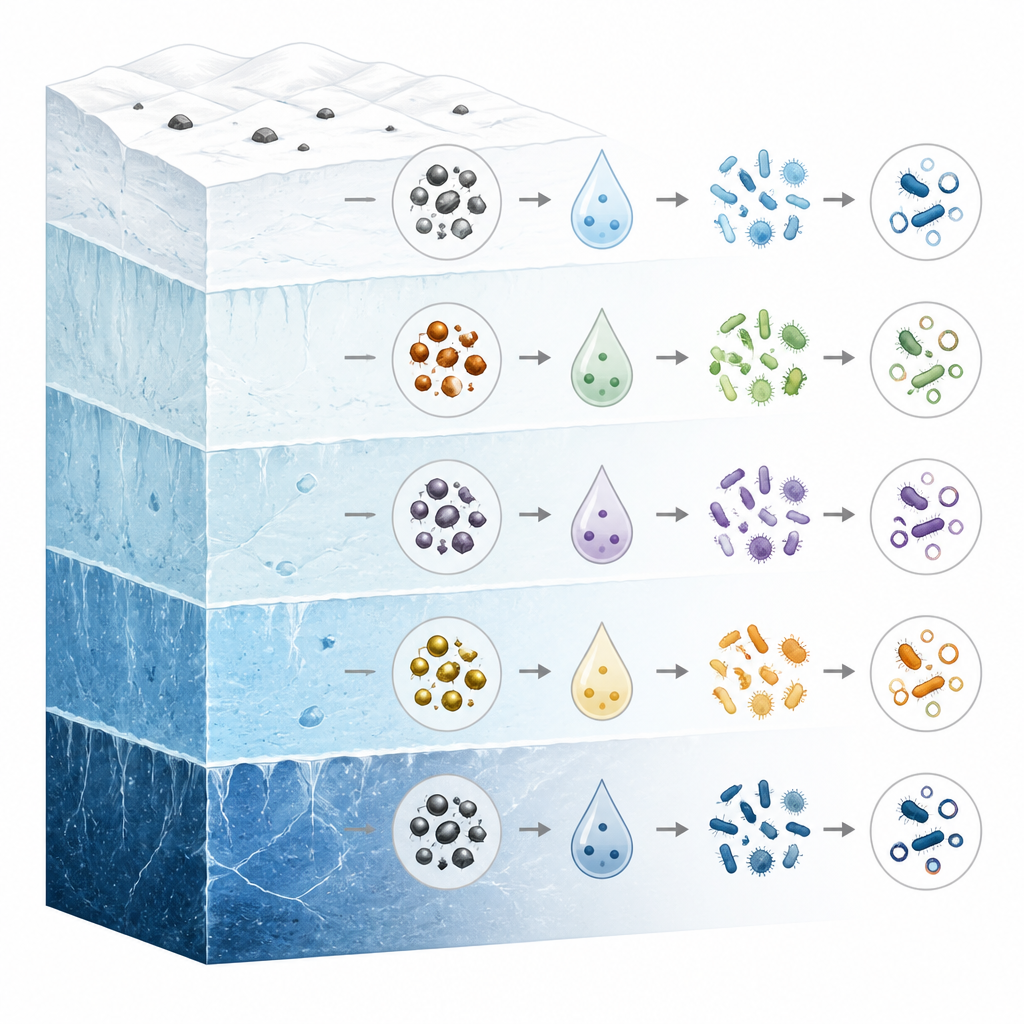
Researchers drilled ice cores from two glaciers in the Sikkim Himalaya, called Frey-Peak and Rathong. They sliced each 1.5 meter long core into upper, middle, and bottom sections and then melted the ice under sterile conditions. Using modern DNA sequencing, they cataloged the bacteria present and the genes those microbes carry. At the same time, they measured basic water chemistry such as pH (how acidic or alkaline the meltwater is), salt content, and trace amounts of metals like sodium, magnesium, calcium, potassium, and zinc.
A Crowd of Cold-Loving Microbes
The ice cores contained an unexpectedly rich variety of bacteria: 37 major groups, more than 600 genera, and over 1,500 species. Two broad groups, known as Pseudomonadota and Actinomycetota, dominated most samples, with others such as Bacillota and Bacteroidota also common. The upper and middle sections of the ice generally held more kinds and higher numbers of bacteria than the deepest layers. Frey-Peak Glacier was consistently more diverse than Rathong, which agrees with other signs that Rathong is retreating faster and has undergone stronger environmental change.
How Chemistry Shapes the Ice Community
To understand why some microbes thrive where they do, the team compared bacterial patterns with the measured chemistry. They found that pH was one of the strongest influences on which bacteria were present, with slightly acidic and slightly alkaline conditions favoring different groups. Several metals, including sodium, magnesium, potassium, calcium, and zinc, also lined up with shifts in bacterial diversity, especially in the upper and middle layers. Statistical models showed that these chemical factors mattered more than temperature differences between samples, suggesting that subtle changes in water chemistry can reshape life inside the ice.
Busy Microbial Work and Silent Resistance
By looking at the genes present, the scientists could infer what the microbes are capable of doing. Many genes were linked to breaking down and building basic ingredients of life such as amino acids, sugars, fats, and energy-carrying molecules. There were also genes involved in cycles of nitrogen and sulfur, hinting that glacier bacteria help recycle key nutrients even while frozen. Among them were species typically known for partnering with plants to fix nitrogen, which fits with the idea that retreating glaciers expose new ground where such helpers are useful. At the same time, the ice harbored a wide range of antibiotic resistance genes, especially in Frey-Peak Glacier. These genes were associated with resistance to several important drug classes, including aminoglycosides, tetracyclines, fluoroquinolones, and macrolides, and they were most strongly linked to three major bacterial groups.
What Melting Ice Could Release
The study does not claim that these genes are actively making people sick today, and the authors caution that some signals may be overestimates due to limits of current methods. Still, their results show that Himalayan glaciers store both diverse bacteria and genetic traits for antibiotic resistance and nutrient cycling. As climate change accelerates glacier melt, this frozen reservoir of microbes, resistance genes, and other contaminants can be washed into mountain rivers. For people living downstream, that means glaciers are not only indicators of a warming climate but also potential sources of new biological and public health challenges that deserve closer watch.
Citation: Tamang, S., Sherpa, M.T., Najar, I.N. et al. Metagenomic analysis of bacterial diversity, antibiotic resistance, and functional profiles in the ice core samples from two glaciers of Sikkim Himalaya. Sci Rep 16, 15482 (2026). https://doi.org/10.1038/s41598-026-40915-7
Keywords: glacier microbiome, antibiotic resistance, Himalayan glaciers, metagenomics, climate change