Clear Sky Science · en
Potassium enrichment mechanism and controlling factors in Cambrian black shale from eastern Guizhou, China
Why Rock Chemistry Matters for Our Food
Much of the world’s food depends on potassium-based fertilizers, yet the mineral sources used to make them are unevenly spread across the globe and vulnerable to geopolitical shocks. China, for example, still imports about half of the potassium it needs for agriculture. This study looks at an unconventional but enormous source of potassium locked inside ancient black shales in eastern Guizhou. By figuring out how these rocks became so rich in potassium, scientists hope to guide the search for new fertilizer resources both in China and around the world.
An Ancient Sea with Hidden Riches
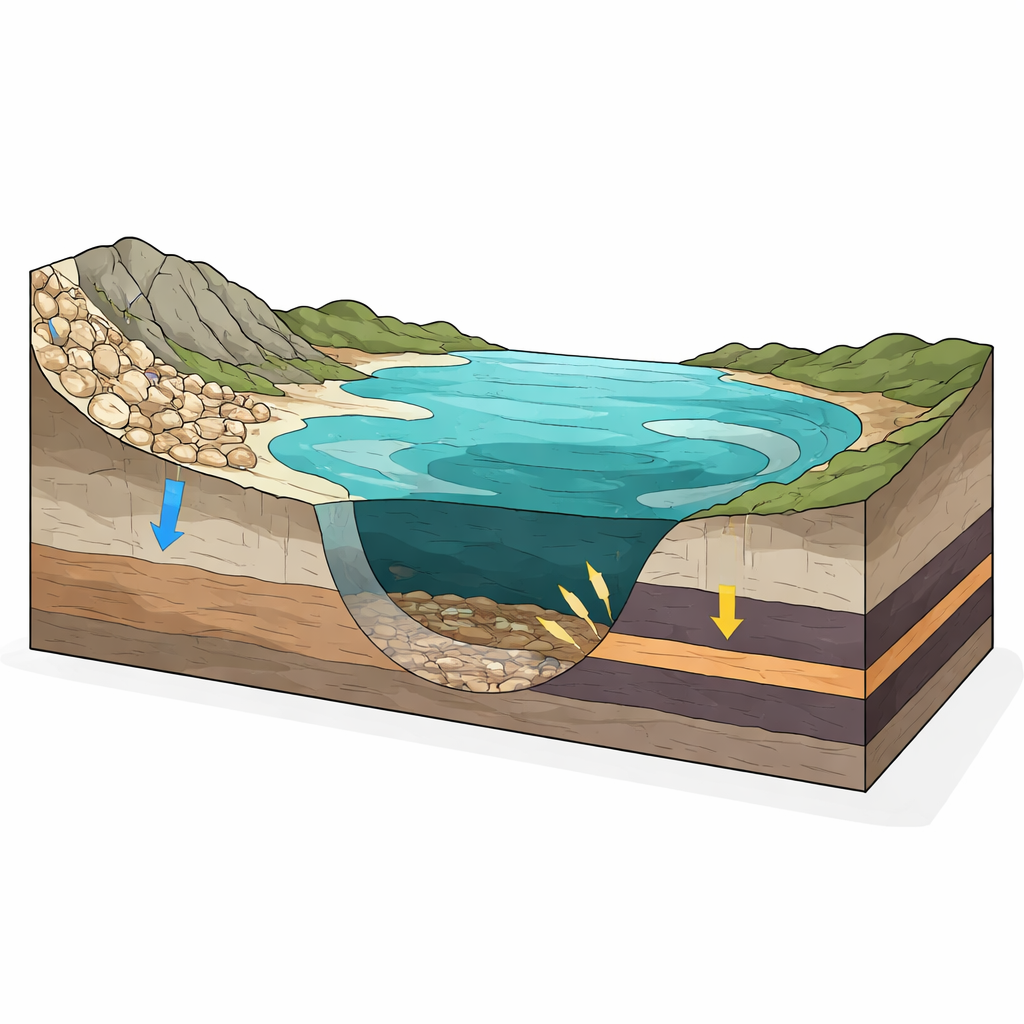
About 500 million years ago, during the Cambrian Period, eastern Guizhou lay along the edge of a shallow sea on a passive continental margin—similar in spirit to today’s quiet continental shelves. The seafloor there accumulated thick layers of dark mud, now preserved as the Aoxi Formation black shales. These shales contain remarkably high levels of potassium (8–11 percent K₂O) and form bodies tens of meters thick with total potential reserves exceeding 5 billion tons. The key question the researchers tackled was: where did all this potassium come from, and why was it preserved so efficiently in these rocks?
Source Rocks Upstream
Chemical fingerprints in the shales point back to their parent rocks on land. Ratios of elements such as aluminum, titanium, thorium, and scandium show that most of the sediment was eroded from light-colored, silica-rich igneous rocks, with smaller contributions from darker volcanic rocks. These potassium-bearing source rocks crop out in the highlands northwest of the study area. Tectonic uplift before Cambrian time exposed them to weathering, freeing grains of potassium-rich minerals that were then carried only short distances into the nearby sea. Because the journey was relatively brief and chemical weathering only moderate, many of these potassium-bearing minerals survived transport nearly intact.
A Quiet, Low-Oxygen Seafloor
Element patterns linked to oxygen conditions in seawater—especially rare earth elements, uranium, and molybdenum—reveal that the mud settled in a restricted basin where bottom waters were often starved of oxygen. Most samples record suboxic to anoxic conditions, with only brief, minor swings toward better-oxygenated states. In such quiet, poorly ventilated settings, organic matter breaks down slowly and pore waters remain closer to neutral or slightly alkaline, instead of becoming strongly acidic. That difference matters: acidic pore waters tend to dissolve and flush away potassium, while neutral to slightly alkaline conditions help preserve potassium-bearing minerals and keep dissolved potassium from escaping the sediment.
Potassium Locked into New Minerals
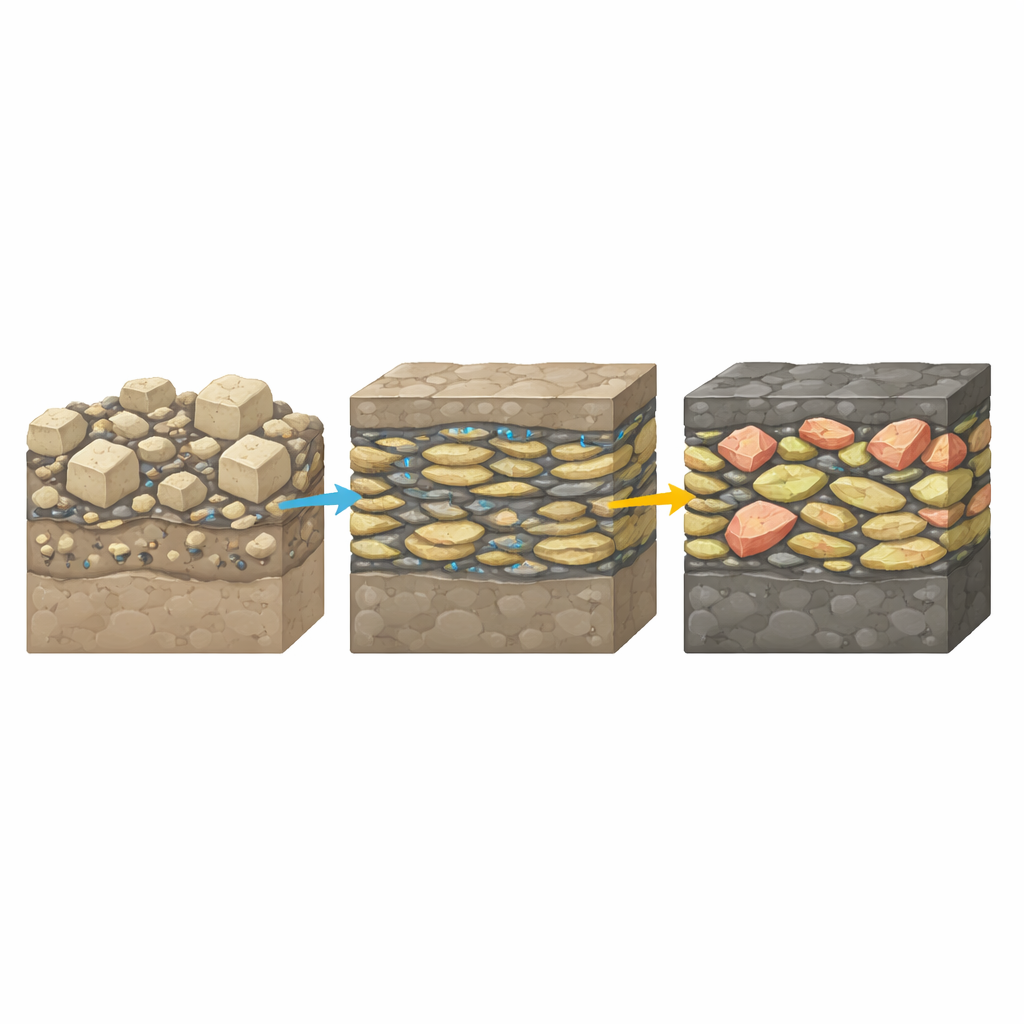
Mineral analyses show that the main hosts for potassium in these shales are K-feldspar, followed by the clay mineral illite and related mixed-layer clays. The data reveal a tight link between potassium and aluminum- and silicon-rich minerals, indicating that potassium is structurally built into their crystal frameworks rather than present as easily dissolved salt. Diagrams that track how rock chemistry changes during weathering and burial show a clear signature of “potassium metasomatism,” a process in which potassium-rich fluids circulating during burial alter existing clay minerals. In this case, potassium freed by the breakdown of earlier minerals was re-used to transform aluminous clays into illite, further concentrating potassium inside the rock. Comparisons between two studied sections (BT1 and BT2) show that the section with weaker weathering, more K-feldspar, and more strongly reducing conditions ended up significantly richer in potassium.
How These Findings Help Future Fertilizer Supplies
In simple terms, the study shows that the extraordinary potassium content of the Cambrian Aoxi black shales arose from three conditions working together: abundant potassium-bearing source rocks on land, a quiet and partially oxygen-poor marine basin that protected and trapped potassium, and later chemical alteration during burial that locked potassium into new minerals. Because the potassium is mainly bound inside insoluble minerals rather than in simple salts, it represents a different style of potash resource that will require tailored extraction technologies. Nonetheless, understanding this three-part “source–environment–alteration” recipe provides a roadmap for finding similar potassium-rich shales elsewhere, potentially easing future pressure on global fertilizer supplies and supporting long-term food security.
Citation: Fu, J., Tu, L., Zhao, S. et al. Potassium enrichment mechanism and controlling factors in Cambrian black shale from eastern Guizhou, China. Sci Rep 16, 14609 (2026). https://doi.org/10.1038/s41598-026-40901-z
Keywords: potassium resources, black shale, Cambrian geology, fertilizer minerals, sedimentary environments