Clear Sky Science · en
Predicting microbial activity potential in salt caverns based on brine chaotropicity analysis
Why salt caverns matter for clean energy
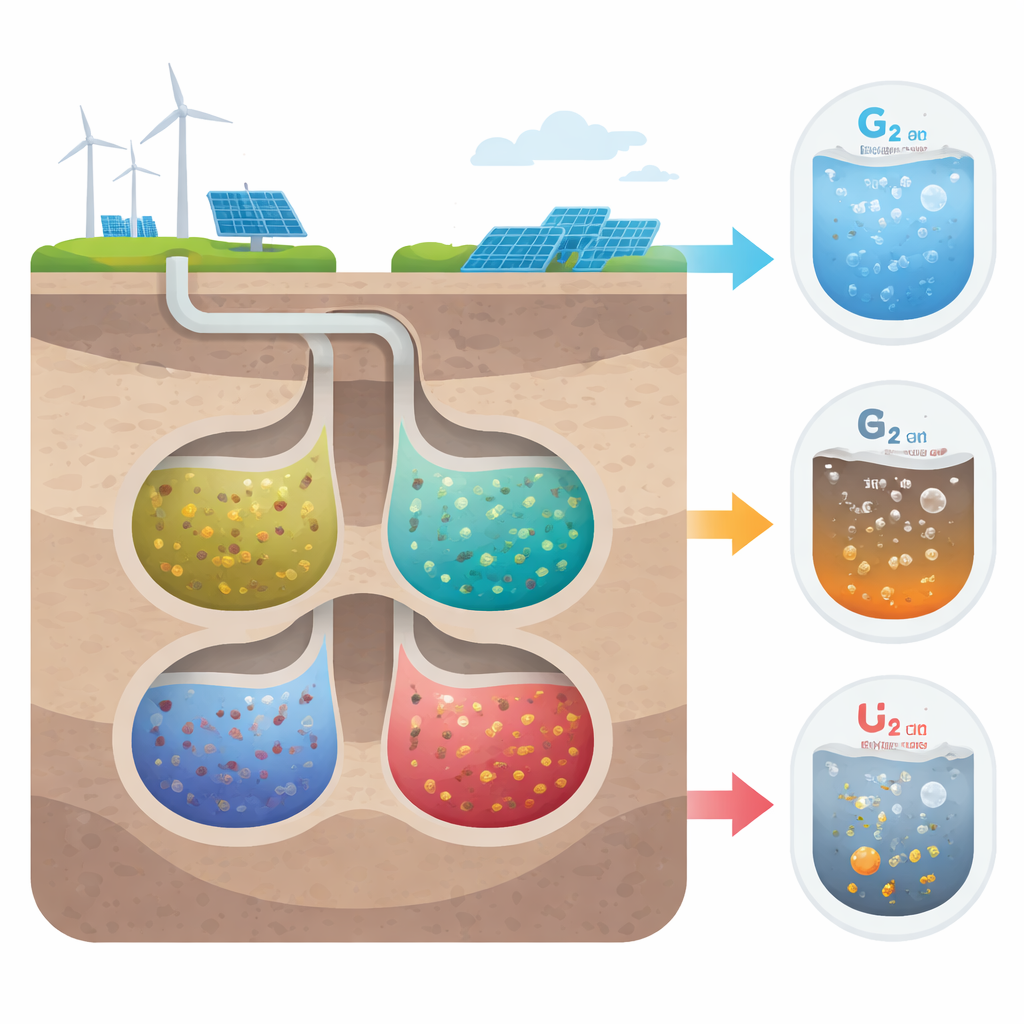
Underground salt caverns are emerging as giant, natural batteries for the hydrogen economy. These hollowed-out spaces in deep salt layers can safely hold enormous volumes of hydrogen gas under pressure. But they are not empty of life: salt-loving microbes can live in the salty water (brine) at the bottom of the caverns, potentially consuming stored hydrogen and producing toxic hydrogen sulfide gas. This study explores a new way to predict and reduce that microbial activity by tuning the chemical makeup of the brine itself.
How salty water can help or hurt microbes
Microbes do not just care about how salty their environment is; they also respond to how different salts affect the structure of water and biological molecules. Some salts make water more orderly and help proteins and cell structures stay stable; others disrupt these structures and place strong stress on cells. The authors focus on this second type of effect, called chaotropicity, which is especially strong for salts containing magnesium ions. By contrast, common table salt mainly has a stabilizing, or kosmotropic, effect. The central idea of the paper is that by measuring and predicting these opposing influences in brines, we can tell how friendly or hostile a cavern will be to microbial life.
A simple gel test turned into a precise tool
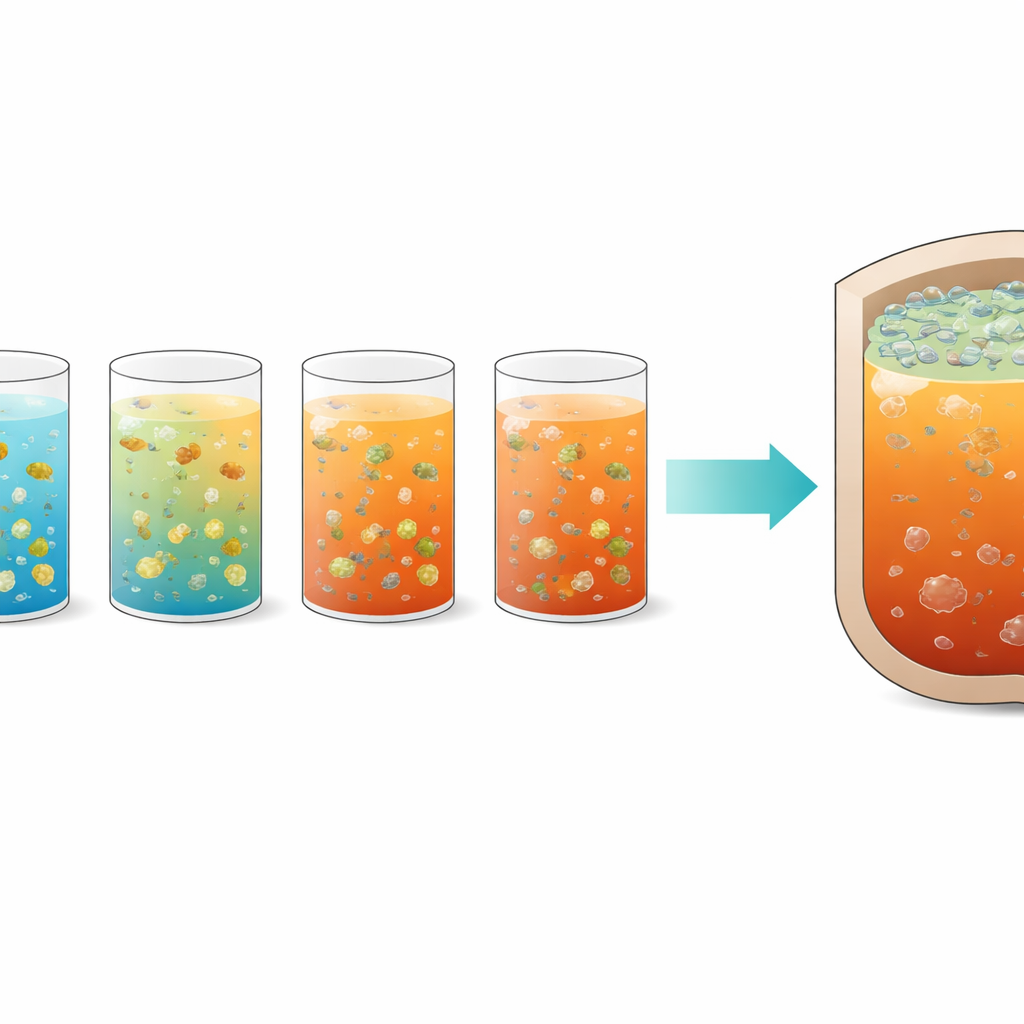
To probe how different salts affect biological structures, the team used agar, a jelly-like substance familiar from microbiology plates. Agar turns from liquid to gel at a temperature that shifts when salts are present. Salts that stabilize structures raise the gel point; disruptive salts lower it. Instead of judging this by eye, the researchers used a sensitive rheometer, an instrument that measures how a material flows and stiffens as it cools. Tracking changes in viscosity allowed them to pinpoint the exact temperature where the agar set, turning an old qualitative test into a precise, reproducible method. They first tested individual salts typically found in natural brines, then mixtures designed to mimic real cavern compositions.
The key role of magnesium-rich brines
By systematically varying both the overall salt content and the fraction of magnesium chloride in mixtures with sodium chloride, the researchers built a predictive model for when a brine behaves in a stabilizing or disruptive way. They found that chaotropic conditions arise only when the total ionic strength—the combined effect of all dissolved ions—is high and magnesium makes up a large share. In practical terms, a solution becomes clearly hostile to microbial structures when ionic strength exceeds about 3 mol per liter with more than 55 percent from magnesium chloride, or when it exceeds about 6 mol per liter with at least 40 percent from magnesium chloride. Below these thresholds, even very salty brines tend to remain supportive of life.
Real caverns put to the test
The team then applied their method to brines from four operating or prospective salt caverns in Europe. Chemical analyses showed that three caverns were dominated by sodium salts, while one contained much more magnesium. When the researchers measured or extrapolated agar gel temperatures for these brines, the three sodium-rich caverns behaved as stabilizing solutions, while the magnesium-rich cavern showed strong chaotropic behavior. Microbiological tests told the same story: the three kosmotropic caverns contained far more bacterial cells and supported fermentation and hydrogen-consuming activity in the lab, sometimes producing hydrogen sulfide. The chaotropic cavern, by contrast, had extremely low cell numbers and showed no detectable microbial activity even after more than a year of incubation.
Looking beyond one site and toward future use
To check whether their approach applies more broadly, the authors reinterpreted published data from other hypersaline environments, such as deep mine brines and extreme lakes in the Danakil Depression. Using ion compositions from those studies, they predicted agar gel temperatures and compared them with reported microbial activity. In most cases, their model correctly distinguished between brines that supported life and those that did not, emphasizing that brine composition and chaotropicity, not salinity alone, define the true limits for microbial survival. This suggests that ion analysis and the new gel-based metric can serve as a powerful screening tool across many extreme settings.
Turning brine chemistry into a safety lever
For a layperson, the key takeaway is that not all salty water is the same from a microbe’s point of view. By deliberately encouraging “disruptive” magnesium-rich chemistry in the brine at the bottom of a salt cavern, operators may be able to create conditions that strongly discourage microbial life, protecting both the stored hydrogen and the integrity of the facility. The authors propose using their method during site selection, cavern design, and even as a possible treatment strategy by adding suitable salts. While more biological work is needed to understand how microbes might adapt, the study offers a new, practical lever: tuning the hidden chemistry of brines to keep unwanted microscopic guests at bay in the future hydrogen economy.
Citation: Kedir, A., Mayers, K., Beeder, J. et al. Predicting microbial activity potential in salt caverns based on brine chaotropicity analysis. Sci Rep 16, 10235 (2026). https://doi.org/10.1038/s41598-026-40866-z
Keywords: hydrogen storage, salt caverns, microbial activity, brine chemistry, extreme environments