Clear Sky Science · en
Association of antibiotic type and timing with sepsis mortality using target trial emulation
Why this matters for patients with severe infections
Sepsis—when an infection triggers a dangerous, body-wide reaction—is one of the leading causes of death in hospitals. People rushed to intensive care units (ICUs) with sepsis usually receive powerful antibiotics within hours, but doctors still debate which drug to start first and exactly how fast it must be given. This study uses real-world data from thousands of ICU patients to ask two practical questions: does the initial type of antibiotic matter, and does giving it a bit earlier or later within the first two days change the chances of survival?
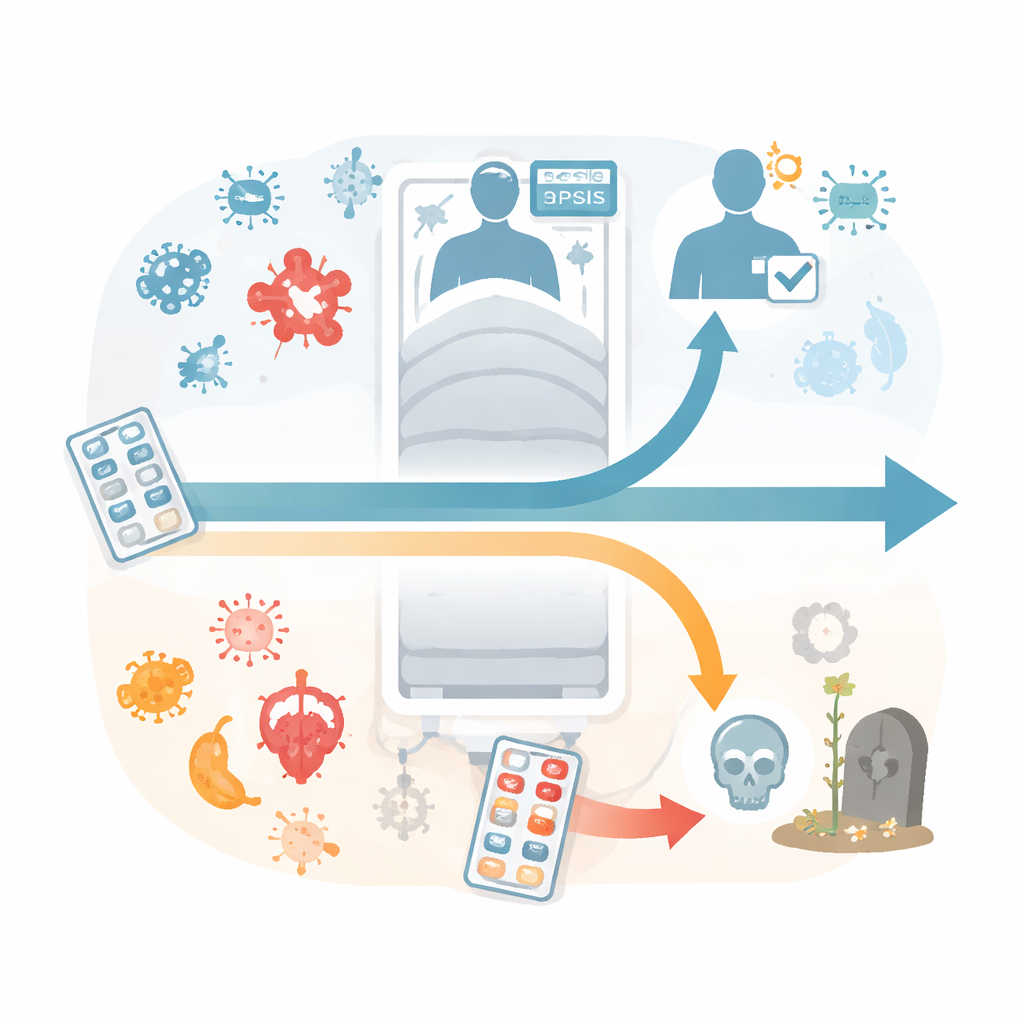
Looking at sepsis care in real hospital life
Instead of running a traditional randomized clinical trial—which would be ethically difficult when delaying treatment might be harmful—the researchers turned to a large public ICU database called MIMIC-IV. It contains detailed records of patients treated at a major U.S. hospital between 2008 and 2019. The team focused on adults newly diagnosed with sepsis who had not received antibiotics just before that diagnosis. They compared two broad groups of first-line drugs: beta-lactam antibiotics (a large family that includes many common hospital antibiotics) and glycopeptides such as vancomycin, often used when doctors worry about resistant bacteria.
Recreating a trial from past records
Because patients in the real world are not randomly assigned to antibiotics, sicker people may be more likely to receive one type over another. To work around this, the authors used a modern method called “target trial emulation.” In simplified terms, they created copies of each patient’s record, assigned each copy to a different hypothetical treatment plan, and then mathematically adjusted the data so that the comparison between drug types resembled what might have happened in a randomized trial. They also followed patients over time to see whether they survived their hospital stay and up to 60 days.
What the study found about drug choice
Among 3,669 eligible ICU patients with sepsis, nearly all received antibiotics within 48 hours of diagnosis. After careful weighting to balance out differences such as age, other illnesses, and how sick the patients were on arrival, the researchers found a consistent pattern: those who started on beta-lactam antibiotics had a lower risk of dying in the hospital than those who started on glycopeptides. The estimated reduction in risk was about 12 percent for in-hospital death overall, with similar benefits seen at 7, 14, and 60 days. These results stayed robust in multiple sensitivity checks and across subgroups divided by age, sex, and severity scores.
What the study found about timing
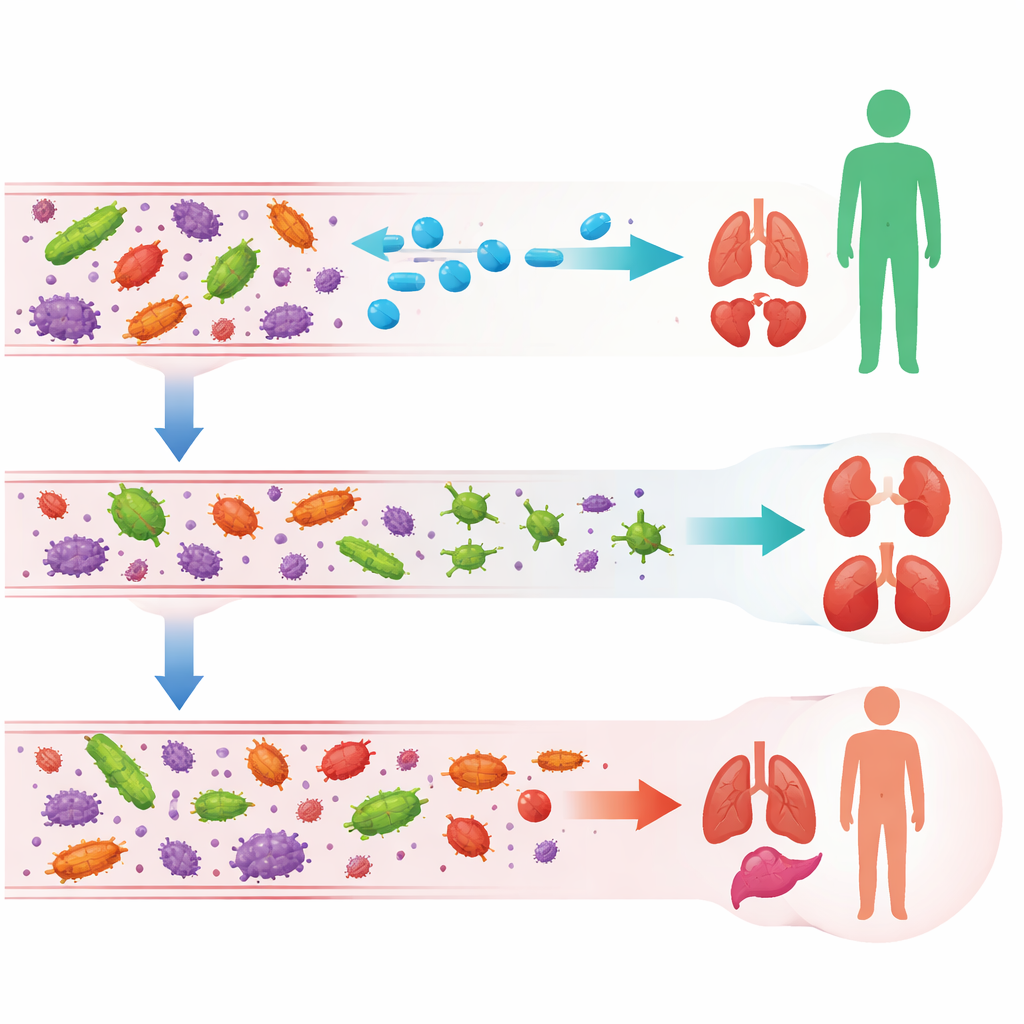
The team also examined whether giving antibiotics very early, within the first hour of diagnosis, was better than starting them a bit later—but still within a 48-hour window. They divided time into short blocks, from the first hour up to two full days, and repeated the target-trial style analysis for each interval. Surprisingly, within this time frame, they did not find clear evidence that starting either beta-lactams or glycopeptides earlier made a meaningful difference in survival. In other words, for this mainly moderately ill ICU population, the specific hour within the first two days when antibiotics were started did not seem to be the key determinant of outcome.
Balancing speed, strength, and safety in treatment
The authors place their findings in the wider debate about sepsis care. Current guidelines often urge clinicians to give broad-spectrum antibiotics as quickly as possible, sometimes within an hour, to avoid missing a chance to stop a rapidly worsening infection. But very aggressive, early treatment also has downsides: it can damage the kidneys, disrupt the gut’s helpful bacteria, drive antibiotic resistance and, in some cases, expose people without true bacterial infections to unnecessary drugs. The study’s results support favoring beta-lactam–based regimens as the first choice for most ICU sepsis patients, while suggesting that a short, careful evaluation period before starting antibiotics may be reasonable in many cases without shock, rather than an automatic rush to treat within minutes.
What this means for patients and clinicians
For lay readers, the take-home message is that in this large real-world analysis, the kind of antibiotic given first mattered more than the exact minute it was started, as long as treatment began within about two days of diagnosis. Patients who initially received beta-lactams tended to live longer than those started on glycopeptides, even after accounting for how sick they were. At the same time, the study does not argue for dangerous delays, especially in people with life-threatening shock. Instead, it suggests that thoughtful antibiotic choice—favoring effective, somewhat narrower drugs when appropriate—may improve survival and help curb overuse, while leaving room for rapid but not rushed decision-making in early sepsis care.
Citation: Li, J., Zhao, M. & He, Q. Association of antibiotic type and timing with sepsis mortality using target trial emulation. Sci Rep 16, 10447 (2026). https://doi.org/10.1038/s41598-026-40860-5
Keywords: sepsis, antibiotics, intensive care, beta-lactams, treatment timing