Clear Sky Science · en
The role of BLZF1 in lung adenocarcinoma and its value as a diagnostic and prognostic biomarker
Why this matters for lung cancer patients
Lung adenocarcinoma is the most common form of lung cancer and is often discovered only after it has quietly advanced, when treatment is harder and survival is poorer. Doctors rely on biological "markers" in tumors and blood tests to detect disease and estimate how patients will do, but current markers are far from perfect. This study focuses on a lesser‑known protein called BLZF1 and asks a practical question: could measuring BLZF1 help doctors diagnose lung adenocarcinoma earlier and better predict which patients are at highest risk of relapse and death?
A closer look at a little‑known protein
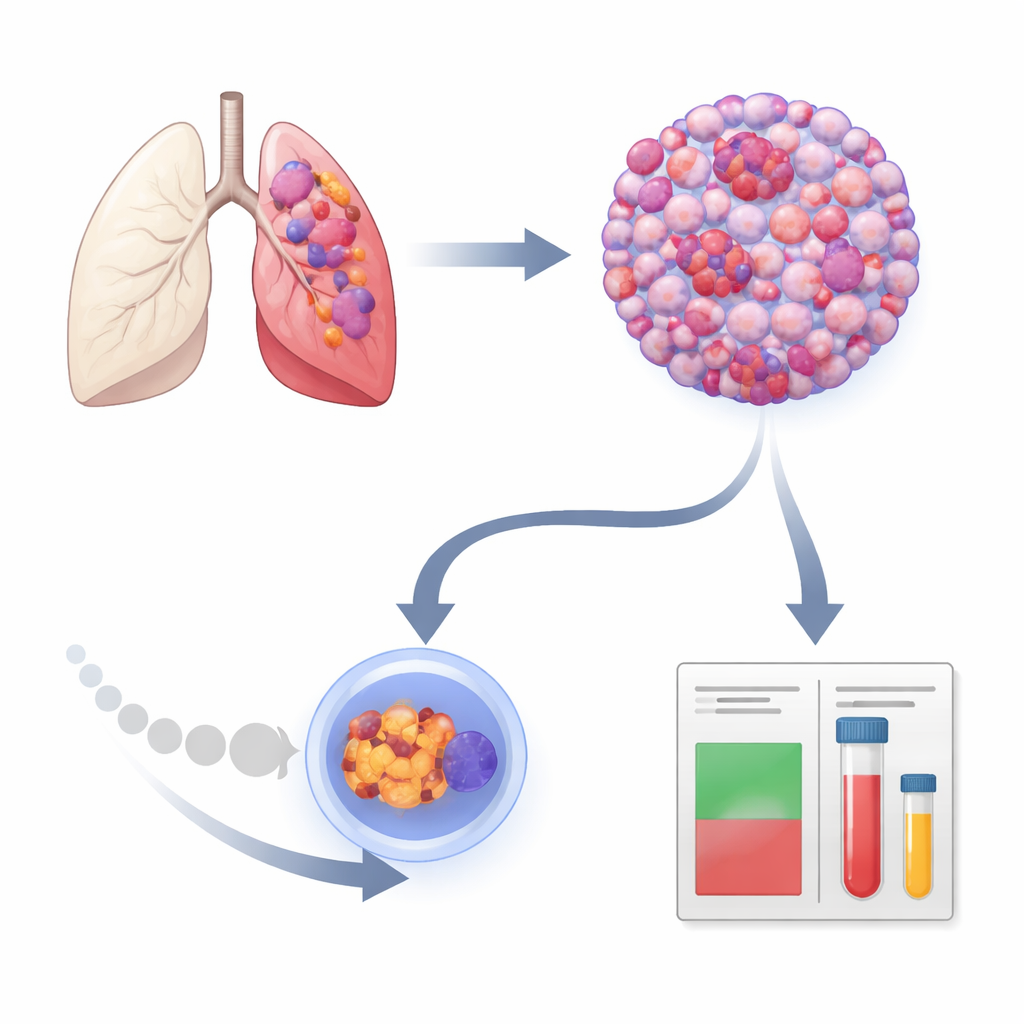
BLZF1 is a protein normally involved in how cells handle stress and manage the traffic of other molecules inside them. Earlier work hinted that BLZF1 might be linked to several cancers, but its role in lung adenocarcinoma was unclear. The researchers combined two major sources of information: genetic data from 505 patients in The Cancer Genome Atlas and tumor samples from 60 patients treated at Yunnan Cancer Hospital. By comparing cancer tissue with nearby non‑cancerous lung tissue, they found that both the genetic message (mRNA) and actual protein levels of BLZF1 were consistently higher in tumors.
Testing BLZF1 as a cancer signal
To see whether this difference could be clinically useful, the team treated BLZF1 levels as a diagnostic test that separates cancerous from non‑cancerous tissue. Using a standard statistical tool called a receiver operating characteristic curve, they calculated how well BLZF1 distinguished the two. In the large public dataset, BLZF1 showed moderate accuracy, while in the hospital cohort it came close to perfectly distinguishing tumor from nearby normal tissue, even after checks to avoid overfitting. Patients whose tumors had higher BLZF1 tended to have cancers that had grown further into the lung, had spread to lymph nodes, or had leftover tumor after surgery—features that usually signal more aggressive disease.
Linking BLZF1 to patient outcomes
The investigators then asked whether BLZF1 levels track with how long patients live and how long they remain free of a returning tumor. Dividing patients into high and low BLZF1 groups, they found that those with higher levels had shorter overall survival and shorter periods without recurrence. This held true even when accounting for other important clinical factors such as tumor stage and spread. In other words, BLZF1 did not just mirror how advanced the cancer already was; it added its own prognostic information, marking patients at greater risk of relapse and death.
Uncovering how BLZF1 drives tumor behavior
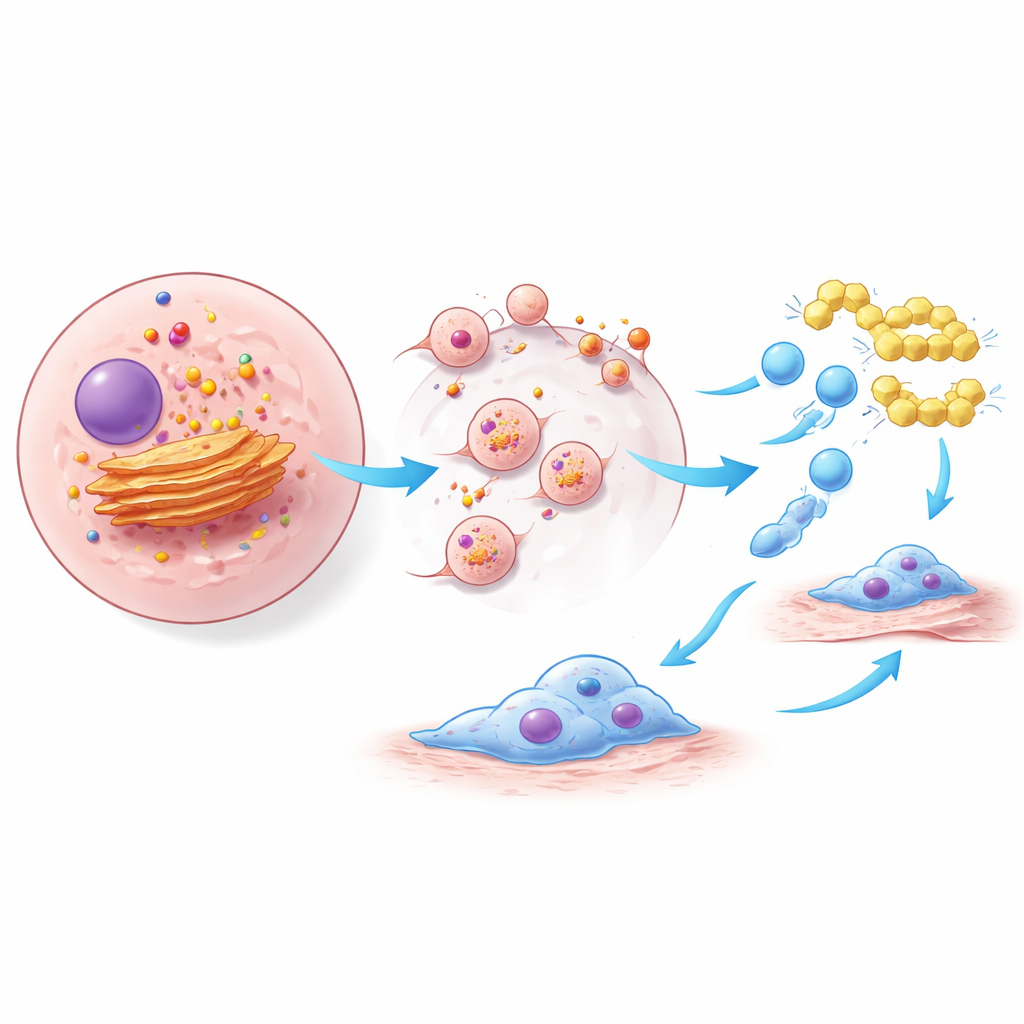
To understand what BLZF1 might be doing inside cancer cells, the team used large‑scale gene analysis and protein‑interaction databases. BLZF1 was tightly connected to genes that control the Golgi apparatus, a cellular hub that packages and ships proteins, and to the tiny transport bubbles that shuttle cargo to and from the cell surface. The same analyses pointed strongly toward energy pathways, especially glycolysis—the way cells break down sugar to fuel growth. BLZF1 levels were positively linked with many key glycolysis genes, and lung cancer cells with high BLZF1 released more lactate, the end‑product of this process.
What happens when BLZF1 is turned down
The authors went on to test BLZF1 directly in lung adenocarcinoma cells grown in the lab. In one cell line that naturally produced a lot of BLZF1, they used small interference molecules to dial the protein down. When BLZF1 was reduced, cancer cells grew more slowly, formed fewer colonies, and were less able to move and invade through a simulated tissue barrier—behaviors closely tied to tumor spread. At the same time, these cells produced less lactate, consistent with a drop in glycolytic activity. Together, these experiments suggest that BLZF1 helps lung cancer cells grow, migrate, and invade by reshaping their internal transport systems and ramping up sugar burning.
What this could mean for future care
This work positions BLZF1 as a promising new marker and potential driver of lung adenocarcinoma. For a general reader, the takeaway is that high BLZF1 in tumor tissue appears to signal more aggressive cancer and a higher chance of relapse, while dialing BLZF1 down weakens tumor‑like behavior in cells. Although more studies are needed—in additional cell lines, animal models, and non‑invasive blood tests—BLZF1 could one day help doctors better detect lung adenocarcinoma, refine prognosis, and perhaps guide treatments that target the altered sugar metabolism on which these tumor cells rely.
Citation: Zhou, C., Hu, Z., Yu, T. et al. The role of BLZF1 in lung adenocarcinoma and its value as a diagnostic and prognostic biomarker. Sci Rep 16, 13325 (2026). https://doi.org/10.1038/s41598-026-40856-1
Keywords: lung adenocarcinoma, biomarkers, BLZF1, cancer metabolism, glycolysis