Clear Sky Science · en
sB7-H3 as a prognostic biomarker in osteosarcoma: insights into clinical outcomes
Why a blood test for bone cancer matters
Osteosarcoma is a rare but aggressive bone cancer that mostly strikes children and teenagers. Today, doctors still struggle to predict who will respond well to chemotherapy and who is at high risk of relapse. This study explores whether a simple blood test, focused on a molecule called sB7-H3, could help forecast how patients will do and track how well their treatment is working over time.
A closer look at a stubborn bone cancer
Osteosarcoma often grows around the knee or other large bones and has a strong tendency to spread, especially to the lungs. Modern multi-drug chemotherapy has improved survival, but outcomes have barely changed in decades, particularly for patients who already have metastases when they are diagnosed. Doctors currently rely on imaging scans and on examining the removed tumor after months of treatment to judge how well chemotherapy worked. These methods are either slow, imperfect, or both, and there is still no widely used blood marker that can reliably predict prognosis or treatment response in this disease.
A cancer-linked molecule in blood and tumor
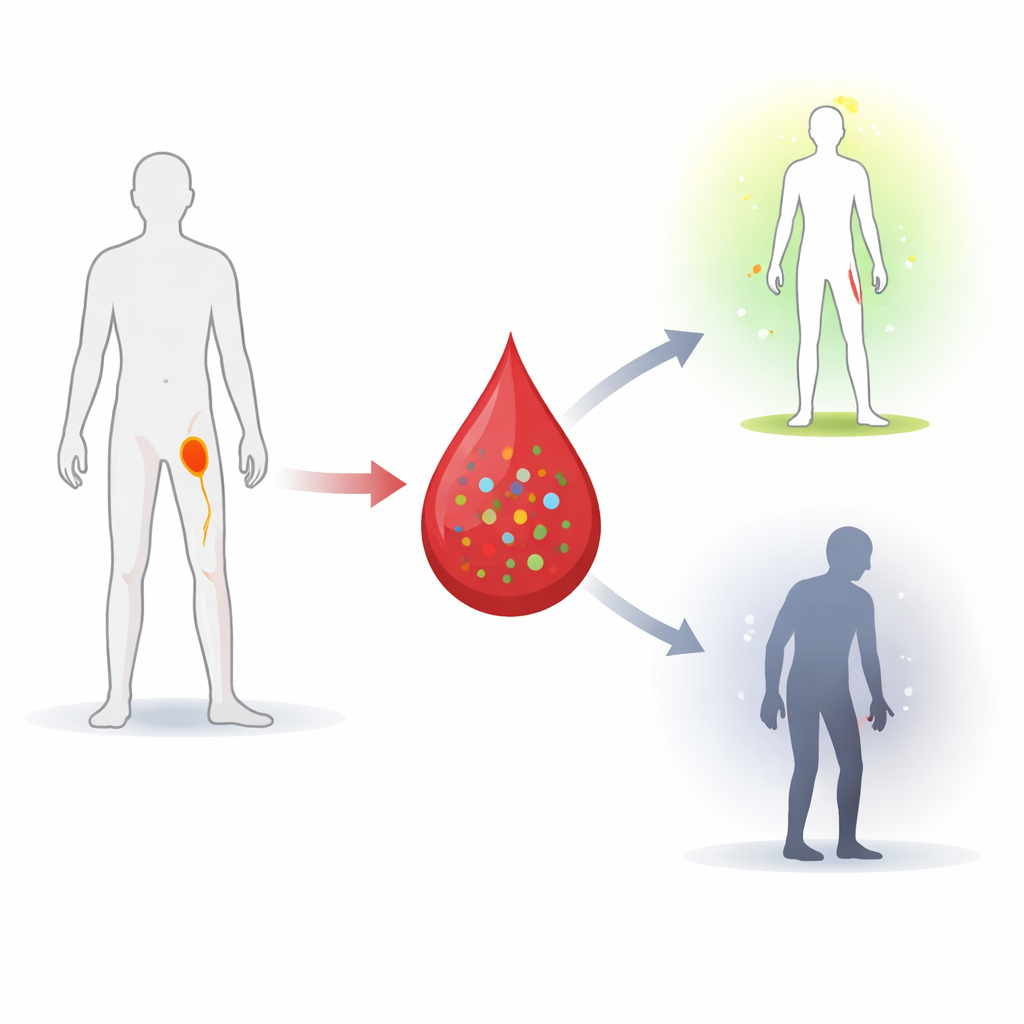
B7-H3 is a protein found at high levels on the surface of many cancer cells, including osteosarcoma. It also exists in a soluble form, sB7-H3, which circulates in the bloodstream. The researchers followed 100 newly diagnosed osteosarcoma patients at a single center. They measured sB7-H3 in blood before and after initial chemotherapy and examined B7-H3 levels in tumor samples removed during surgery. They then compared these measurements with how patients responded to chemotherapy, whether their tumors progressed, and how long they remained free of major events such as relapse or death.
What tumor tissue and blood levels reveal
Within the tumor itself, higher B7-H3 expression was clearly bad news. Patients whose tumors had strong B7-H3 staining were more likely to respond poorly to chemotherapy and had shorter event-free survival. Surprisingly, the amount of B7-H3 in tumor tissue did not match the level of sB7-H3 found in blood, suggesting that the soluble form reflects more than just what is happening in the cancer cells. Yet patients with osteosarcoma still had higher sB7-H3 in their blood than healthy volunteers, confirming that the marker is related to disease.
A counterintuitive but useful blood signal
The most striking finding was that higher baseline sB7-H3 in blood predicted better outcomes, not worse. Patients with levels above a specific cutoff at diagnosis tended to stay free of progression longer and were more likely to have extensive tumor cell death in their surgical specimens, indicating a good response to chemotherapy. When sB7-H3 was combined with two other routine blood measures—lactate dehydrogenase (LDH) and the presence or absence of metastases—the team built a risk score that separated patients into high- and low-risk groups with good accuracy over time.
Watching the marker change during treatment
Beyond the starting value, how sB7-H3 changed during chemotherapy also carried important information. Patients whose sB7-H3 levels rose sharply were more likely to have tumors that progressed and to show poor killing of cancer cells in the removed tumor. In contrast, patients with stable or smaller changes in sB7-H3 were more likely to have good responses. In other words, a high level at the beginning was a favorable sign, but a large jump during treatment signaled trouble ahead, hinting at complex interactions between the cancer and the immune system.
What this could mean for patients and doctors
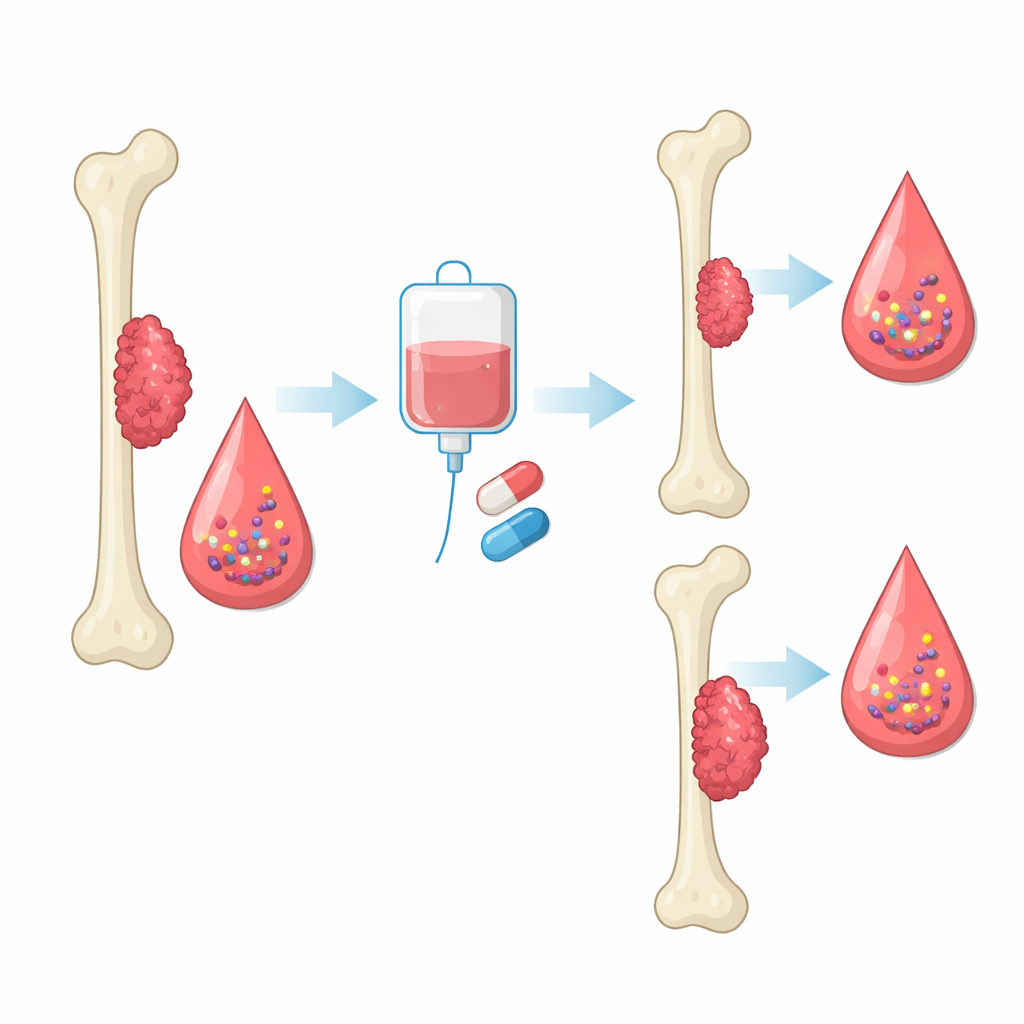
For families facing osteosarcoma, these findings suggest that a relatively simple blood test could help doctors gauge risk at diagnosis and monitor whether chemotherapy is working, long before scans or surgery give a final answer. While the exact biological reasons for the puzzling behavior of sB7-H3 are still being worked out, the study shows that both its starting level and its change over time are linked to how patients fare. With further validation in larger groups, sB7-H3 could become part of an everyday blood panel that helps personalize treatment and identify those who need closer follow-up or new therapeutic strategies.
Citation: Zhao, Y., Sun, K., Yu, Y. et al. sB7-H3 as a prognostic biomarker in osteosarcoma: insights into clinical outcomes. Sci Rep 16, 10169 (2026). https://doi.org/10.1038/s41598-026-40855-2
Keywords: osteosarcoma, blood biomarker, B7-H3, chemotherapy response, cancer prognosis