Clear Sky Science · en
Candidate blood biomarkers linked with feed intake efficiency and weight gain in sheep
Why Feed-Efficient Sheep Matter
For sheep farmers, feed is the largest bill they pay, often swallowing up more than half of production costs. If some animals can grow just as fast while eating less, that means lower expenses, less waste, and a smaller environmental footprint. This study explores whether a simple blood test could help identify those naturally "thrifty" sheep early in life, so they can be favored in breeding and management decisions.
Looking for Clues in the Blood
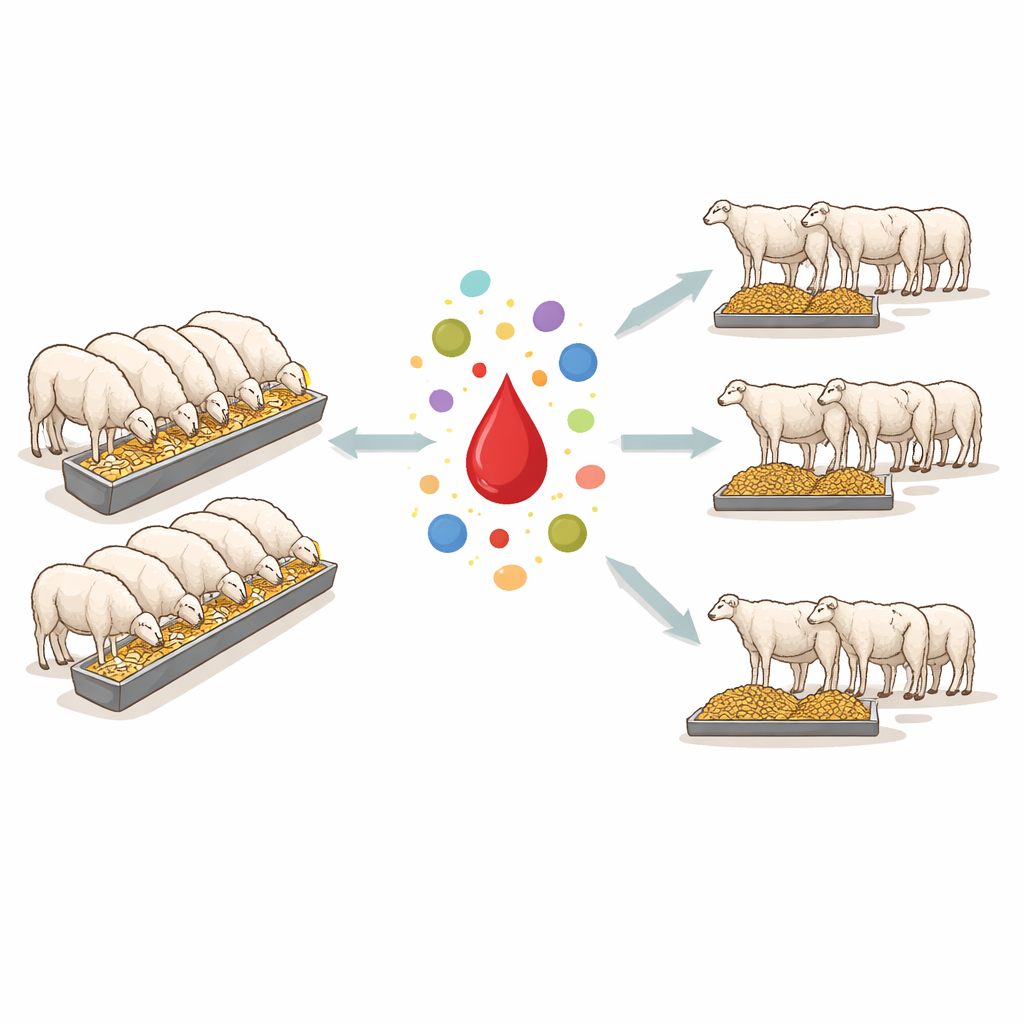
The researchers followed 80 young ewe lambs of a single breed in a controlled feedlot setting. Over 64 days, they recorded exactly how much each lamb ate and how quickly it gained weight, then used these data to calculate a measure called residual intake and gain (RIG). RIG effectively asks: given an animal’s size and growth, is it eating more or less than expected? Lambs that grew well while eating less feed were labeled feed-efficient, and those that needed more feed for similar growth were labeled feed-inefficient. From these animals, the team collected blood at three stages of the trial—at the start, after four weeks, and at the end—and used a sensitive chemical analysis technique to profile more than a hundred small molecules circulating in their serum.
Chemical Signatures of Thrifty Animals
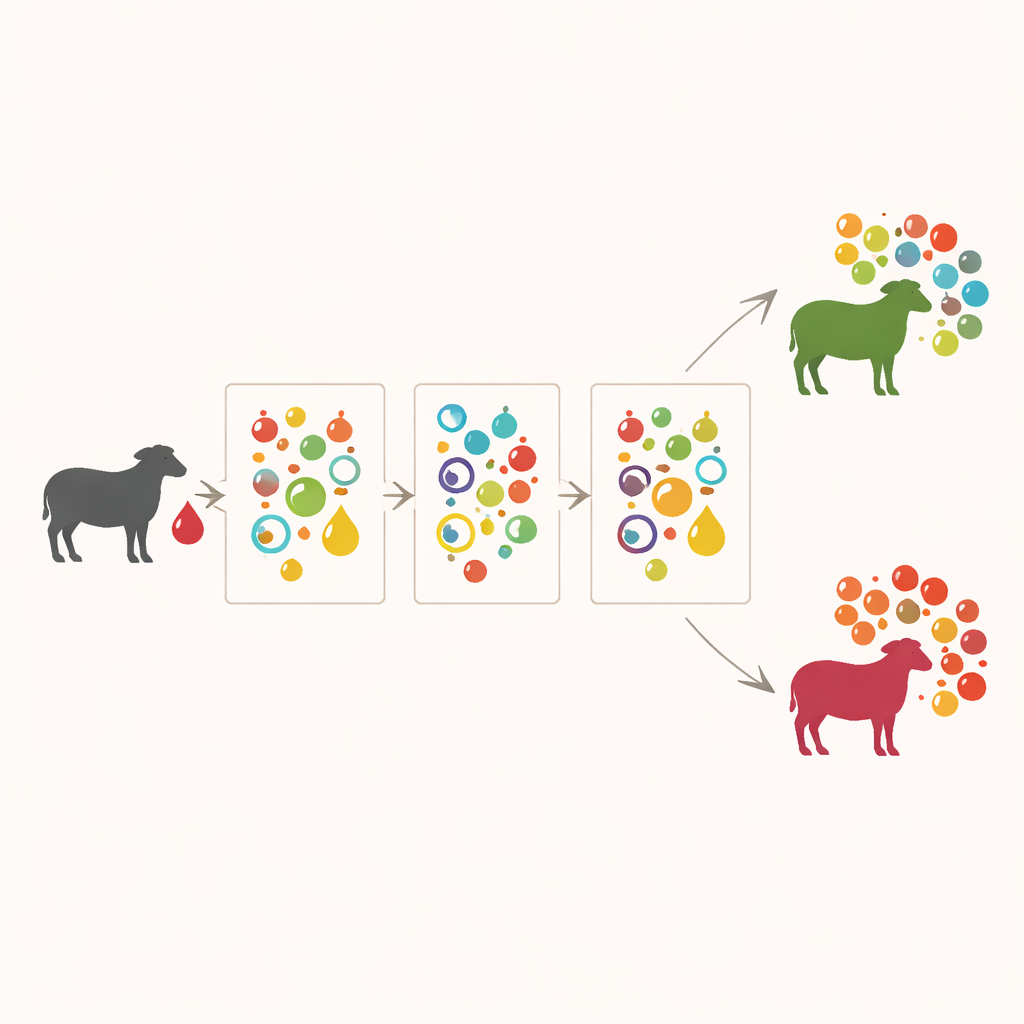
The blood profiles revealed distinct chemical fingerprints that separated efficient and inefficient lambs. Early in the trial, efficient animals tended to have higher levels of substances linked to the cell’s core energy engine, such as citric acid and certain related amino acids. As time went on, differences shifted toward fats and fat-like molecules that form cell membranes and help shuttle energy around the body. Efficient lambs generally showed patterns suggesting smoother handling of fats and better use of energy, while inefficient lambs had more signs of incomplete fat burning and possible metabolic strain. These patterns remained visible across all three sampling days, hinting that they reflect underlying biology rather than momentary fluctuations.
Promising Biomarkers for a Simple Test
To turn these chemical differences into something practical, the team looked for small panels of blood molecules that could reliably tell efficient from inefficient lambs. Using statistical models similar to those applied in medical diagnostics, they found three-molecule combinations that classified animals with good accuracy at each time point. For example, a trio involving citric acid and two fat-related molecules at the beginning of the trial could distinguish the two groups more than 80% of the time. Later in the feeding period, specific lipid molecules provided similarly solid discrimination. Although these panels were tested in a relatively small, uniform group of lambs, they show that a handful of blood markers might one day stand in for long and costly feed trials.
What the Pathways Reveal
When the team mapped these marker molecules onto broader biological pathways, two themes emerged again and again: how cells process core energy fuels, and how they manage complex fats in membranes and signaling. Pathways involving glycerophospholipids and arachidonic acid—both families of fat-like molecules—were consistently more active in efficient animals. Inefficient lambs, by contrast, tended to accumulate certain transport forms of fats that can signal bottlenecks in energy conversion. The study also uncovered several blood molecules never before reported in sheep, expanding the reference catalog that future researchers can draw on when linking diet, genetics, and metabolism in livestock.
What This Means for Farmers and the Future
In simple terms, this work suggests that some lambs are biologically wired to squeeze more growth out of each mouthful of feed, and that this difference leaves a detectable trace in their blood. The authors propose that, with further validation in more breeds and real-world farms, blood-based metabolite tests could complement traditional records of feed intake and weight gain. That could allow farmers to pick breeding animals for better feed efficiency earlier and with less investment, lowering costs and reducing the environmental impact of sheep production. While more research is needed before such tests become routine, this study provides a clear first step toward using blood chemistry as a shortcut to identify the best "feed converters" in the flock.
Citation: Osonowo, O., Goldansaz, S.A., Lei, Y. et al. Candidate blood biomarkers linked with feed intake efficiency and weight gain in sheep. Sci Rep 16, 12329 (2026). https://doi.org/10.1038/s41598-026-40850-7
Keywords: sheep feed efficiency, blood biomarkers, metabolomics, livestock genetics, ewe lamb growth