Clear Sky Science · en
Genome-wide SNP analysis reveals genetic diversity and structure of wild and cultivated olives (Olea europaea L.) in Oman
Why olives in the desert matter
Olive trees are icons of the Mediterranean, but they are also pushing into new frontiers, including the hot, dry mountains of Oman on the Arabian Peninsula. In such harsh landscapes, only the hardiest trees survive, and their hidden genetic differences may hold clues to future-proofing this ancient crop against heat, drought, and other stresses. This study uses modern DNA tools to explore how wild olives growing naturally in Oman compare with the commercial varieties imported from Europe and now cultivated in Omani orchards.
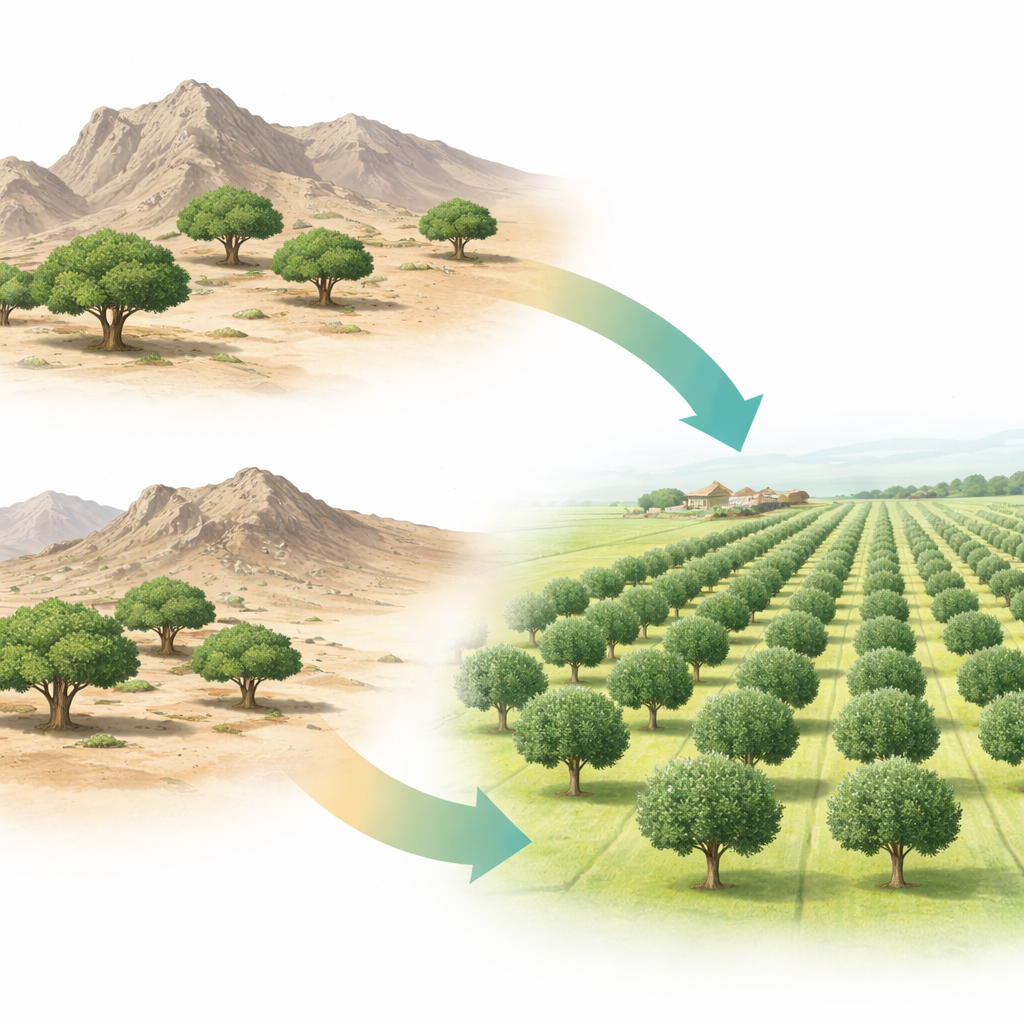
Old trees in a new land
Although olives have been grown for more than 6000 years in the Mediterranean, Omani groves are recent arrivals. Farmers in the cool, high-altitude terraces of northern Oman now test well-known European varieties for oil production, while native wild olives cling to rocky slopes in both the northern Hajar and southern Dhofar mountains. These wild stands are not planted by people; they reproduce on their own and endure intense sun, limited water, and fragmented habitats. Because they have faced such tough conditions for generations, scientists suspect that they may carry unique genetic features that could help improve cultivated olives worldwide.
Reading the olive genome
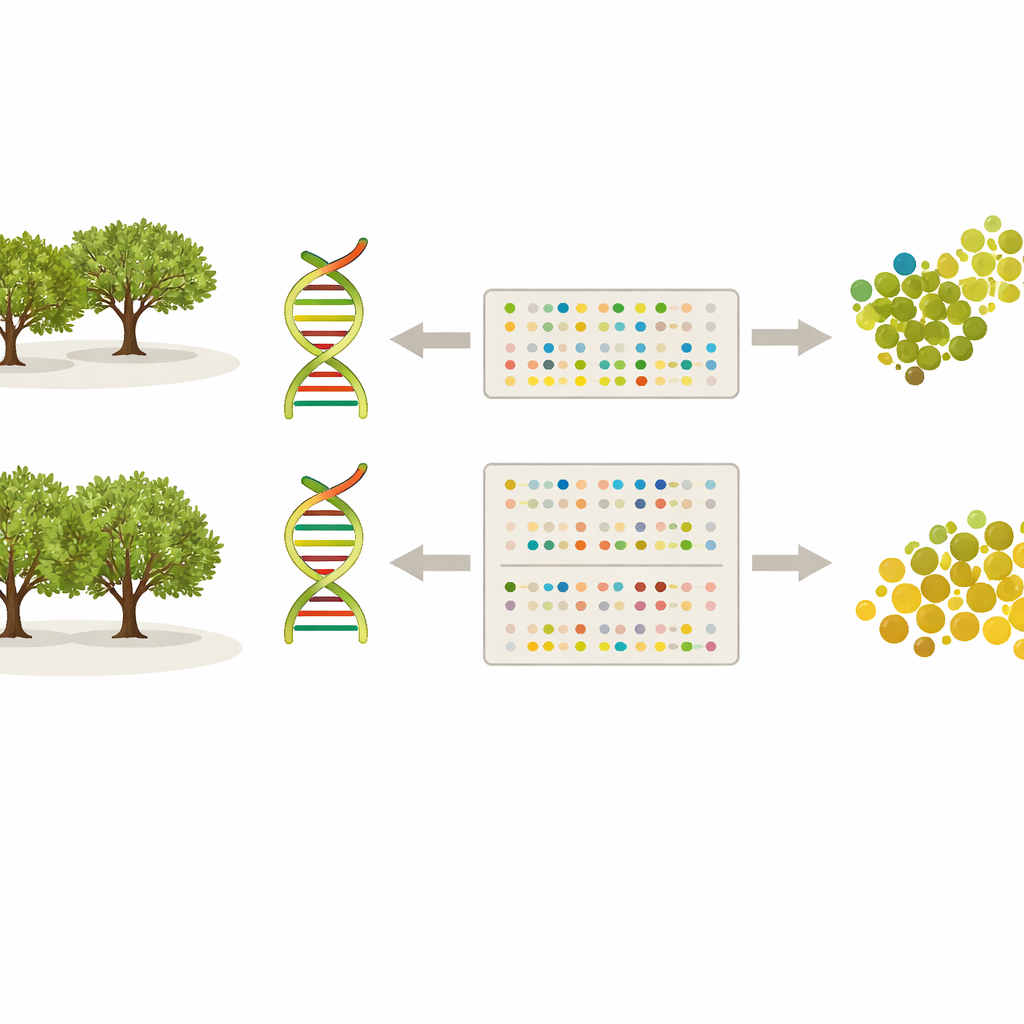
To peek inside the DNA of these trees, the researchers collected leaves from 44 olives: two wild groups from the mountains and several introduced cultivars from farms. They extracted DNA and used a high-throughput method that samples hundreds of thousands of positions along the genome, known as single-letter, or single-nucleotide, changes. After careful filtering to remove low-quality data, they retained about 168,000 reliable genetic markers spread across both the working parts of genes and the nearby control regions. This dense genetic snapshot allowed them to measure diversity within each group and to see how clearly wild and cultivated trees are separated at the DNA level.
Wild and farmed trees stand apart
The genetic patterns revealed a striking divide. The commercial cultivars, though all ultimately from the Mediterranean, showed moderate diversity among themselves and tended to share many variants, reflecting their history of human selection and clonal propagation. In contrast, the wild olives from Oman had noticeably lower diversity and signs of limited mixing between individuals, consistent with small, isolated populations. Yet these same wild trees were also the most distinct: statistical analyses that cluster individuals by genetic similarity, along with DNA-based family trees, consistently placed the wild groups on long, separate branches far from the cultivated cluster. More than half of the overall genetic variation in the dataset could be explained simply by whether a tree was wild or cultivated.
Signals of adaptation in a harsh climate
Although the study did not link specific DNA changes to particular traits, the location of many variants inside or near genes suggests that some may affect how the trees respond to stress. The clear separation between wild and cultivated trees mirrors patterns seen in other regions, but here it is sharpened by Oman’s extreme climate and geographic isolation. The wild populations, especially those from the high northern mountains, appear to carry their own genetic signature, shaped by long-term survival in dry, marginal habitats. At the same time, the imported cultivars form tight groups, reflecting a small set of source varieties and recent establishment in the country.
What this means for future olives
For non-specialists, the takeaway is simple: Omani wild olives are genetically unique, and they are not just scraggly versions of familiar farm varieties. They represent a distinct reservoir of genes that may help breeders design olives better suited to hot, dry environments like those expected under climate change. Protecting these wild stands and studying them in more detail could provide the raw material for future olive oils and table olives that remain productive even as water becomes scarcer and temperatures rise. In short, conserving these tough mountain trees today could help secure our olive harvests tomorrow.
Citation: Al-Yahyai, R.A., Halo, B.A., Al-Subhi, A.M. et al. Genome-wide SNP analysis reveals genetic diversity and structure of wild and cultivated olives (Olea europaea L.) in Oman. Sci Rep 16, 11490 (2026). https://doi.org/10.1038/s41598-026-40849-0
Keywords: olive genetic diversity, wild olives Oman, crop adaptation to arid climates, genotyping by sequencing, olive conservation and breeding