Clear Sky Science · en
Synergistic effects of mulch type and deficit irrigation on physiological determinants and yield of spring maize (Zea mays L.)
Why saving water on farms matters
In many dry regions of the world, farmers face a hard choice: use a lot of water to keep crops alive, or cut back and risk losing yield. Maize (corn), a staple for food, feed, and fuel, is especially sensitive to drought during flowering and grain filling. This study asks a practical question with global relevance: can farmers grow nearly the same amount of maize while using less water, simply by changing how they irrigate and how they cover the soil?
Testing simple changes in the field
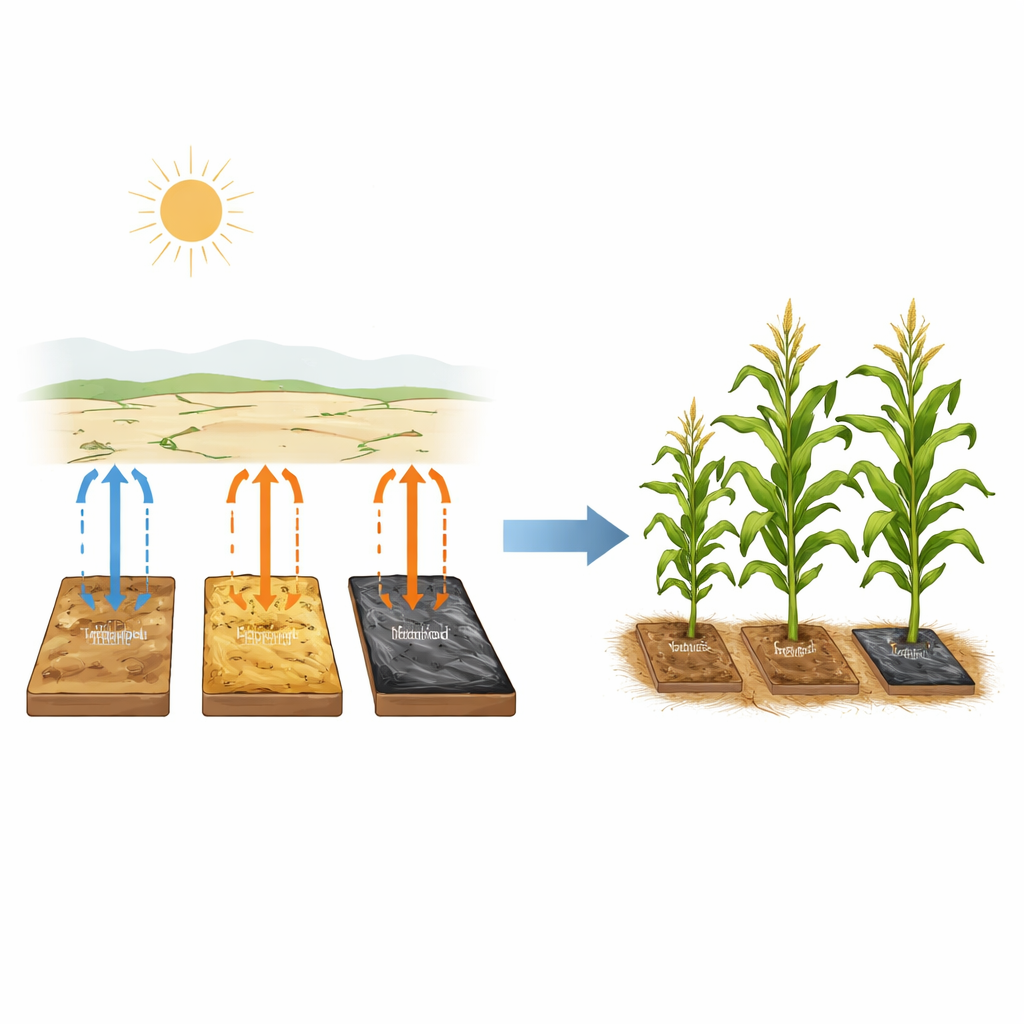
Researchers in Punjab, a semi-arid region of India, ran a two-year field experiment on spring maize to test different combinations of irrigation and mulching. They compared three soil covers—no mulch, black plastic sheets, and a layer of paddy (rice) straw—with three levels of drip irrigation based on the crop’s water demand (80%, 100%, and 120%), plus a traditional flood-irrigated control. By measuring plant height, leaf area, biomass, detailed leaf gas exchange, and final grain yield, they could see not only how big the plants grew, but also how well their internal “engines” for turning sunlight and water into food were working.
How straw on the soil helps plants breathe
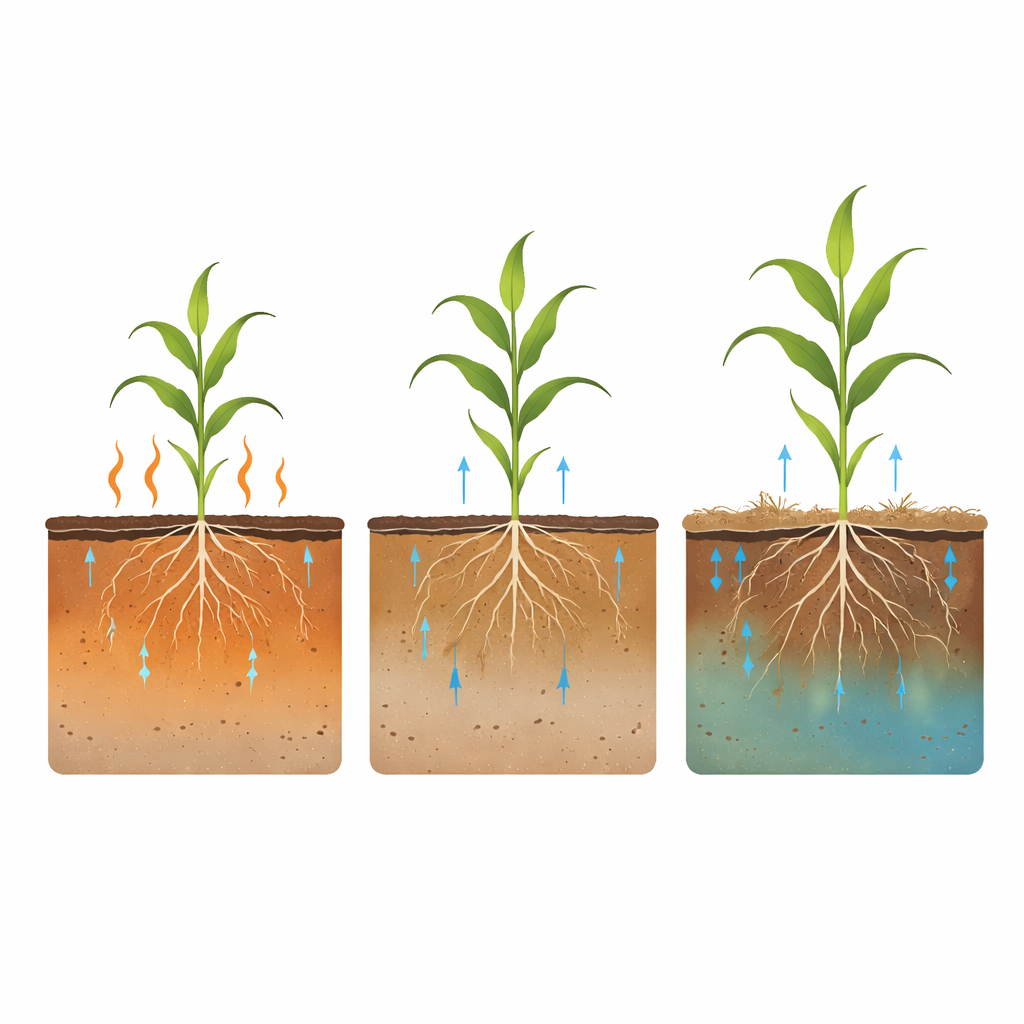
The paddy straw mulch consistently created the best growing conditions. With full drip irrigation (100%), maize grown over straw reached almost the same height and biomass as plants that received 20% more water, showing that extra irrigation was unnecessary when the soil surface was protected. Straw-covered plots had denser, longer-lasting leaf canopies, which are vital for capturing sunlight. Inside the leaves, photosynthesis rates and stomatal conductance—the opening of tiny pores that let in carbon dioxide while losing water—remained high, and a sensitive light-based test of leaf health (chlorophyll fluorescence) stayed near ideal values. In effect, straw reduced wasteful evaporation from bare soil, kept the root zone cooler and moister, and allowed plants to keep “breathing” and growing even when water was limited.
When plastic backfires in the heat
Black plastic mulch, often promoted for conserving water and controlling weeds, performed poorly under the hot spring conditions of this study. Plants over plastic were shorter, accumulated less dry matter, and delivered the lowest grain yields across all irrigation levels. Indicators of leaf stress showed that their photosynthetic machinery was being damaged, likely because the dark plastic overheated the soil and restricted gas movement around the roots. In contrast, straw acted like a breathable blanket: it shaded the soil and slowed evaporation without sealing the surface, supporting healthier roots and leaves. These findings highlight that a technology that works in cooler climates can become harmful when simply transplanted into hotter, semi-arid regions.
More crop per drop with less water
The clearest practical result came from looking at water productivity—the amount of grain produced per unit of water used. Straw mulch with 80% drip irrigation delivered grain yields similar to both no mulch with full irrigation and the conventional flood-irrigated control, but with about 20% less irrigation water. Detailed water balance estimates showed that this setup sharply cut non-productive losses like deep drainage and bare-soil evaporation, directing a larger share of water into transpiration, the flow that actually drives growth. A multivariate analysis combining 24 different plant and yield measurements confirmed this picture: treatments with straw mulch, especially at 100% irrigation, clustered as top performers, while plastic and flood irrigation fell to the bottom.
What this means for farmers and the environment
For farmers in water-scarce areas, the message is straightforward. Laying a layer of crop residue such as paddy straw on the soil and using efficient drip irrigation can maintain, and sometimes increase, maize yields while cutting water use and reducing pollution from straw burning. The study suggests two practical strategies: for maximum yield, use straw mulch with full drip irrigation; for a water-saving, climate-smart approach, combine straw mulch with moderate deficit irrigation at about 80% of crop water needs. In both cases, farms gain more grain from each drop of water, helping make maize production more resilient in a hotter, drier future.
Citation: Singh, M., Singh, S., Brar, A.S. et al. Synergistic effects of mulch type and deficit irrigation on physiological determinants and yield of spring maize (Zea mays L.). Sci Rep 16, 10214 (2026). https://doi.org/10.1038/s41598-026-40843-6
Keywords: maize irrigation, mulch, paddy straw, water use efficiency, semi-arid agriculture