Clear Sky Science · en
A qualitative exploration of patient experiences living with autoimmune encephalitis
Why this brain disorder matters to everyday life
Imagine a sudden illness that scrambles your memory, personality, and energy levels, then lingers for years in ways that doctors and support systems struggle to recognize. This study looks at people across Australia living with autoimmune encephalitis, a rare condition where the body’s own defenses attack the brain. Instead of focusing on brain scans or lab tests, the researchers listened closely to patients and their family carers, asking how the illness and the health system have shaped their daily lives.
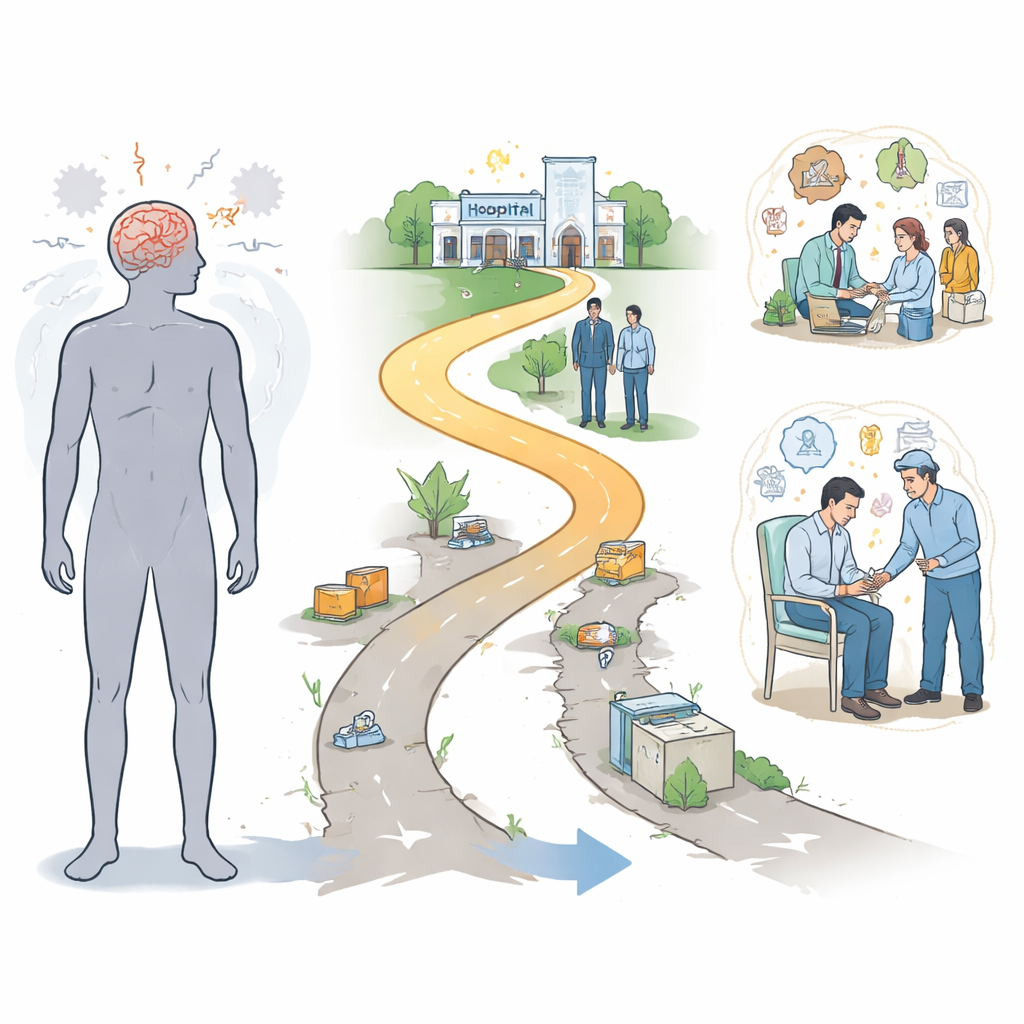
Listening to patients and families
The researchers carried out an in-depth, written questionnaire with ten adults who had been diagnosed with autoimmune encephalitis and with the people who care for them. Participants came from five Australian states and included both city and rural residents. Rather than ticking boxes, they were invited to describe in their own words how the illness began, how it was handled by the health system, and how life looks now. Carers were asked similar questions about the long-term impact on daily routines, relationships, and their own wellbeing. The answers were then carefully read, coded, and grouped into common themes.
Struggling to get the right help
A central theme was difficulty getting timely, appropriate medical care. Many participants saw multiple doctors over weeks or months, underwent long lists of tests, or were treated for other conditions such as mental illness or infection before anyone recognized autoimmune encephalitis. People described big differences between local clinics and major specialist hospitals, and between rural and metropolitan areas. Once they reached a tertiary neurology service, they generally felt care improved, but by then valuable time had often been lost. Poor communication between different health professionals, and between professionals and families, added to delays and confusion—especially when patients were too unwell to speak for themselves or remember what had been said.
Life after the acute crisis
Surviving the initial brain inflammation did not mean returning to normal. Every participant reported ongoing symptoms that reshaped daily life. Overwhelming fatigue—described as a constant lack of energy and far lower stamina for ordinary tasks—was the most common complaint, often making work, study, or even personal care difficult. Many also lived with lasting memory and thinking problems, from patchy gaps around the time of the illness to ongoing struggles with attention, problem solving, and learning new information. About half had continuing seizures that were hard to control, bringing fears of sudden collapse or injury. Together, these problems made it hard to resume previous roles and activities, and left many dependent on others for tasks such as driving, housework, and managing appointments.

Changes in identity, relationships, and independence
Participants spoke of a deep sense of loss. Some could not return to work or study; others felt they had become a different person because of memory loss, slower thinking, or emotional changes. Friendships sometimes faded, and family relationships were strained as roles shifted. Many described social isolation—either because they no longer had the energy to join in, or because others struggled to understand an invisible brain injury. For carers, the demands ranged from emotional support to around-the-clock supervision. They often reorganized their work and family lives, coped with constant worry, and faced the practical burden of navigating disability and aged care systems that seemed poorly tailored to this condition.
What this means for care and support
The study concludes that life with autoimmune encephalitis is shaped as much by the health and social systems around people as by the disease itself. Delays in diagnosis, uneven knowledge among clinicians, patchy access to specialist services—especially outside big cities—and a lack of clear information and tailored support all add to the load carried by patients and their carers. The authors argue that better education for doctors, patients, and families, along with visible, easy-to-follow guidelines and more suitable support services, could improve quality of life and ease carer burden. In plain terms, recognizing the condition earlier and standing up better long-term support may help people with autoimmune encephalitis rebuild their lives more fully.
Citation: Wesselingh, R., Seery, N., Ko, K. et al. A qualitative exploration of patient experiences living with autoimmune encephalitis. Sci Rep 16, 10236 (2026). https://doi.org/10.1038/s41598-026-40832-9
Keywords: autoimmune encephalitis, patient experience, caregiver burden, chronic brain illness, healthcare access