Clear Sky Science · en
High-intensity interval training remodels perineuronal nets in the medial prefrontal cortex to drive microglial polarization and alleviate osteoarthritis pain
Why this matters for aching knees
Knee osteoarthritis is one of the most common reasons people struggle to walk, climb stairs, or enjoy daily life without pain. Many treatments focus on the worn joint itself, but pain can linger even when the joint is treated. This study in rats shows that a specific form of exercise—high‑intensity interval training, or HIIT—can calm pain by changing how the brain and immune system work together, offering clues to drug‑free ways of easing long‑lasting joint pain.
Exercise, the brain, and joint pain
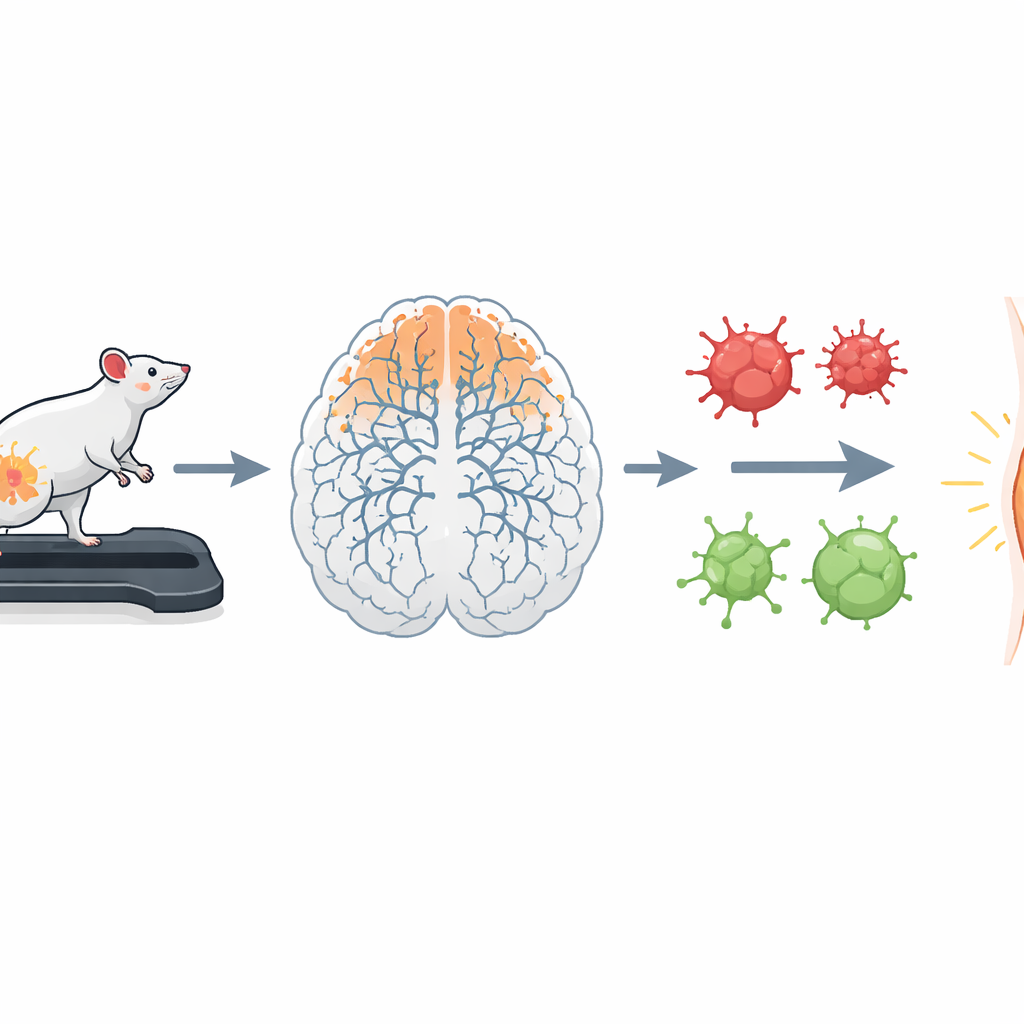
The researchers started with the idea that osteoarthritis pain is not only about damaged cartilage in the knee, but also about changes in the brain that keep pain signals turned up. They focused on a region called the medial prefrontal cortex, which helps shape how we feel and respond to pain. In this brain area, nerve cells are wrapped in a sugar‑rich coating called perineuronal nets, which act like scaffolding that stabilizes connections between cells. Microglia, the brain’s resident immune cells, can behave in either a hostile, inflammation‑driving mode or a calming, repair‑oriented mode. The team asked whether HIIT could reshape these brain structures and immune cells to dial down persistent pain from osteoarthritis.
Putting rats through intervals
To model knee osteoarthritis, the scientists injected a compound into one knee of rats that gradually damages cartilage and produces swelling and pain. After the disease was established, some rats were trained on a small treadmill using a HIIT routine: brief bursts of fast running alternated with slower recovery periods, five days a week for six weeks. The team measured how the animals walked, how sensitive their paws were to pressure and heat, and how swollen their knees became. They also examined knee tissue, blood, joint fluid, and brain samples to track changes in inflammation and cell behavior.
Sharper strides and calmer joints
Rats with untreated osteoarthritis moved more slowly, favored one hind leg, showed greater sensitivity to touch and heat, and had visibly swollen knees with damaged cartilage. In contrast, rats that performed HIIT walked more symmetrically, moved faster, reacted less strongly to painful stimuli, and had reduced joint swelling. Microscopic examination showed that HIIT‑trained rats had healthier cartilage, with more of the protein that gives cartilage its spring and less of the enzyme that chews it away. In their joint fluid and blood, levels of two inflammatory messenger molecules were lower, while levels of an anti‑inflammatory messenger rose, indicating that exercise had shifted the body toward a less inflamed state.
Rewiring pain circuits in the brain
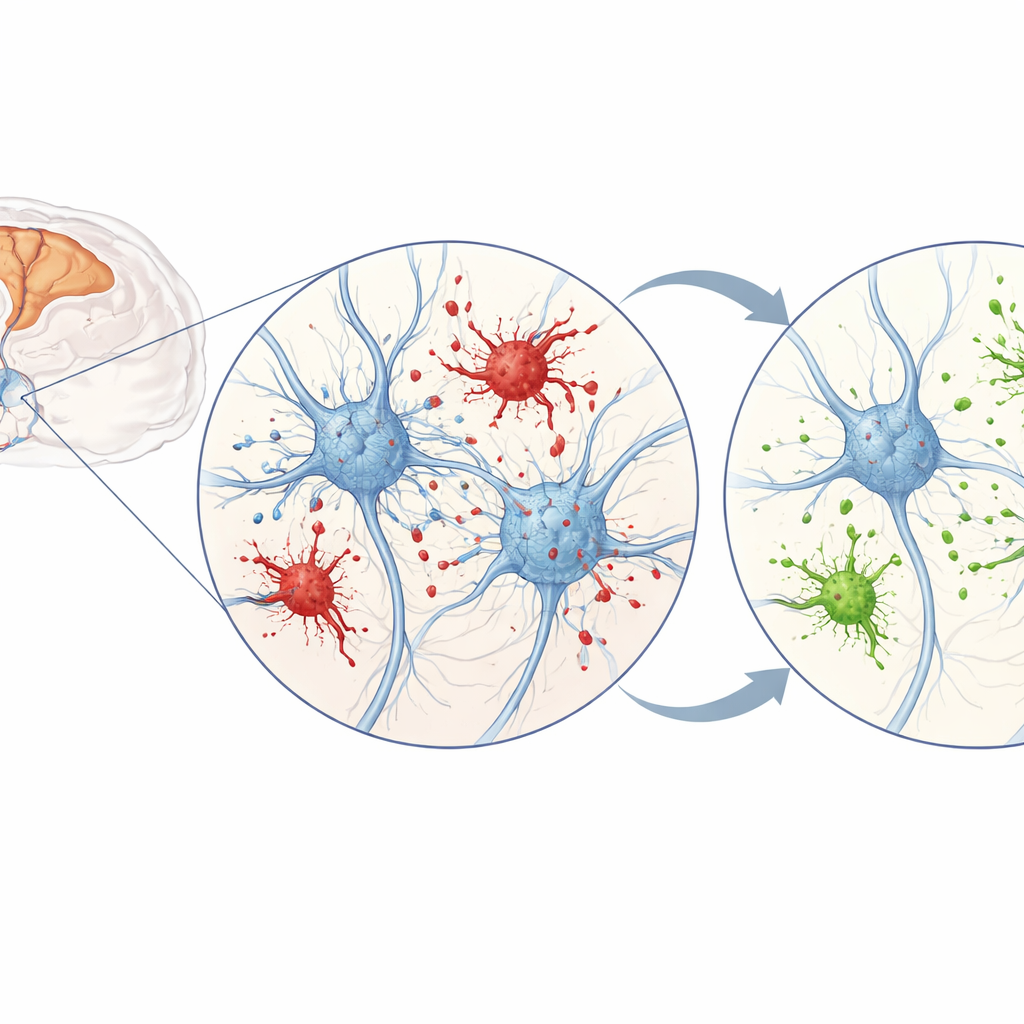
Inside the medial prefrontal cortex, osteoarthritis alone led to a buildup of dense perineuronal nets around certain nerve cells, along with microglia in a highly reactive, inflammation‑promoting state. HIIT reversed both changes: the nets became less prominent, and microglia shifted toward a more soothing, repair‑focused form. When the researchers used an enzyme to break down these nets directly in the brain, even without exercise, microglia moved into the same calming state and osteoarthritis pain and joint damage eased. However, combining the enzyme with HIIT did not provide extra benefit, suggesting they act through the same pathway. In further tests, blocking microglial activation did not prevent HIIT from reducing the nets, implying that net remodeling happens first and then nudges microglia toward a gentler role.
What this means for people with sore knees
Taken together, the findings outline a chain of events: HIIT reduces the heavy scaffolding around certain brain cells, this change pushes brain immune cells toward an anti‑inflammatory state, the brain’s inflammatory tone drops, and pain and joint damage in osteoarthritis improve. Although these results come from rats and the exact exercise prescriptions for people remain to be worked out, the study suggests that well‑designed interval exercise could tap into powerful brain–immune crosstalk to relieve chronic joint pain without drugs.
Citation: Lin, C., Zhang, X., Ye, Z. et al. High-intensity interval training remodels perineuronal nets in the medial prefrontal cortex to drive microglial polarization and alleviate osteoarthritis pain. Sci Rep 16, 9983 (2026). https://doi.org/10.1038/s41598-026-40823-w
Keywords: knee osteoarthritis, high-intensity interval training, chronic pain, brain inflammation, exercise therapy