Clear Sky Science · en
A dual-mode dual-stator hybrid rotor synchronous and vernier machine for variable speed applications
Why a washing machine motor matters
Hidden inside every automatic washing machine is an electric motor that must gently churn heavy, wet clothes at low speed and then whip the drum at high speed to spin out water. Doing both jobs efficiently, quietly, and cheaply is harder than it sounds. This paper describes a new kind of motor that can switch between a strong "wash" personality and a fast, energy‑saving "spin" personality inside a single compact design, promising lower energy bills and fewer rare, costly materials.
Two very different jobs in one machine
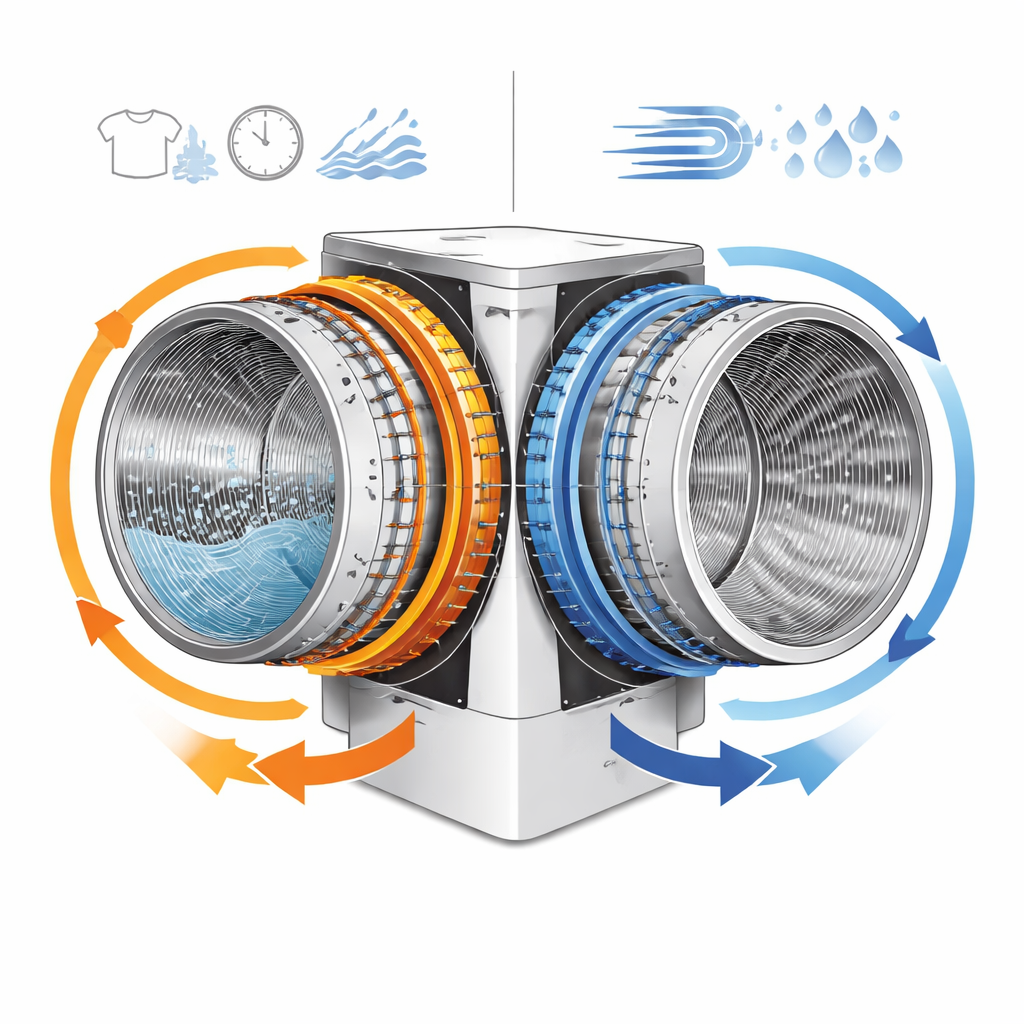
Washing machines run through two main stages. During the wash cycle, the drum turns slowly but must deliver high twisting force to move water‑soaked laundry. During the spin‑dry cycle, the drum rotates very quickly, but needs less force and very high efficiency to avoid wasting electricity and overheating. Today, manufacturers usually choose between traditional induction motors, which are cheap but inefficient, and permanent‑magnet motors, which are efficient but depend on expensive rare‑earth magnets and can struggle at very low speeds. The new design aims to capture the best of both worlds while being easier to maintain and less dependent on rare materials.
One motor, two shells, and a smart rotor
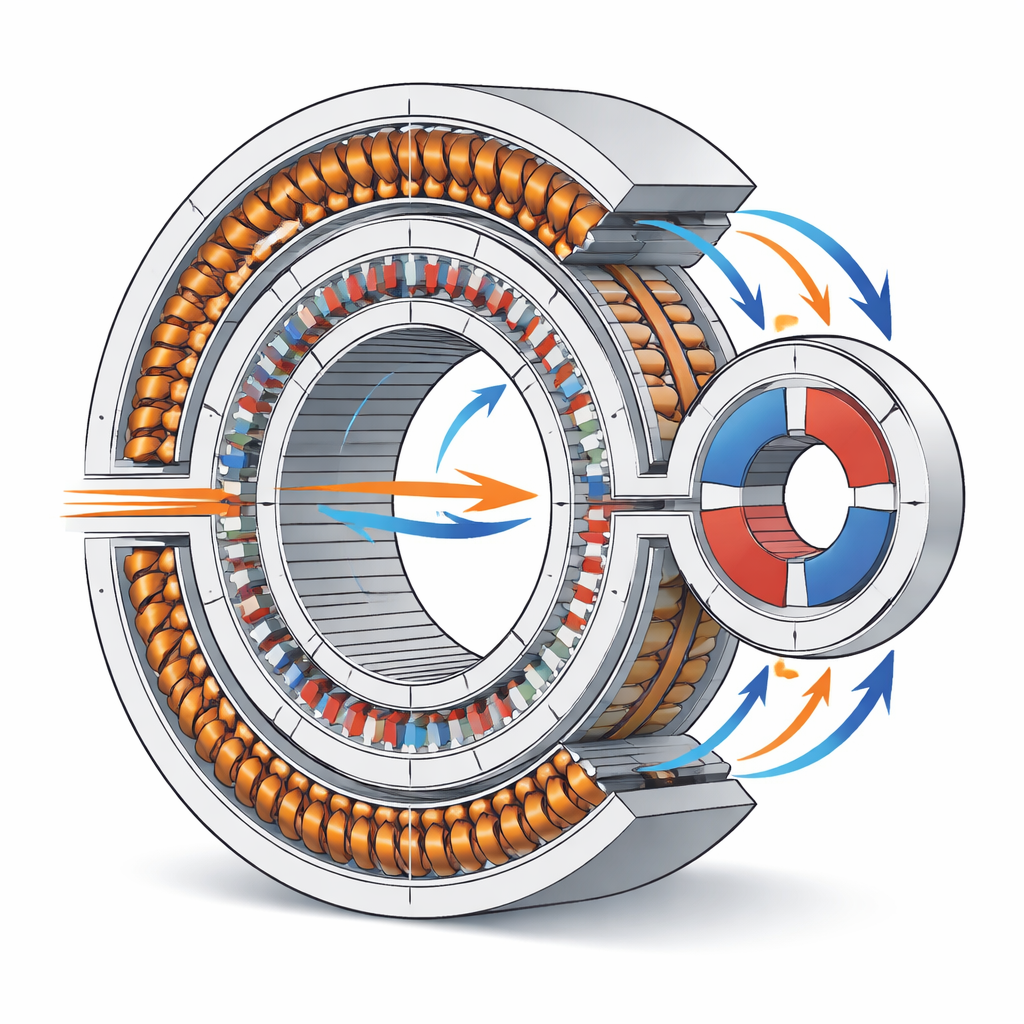
The proposed machine uses an unusual layout: two stationary shells (stators) surrounding a single rotating middle ring (rotor). The outer stator works in a “geared” style that naturally produces high torque at low speed, ideal for the wash cycle. The inner stator works as a classic high‑efficiency synchronous motor driven by permanent magnets on the inner face of the rotor, ideal for the fast spin cycle. The rotor carries both a set of many fine teeth for the outer interaction and a simpler magnet pattern for the inner interaction, so the same rotating part can serve both modes without changing hardware.
Brushless power without extra wear parts
Conventional wound‑rotor machines need sliding electrical contacts, called brushes and slip rings, to feed current into coils on the rotor. These parts wear out, spark, and require maintenance. In this design, the outer stator hosts two different windings: one main three‑phase winding that produces the turning force, and a smaller helper winding that creates a special low‑frequency magnetic pattern. As the rotor spins through this pattern, a dedicated winding on the rotor picks up an alternating current, which is immediately converted to direct current by a tiny rectifier mounted on the rotor itself. That direct current then feeds the main rotor field winding, all without any physical electrical contact. In effect, the machine “charges” its own rotor magnetism wirelessly while it runs.
Tailoring the motor to the wash and spin cycles
The authors simulate the motor’s behavior in both modes using detailed computer models. In the low‑speed wash mode, the outer vernier‑style section produces about 20 newton‑meters of torque after refinement, more than double that of a recent benchmark design, with an efficiency of about 77%. Initially the torque was quite bumpy, but the team reduced this “torque ripple” by slightly skewing the rotor teeth, sacrificing only a small amount of average torque. In the high‑speed spin mode at 1200 revolutions per minute, only the inner permanent‑magnet section is energized. Here the motor delivers around 5.9 newton‑meters of torque with very smooth rotation and an impressive efficiency of roughly 95%, far higher than comparable vernier‑only machines at similar speeds.
What this could mean for home appliances
By combining two operating styles in one shared structure, this dual‑mode dual‑stator motor can behave like a strong low‑speed workhorse during washing and a lean high‑speed sprinter during spin‑drying. It uses relatively little permanent‑magnet material, avoids brushes and slip rings, and still meets the demanding torque and efficiency needs of modern washing machines. For everyday users, that could translate into quieter operation, lower energy use, and more durable appliances, while manufacturers gain flexibility to meet tough efficiency standards without relying heavily on scarce magnetic materials.
Citation: Ali, S., Ali, Q., Munir, H.M. et al. A dual-mode dual-stator hybrid rotor synchronous and vernier machine for variable speed applications. Sci Rep 16, 10315 (2026). https://doi.org/10.1038/s41598-026-40821-y
Keywords: washing machine motor, variable speed drive, brushless rotor, vernier machine, energy efficient appliances