Clear Sky Science · en
Cognitive salience features enhance multitask deep learning for pragmatic reasoning across cultures
Why Subtle Meanings Across Cultures Matter
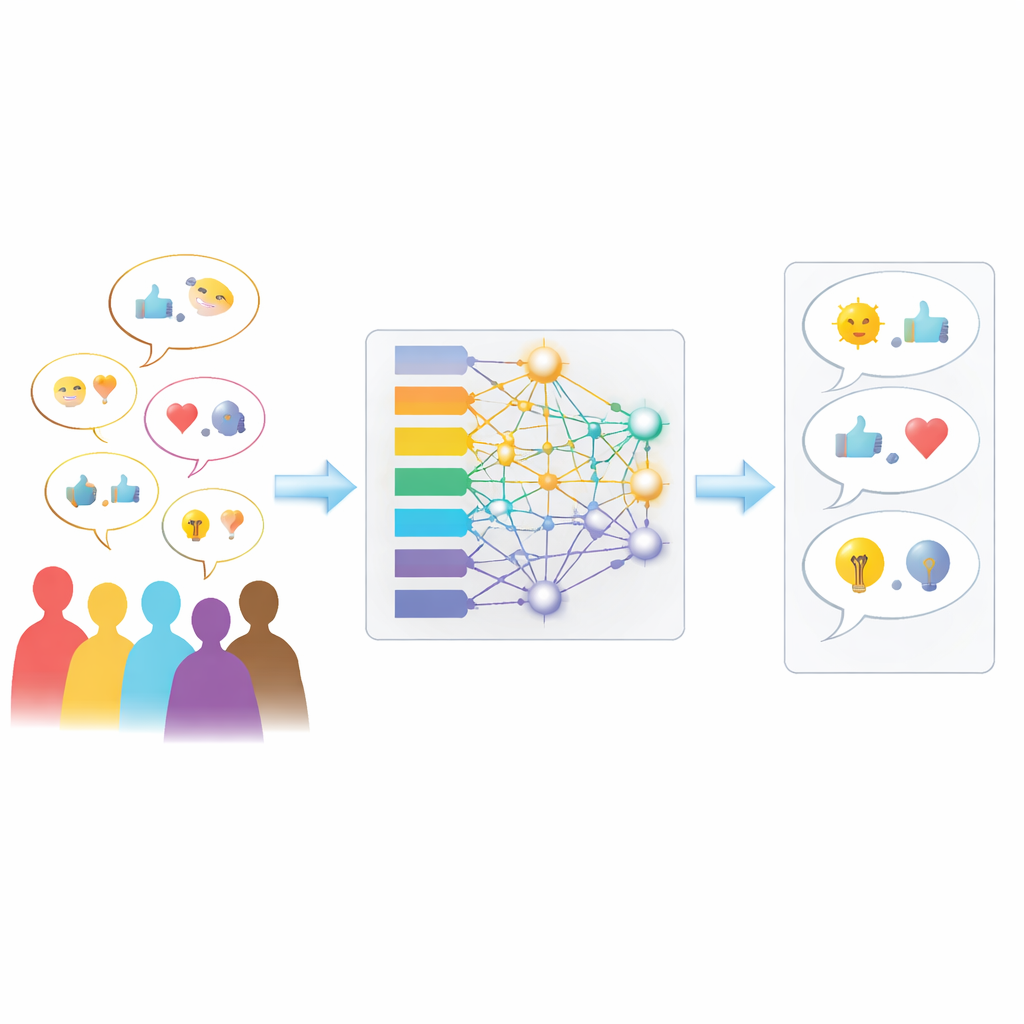
Every day, people from different cultures exchange messages online, in business, and in diplomacy. Much of what we truly mean is not said outright: hints, tone, and politeness do the heavy lifting. Computers that only read literal words can easily miss these layers, leading to awkward or even harmful misunderstandings. This study explores how to build AI systems that pay attention to the same kinds of subtle cues that humans use, so that machines can better grasp what is implied, how polite something is, and whether it fits the norms of different cultures.
Reading Between the Lines
Human communication is full of indirect messages. A phrase like “It might be difficult” can be a gentle refusal in one culture and simple uncertainty in another. To handle this, the authors focus on “pragmatic reasoning” – how people infer intentions from context, social rules, and shared background knowledge, not just from dictionary meanings. They show that cultural differences in directness, politeness, and comfort with ambiguity make this kind of reasoning especially hard for computers. The paper frames understanding as a kind of probability puzzle: given the words, the situation, and cultural expectations, which interpretation is most likely?
What Stands Out to the Mind
A key idea in the study is “cognitive salience” – the features that naturally pop out and grab our attention. In conversation, these might be a hedge (“maybe”), a softener (“please”), an honorific title, or an unusual word order. Psychologists have shown that people do not weigh every part of a message equally; some bits get fast, priority processing. The authors turn this insight into a computational module that highlights such important pieces while downplaying the rest. Unlike standard AI attention mechanisms, their design is constrained by findings from brain and behavior studies, such as how quickly humans react to salient signals and how focusing on one cue suppresses others.
Teaching One System Many Social Skills
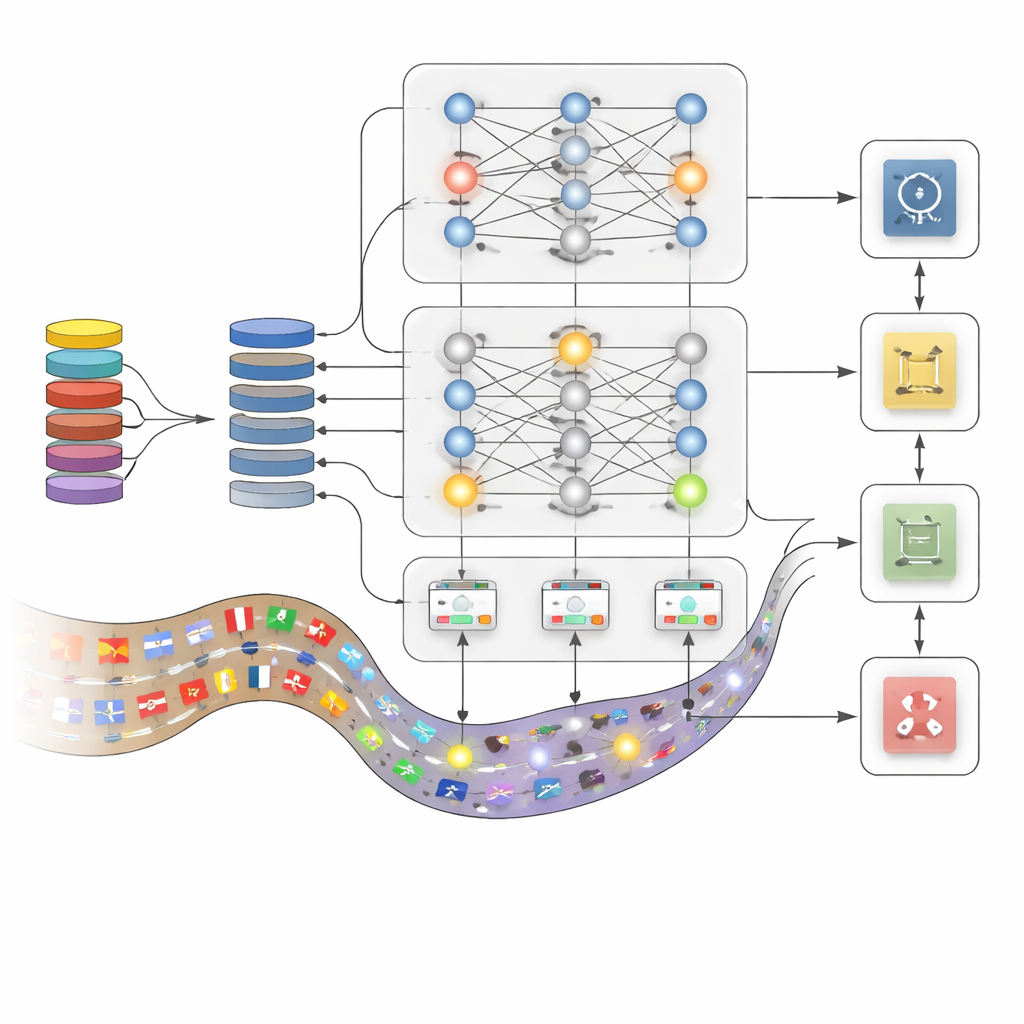
Instead of training separate models for each social skill, the researchers build a single deep learning system that tackles four tasks at once: spotting implied meanings, identifying the type of speech act (such as request or promise), scoring politeness, and judging cultural appropriateness. The system first encodes the text using a multilingual language model. Then a salience module boosts the weight of likely pragmatic cues. A cultural “gate” adjusts which cues matter most, depending on information about the speaker’s cultural background. Finally, shared inner layers feed into four specialized heads, one per task. The training procedure carefully balances these tasks so that one does not dominate, and it reshapes conflicting learning signals so they reinforce rather than fight each other.
Testing Across Languages and Cultures
To evaluate this approach, the authors assemble a large cross-cultural dataset of over 47,000 examples spanning eight language communities, including English, Chinese, Arabic, Japanese, and others. Each example is annotated for all four tasks by native speakers, with careful checks on agreement and cultural bias. The new model is compared against strong baselines such as multilingual BERT and more conventional multi-task setups. It reaches an overall score of about 83 percent and, crucially, holds up well when tested on cultures it has not seen during training. The salience module alone accounts for a noticeable boost in performance, and the learned salience patterns correlate strongly with what human annotators mark as important words or phrases.
Making Machines Better Conversation Partners
For a general reader, the central message is that AI can become more culturally aware and socially sensitive by mimicking how humans decide what is worth paying attention to in a message. By weaving together cognitive insights about salience, cultural differences in communication style, and a multi-skill learning framework, the authors show that machines can better read between the lines across languages and cultures. While the system still struggles with highly idiomatic expressions, irony, and non-verbal cues, it provides an important step toward translation tools, chatbots, and moderation systems that are less tone-deaf and more attuned to the human art of saying things without quite saying them.
Citation: Qi, M., Thai, Y.N. Cognitive salience features enhance multitask deep learning for pragmatic reasoning across cultures. Sci Rep 16, 11778 (2026). https://doi.org/10.1038/s41598-026-40809-8
Keywords: cross-cultural communication, pragmatics, politeness, multilingual AI, deep learning