Clear Sky Science · en
An in-silico study to design C60 fullerene-based nanosensors for the adsorption, detection, and removal of the narcotic drug γ-hydroxybutyric acid
Why this matters for everyday safety
Gamma‑hydroxybutyric acid (GHB) is a powerful sedative that can be prescribed as a medicine but is also misused as a so‑called “date‑rape” or club drug. Because the body breaks GHB down quickly, it can be difficult for hospitals and forensic labs to detect it in time. Today’s gold‑standard tests rely on large, expensive instruments in centralized laboratories. This study explores how tiny carbon cages called fullerenes could be turned into simple, low‑cost nanosensors that spot GHB in drinks or biological fluids, and even help remove it from contaminated samples.
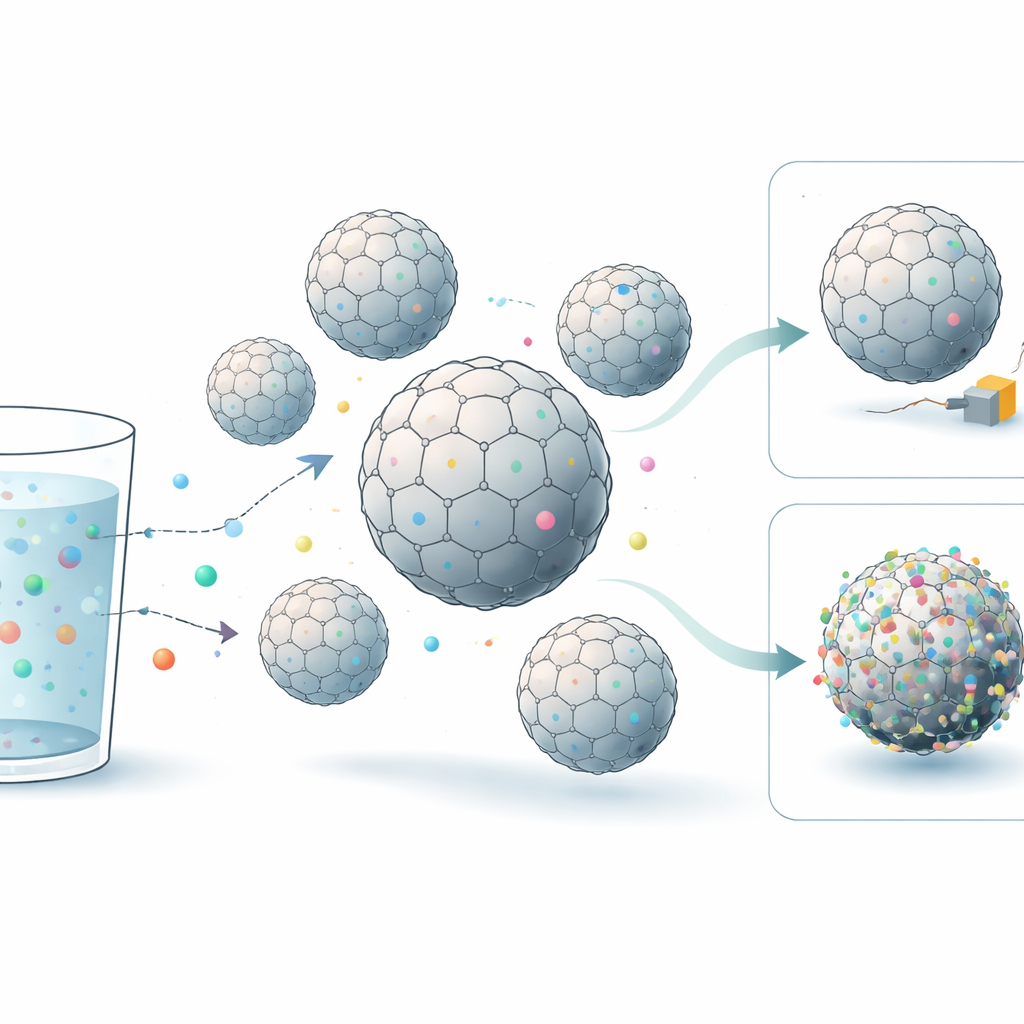
Tiny carbon cages as smart helpers
Fullerenes are soccer‑ball‑shaped molecules built from sixty carbon atoms (C60). They are electrically and optically active, making them attractive as sensor materials. The researcher asked whether three related nanostructures—pure C60, a version where one carbon is replaced by boron (BC59), and another where one carbon is replaced by zinc (ZnC59)—could act as sensitive partners for GHB. Instead of building these nanosensors in the lab, the work uses powerful computer simulations to predict how strongly GHB would stick to each surface, how much charge would move between drug and sensor, and how easily these changes could be read as color shifts or electrical signals.
Virtual experiments inside water
Because GHB acts in the body and in beverages, all calculations were carried out with water included as the surrounding medium. The study first checked that the chosen quantum‑chemistry method reproduces known properties of C60, such as bond lengths, vibrational spectra, and the energy gap between its highest filled and lowest empty electron states. The excellent match with measurements from earlier experiments builds confidence that the same method can reliably predict how doped fullerenes and GHB will behave. The simulations then examined how replacing a single carbon atom with boron or zinc reshapes the carbon cage, redistributes electrical charge on its surface, and creates new “hot spots” where GHB is more likely to bind.
How the three nanocages interact with GHB
When GHB approaches pure C60, the interaction is relatively gentle: the drug molecule hovers near the cage, held mainly by weak attractive forces, and the fullerene’s structure and conductivity change only slightly. By contrast, the boron‑doped cage BC59 creates an electron‑hungry site that pulls strongly on the oxygen‑rich end of GHB. This leads to a shorter contact distance, greater charge transfer between drug and sensor, and a pronounced boost in the material’s ability to conduct electricity. The zinc‑doped cage ZnC59 goes even further. It acts a bit like a metal center in a coordination complex, locking GHB in place with strong, directional bonding. The simulations show large distortions in the cage, high electron density at the contact point, and very long times before GHB would naturally let go.
From color changes to electrical readouts
The team then translated these microscopic interactions into practical sensing behaviors. For a color‑based test, what matters is whether the main light‑absorption band shifts into the visible range when GHB binds. Pure C60 shows exactly this: its absorption peak moves from the edge of the visible spectrum deep into the red upon contact with GHB, implying a clear, naked‑eye color change. The boron‑ and zinc‑doped cages mainly absorb in the infrared, beyond human vision, so their spectral shifts would be hard to see without instruments. For electronic sensors, the key signature is a change in conductivity when the target binds. Here BC59 stands out: GHB adsorption significantly increases its calculated conductivity, suggesting it could serve as an efficient electrochemical sensor. ZnC59, while excellent at grabbing GHB, shows only minor conductivity changes, marking it instead as a strong adsorbent for trapping and removing the drug.
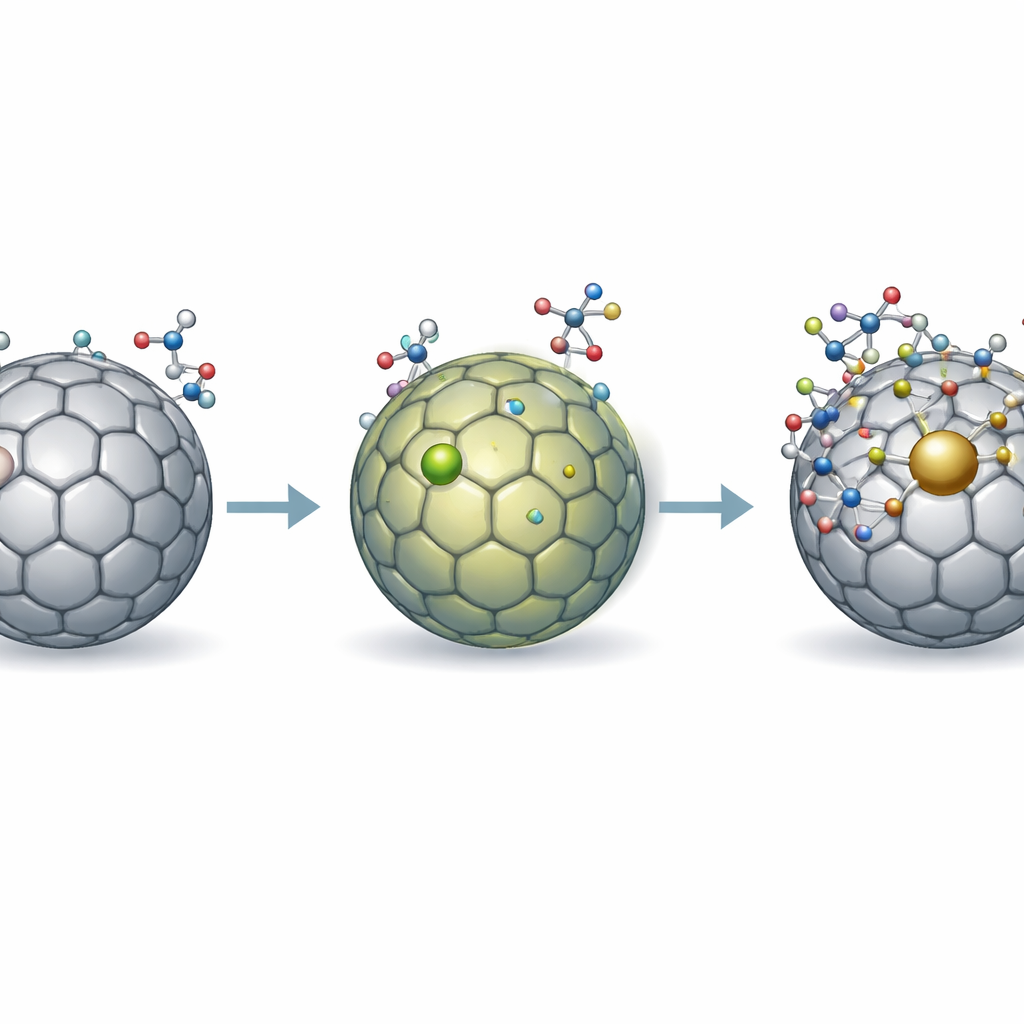
What this means for future tools
Put together, the virtual experiments paint a clear, intuitive picture. Pure C60 is best suited for simple color tests, where a noticeable shift in hue would signal the presence of GHB. The boron‑doped cage BC59 is the most promising choice for an electrical sensor that converts GHB binding into a robust current change. The zinc‑doped cage ZnC59 behaves more like a permanent sponge, powerfully holding onto GHB and thus better suited for cleanup or purification rather than repeated sensing. Although these results come from computer models rather than physical devices, they offer a roadmap that can help experimental chemists focus on the most promising designs, speeding the development of portable, affordable technologies to detect and remove this dangerous drug.
Citation: Almotawa, R.M. An in-silico study to design C60 fullerene-based nanosensors for the adsorption, detection, and removal of the narcotic drug γ-hydroxybutyric acid. Sci Rep 16, 10260 (2026). https://doi.org/10.1038/s41598-026-40808-9
Keywords: GHB detection, nanosensors, fullerene C60, electrochemical sensing, drug removal