Clear Sky Science · en
Integrated assessment of physicochemical and structural changes during composting and vermicomposting of cattle and sheep manure with additive treatments
Turning Barnyard Waste into a Soil Resource
Across the world, farms produce mountains of cattle and sheep manure. If it is left in piles or spread carelessly, this waste can leak nutrients, smell bad, and release greenhouse gases. This study explores how to turn that problem into a solution by fine‑tuning composting and vermicomposting—using microbes and earthworms—to produce a cleaner, more stable soil booster. The researchers test simple mineral and carbon additives that could help farmers manage manure more safely while growing healthier crops.
From Raw Manure to Managed Piles
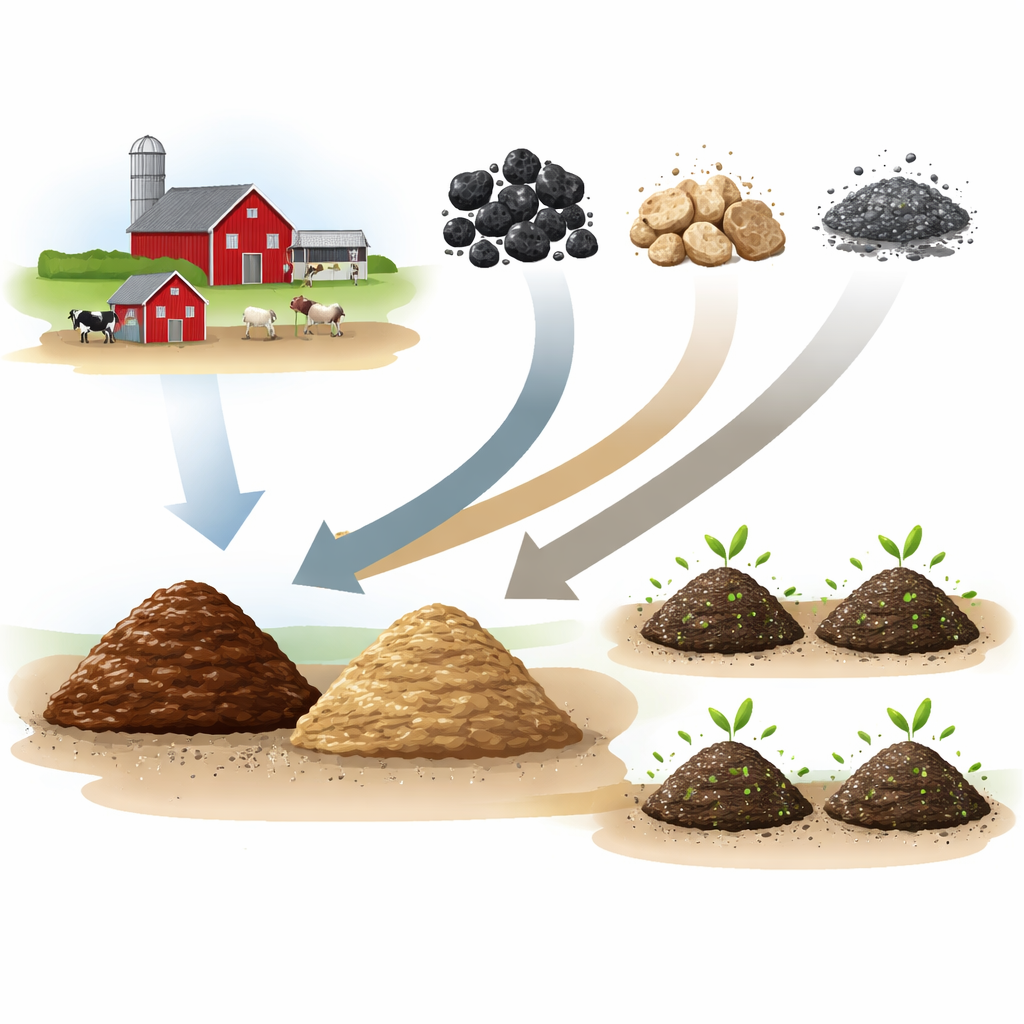
The team collected cattle and sheep manure and processed it over 120 days in two ways: classic composting, driven mainly by heat‑loving microbes, and vermicomposting, which adds the work of earthworms. They mixed in three types of additives at different doses: a porous charcoal‑like material called biochar, a fine fire clay, and a reactive mineral, manganese dioxide. By tracking temperature, weight loss, and basic chemical properties over time, they could see how each recipe changed the speed and quality of manure breakdown in both animal types.
Heat, Weight Loss, and What They Really Mean
All piles went through the familiar arc of composting: a warm‑up, a hot phase, and then slow cooling. Piles treated with the higher dose of fire clay reached the highest temperatures, more than 65 °C for cattle manure and over 70 °C for sheep manure, showing especially intense microbial activity and good airflow. Biochar also raised and prolonged the hot phase, particularly at the higher dose, while manganese dioxide had a milder effect. When earthworms were added, the piles lost more weight overall—up to about 70% loss in some sheep‑manure mixes with biochar or low‑dose fire clay—because worms physically shredded the material and boosted microbial action. However, the clay‑rich mixes lost less mass but formed more stable, well‑“cooked” compost, reminding us that faster disappearance is not always better if the goal is a long‑lasting soil amendment.
Building a Better "Nutrient Sponge"
To judge compost quality, the researchers focused on its ability to hold onto nutrient elements such as calcium, magnesium, and potassium. This trait, called cation exchange capacity, tells how much of a "nutrient sponge" the finished material becomes in soil. Vermicomposted sheep manure with high fire‑clay content showed the strongest improvement, with very high measured capacity and modelled values that point to long‑term stability. Biochar also boosted this property in a dose‑dependent way, thanks to its large internal surface area. In contrast, manganese dioxide gave only modest gains because it acts more like a chemical spark for reactions than a true nutrient holder. Overall, systems with earthworms consistently outperformed compost‑only systems, as their activity helped build up the acidic and phenolic groups in organic matter that grab and release nutrients for plants.
Breaking Down Stubborn Plant Fibers
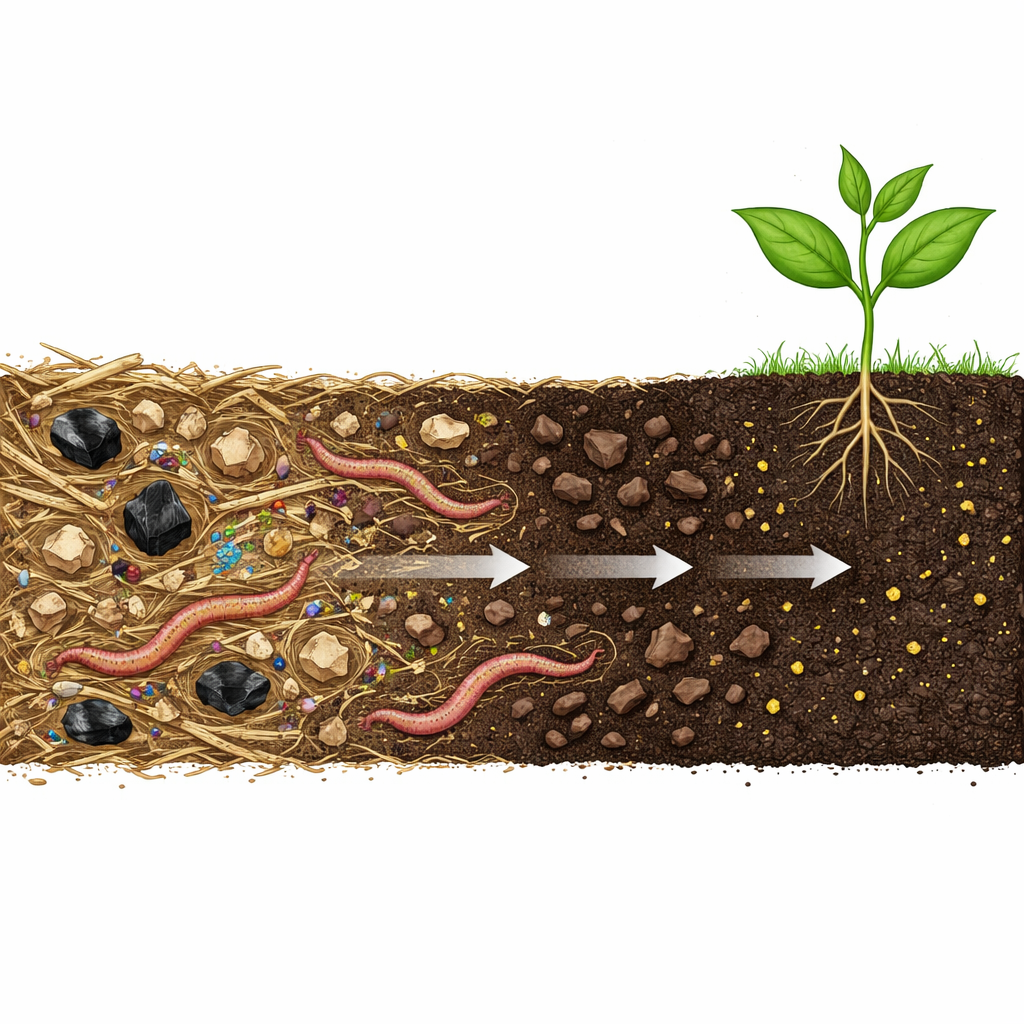
The team also looked inside the manure at its tough plant‑based components: hemicellulose, cellulose, and lignin. These are the skeleton of straw and other plant residues and are often slow to decay. Using mathematical models, they showed that hemicellulose decomposed quickest, especially in treatments with fire clay and biochar, which kept the piles airy and hospitable for microbes. Cellulose broke down at a moderate rate. Lignin, the most resistant fraction, yielded mainly when manganese dioxide was present, pointing to a chemical assist that helps microbes crack this rigid glue. In cattle and sheep systems with worms, combinations of manganese dioxide and moderate clay dose gave particularly strong breakdown of these stubborn fibers, while high clay or excessive carbon sometimes slowed the process by blocking airflow or altering microbial communities.
Practical Lessons for Farmers and Gardeners
Taken together, the results show that each additive plays a different but complementary role. Biochar makes the pile more breathable and microbe‑friendly, speeding up the early clean‑up of fresher material. Fire clay helps create a stable, humus‑rich product that clings to nutrients and releases them gradually to crops. Manganese dioxide gives an extra push to dismantle the most stubborn plant fragments. When combined thoughtfully and paired with earthworms, these simple materials help turn raw cattle and sheep manure into safer, more effective compost and vermicompost. For a layperson, the key message is that with the right mix of ingredients and biological helpers, even messy barnyard waste can be transformed into a reliable, climate‑friendlier fertilizer that supports long‑term soil health.
Citation: Karimi, S., Shariatmadari, H. & Nourbakhsh, F. Integrated assessment of physicochemical and structural changes during composting and vermicomposting of cattle and sheep manure with additive treatments. Sci Rep 16, 10128 (2026). https://doi.org/10.1038/s41598-026-40802-1
Keywords: composting, vermicomposting, biochar, manure management, soil fertility