Clear Sky Science · en
Identification and characterization of 13 gene families encoding enzymes involved in flavonoid biosynthesis in barley and their roles under abiotic stress
Why barley’s natural colors matter
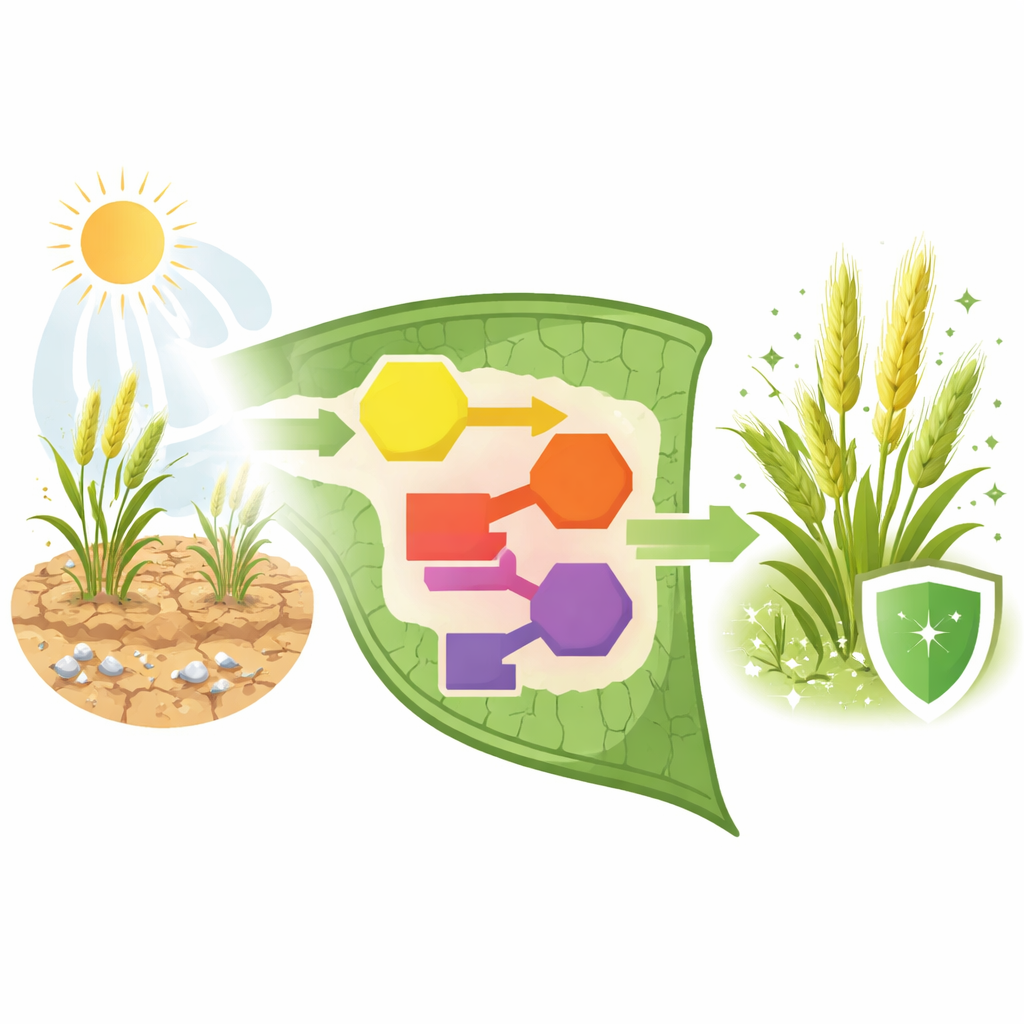
Barley is best known for bread and beer, but inside its leaves and grains lies a powerful chemistry set. This study explores a major group of plant compounds called flavonoids, which help barley cope with harsh conditions such as heat, salt, and drought. By mapping the full set of flavonoid‑related genes and proteins in barley, the authors show how this crop uses its own natural “shield” to survive stress—knowledge that could be used to breed hardier, more nutritious cereals.
Barley’s built‑in chemical shield
Flavonoids are colorful, antioxidant molecules that protect plants from sun damage, drying, and other environmental extremes. Until now, researchers knew that barley accumulated flavonoids under stress, but they did not have a complete picture of all the enzymes that build these molecules or how they respond when the plant is pushed to its limits. In this work, scientists combed through the barley genome and identified 108 enzymes grouped into 13 families that together form the flavonoid “assembly line.” These enzymes fall into five bigger superfamilies, suggesting that barley has recruited several different types of proteins over evolutionary time to construct its chemical defenses.
How the flavonoid toolkit is organized
Using computational tools, the team examined where these genes sit on barley’s chromosomes, how their structures compare with those in rice and other grasses, and what control switches sit in their DNA. The enzymes are not scattered randomly: certain chromosomes, especially chromosome 7, carry clusters of flavonoid genes, hinting at past genome rearrangements that expanded this pathway. Many genes share similar exon–intron patterns and conserved protein motifs, showing that they arose from common ancestors, while others have lost introns altogether, a feature often linked with fast, flexible responses to stress. Promoter analyses revealed numerous hormone‑ and stress‑responsive elements, particularly those tied to drought and key plant hormones, indicating that the pathway is tightly wired into the plant’s growth and stress signaling systems.
Zooming in on protein action
To move from lists of genes to likely functions, the authors modeled the three‑dimensional shapes of representative enzymes and simulated how they interact with a panel of flavonoid molecules. Docking and molecular dynamics simulations showed that several enzymes, especially one called HvANS1 and a small group of others, form very stable complexes with specific flavonoids. This suggests they occupy central positions in the pathway where small changes could strongly affect which protective compounds are produced and in what amounts. A separate protein‑interaction network confirmed that a handful of enzymes act as “hubs,” physically or functionally connecting many others and helping coordinate the flow of intermediates along the pathway.
Where and when the defense genes switch on
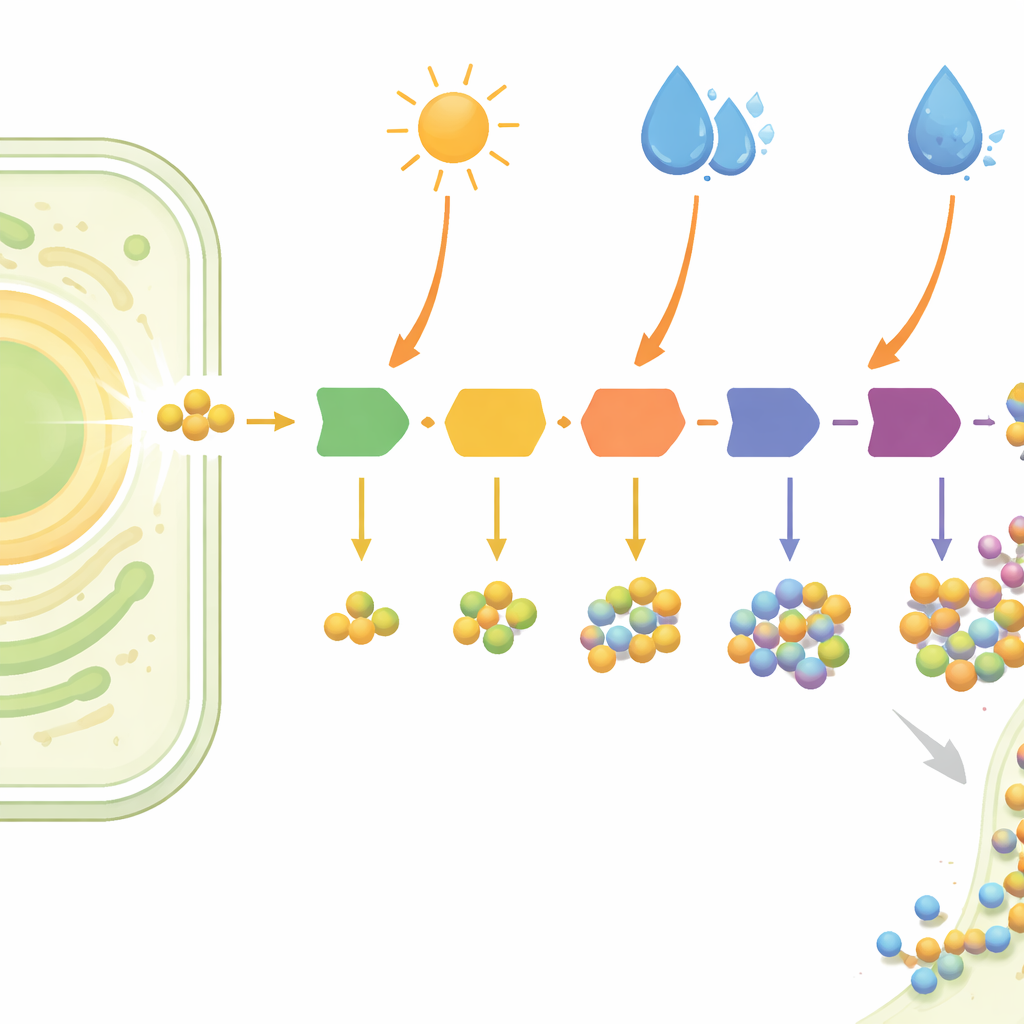
The researchers then asked where in the plant these genes are most active, and how they react when barley faces heat, salt, or drought. By mining large expression datasets and running targeted expression tests, they found that some enzymes, especially HvCHS1, are switched on in many tissues, including shoots, grains, and specialized floral parts—suggesting a broad protective role. Under high temperature, salt, and drought, a subset of genes changed their activity in a tissue‑specific way: some went up in roots but down in stems, or vice versa. These patterns imply that barley fine‑tunes flavonoid production depending on both the type of stress and the organ at risk. Microscopy experiments showed that one key enzyme, HvCHS1, localizes to the plasma membrane and nucleus, positioning it to influence both the movement of flavonoids and gene regulation within the cell.
Implications for tougher, healthier barley
Altogether, the study delivers a detailed catalog and functional roadmap of the enzymes that allow barley to build flavonoids and deploy them against environmental stress. For non‑specialists, the main message is that barley’s resilience and nutritional value are strongly tied to this chemical shield—and that we now know which genes and proteins are most important. This blueprint can guide future breeding and genetic engineering efforts to create barley varieties with higher flavonoid content and better tolerance to heat, salt, and drought, potentially leading to more stable harvests and foods with added health benefits.
Citation: Mia, M., Jing, X., Wani, T.A. et al. Identification and characterization of 13 gene families encoding enzymes involved in flavonoid biosynthesis in barley and their roles under abiotic stress. Sci Rep 16, 12628 (2026). https://doi.org/10.1038/s41598-026-40768-0
Keywords: barley, flavonoids, abiotic stress, plant defense, crop improvement