Clear Sky Science · en
Association between the geriatric nutritional risk index and all-cause mortality in patients with acute pancreatitis in the intensive care unit: a retrospective cohort study
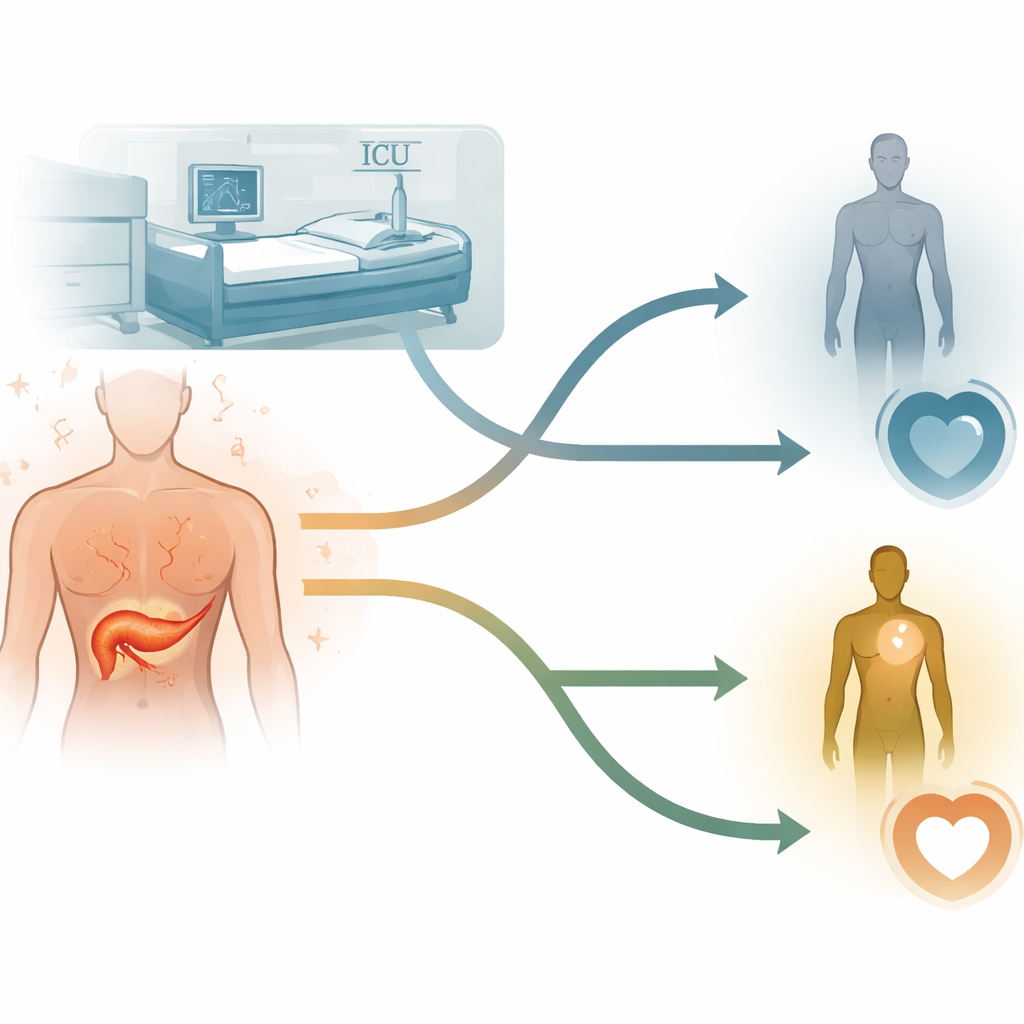
Why nutrition matters in a sudden belly crisis
Acute pancreatitis is a sudden, painful inflammation of the pancreas that can land people in an intensive care unit (ICU). In this high‑stakes setting, the body burns through its reserves, and hidden malnutrition can quietly tip the balance between life and death. This study asks a practical question with big consequences: can a simple score based on body weight and a common blood protein help doctors quickly spot which patients are in the most danger and may need more intensive nutritional care?
A simple score with a serious purpose
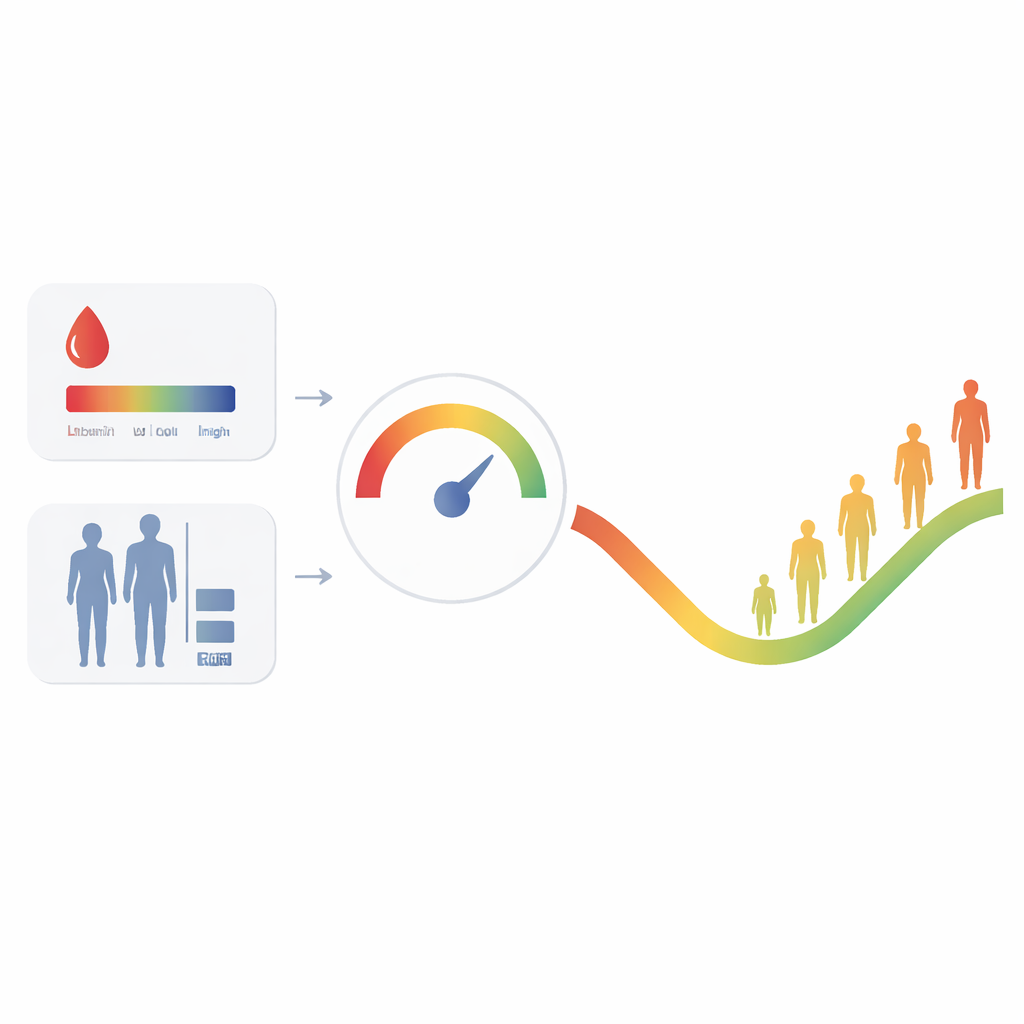
The researchers focused on the Geriatric Nutritional Risk Index, or GNRI, a score originally developed to screen older people for malnutrition. GNRI combines a patient’s blood level of albumin—a protein made by the liver—with their body weight and height to give a snapshot of their nutritional reserves and overall stress on the body. Using a large, public ICU database from a major U.S. hospital, the team identified 430 adults who were admitted to intensive care with acute pancreatitis for the first time. They then calculated each patient’s GNRI at the time of ICU admission and followed them for up to one year to see who survived.
What the numbers revealed about risk
When the patients were sorted into two groups based on the median GNRI value, clear differences emerged. Those with lower GNRI scores looked sicker from the start: they had faster heart and breathing rates, lower levels of red blood cells, calcium, and albumin, and higher illness‑severity scores. They also stayed longer in the ICU and in the hospital overall. Most strikingly, their chances of dying were far higher. Within 28 days, about one in five patients in the low‑GNRI group had died, compared with about one in ten in the high‑GNRI group. This gap persisted at 90 days and at one year.
Risk that bends like a hooked curve
To explore how risk changed across the full range of GNRI scores, the team used flexible statistical models. They found a J‑shaped pattern: as GNRI rose from very low values toward a mid‑range level, the chance of death dropped steeply. Around a GNRI value of roughly 87, the risk reached its lowest point. Below this range, each small drop in GNRI was linked to a sharp increase in the likelihood of dying. Above it, the protective effect leveled off, suggesting that once patients were reasonably well nourished, having an even higher score did not add much further safety. In other words, GNRI worked best at flagging the most fragile, under‑resourced patients rather than fine‑tuning risk among those already in better shape.
Who benefits most from better reserves
The researchers also checked whether the score behaved differently in various groups. The survival advantage of a higher GNRI was seen across many subgroups, but it was not equal for everyone. Men and patients younger than 60 years seemed to gain the most protection from a higher GNRI, while the benefit was weaker and sometimes not clear in women and in older patients. People without chronic kidney disease showed a strong survival edge early on, but those with kidney problems still appeared to benefit over the longer term. These patterns suggest that GNRI captures a blend of nutrition and inflammation that may interact with age, sex, and underlying organ health.
What this means for patients and care teams
For a layperson, the key message is that in severe attacks of pancreatitis, the body’s fuel stores and protein levels are not just background details—they are powerful indicators of who is most at risk of dying, both in the short term and months later. A quick calculation using common bedside measurements can help ICU teams identify patients whose bodies are running on empty and who may need closer monitoring and earlier, more tailored nutritional support. While this study cannot prove that changing the GNRI through targeted feeding will save lives, it lays the groundwork for future trials. If confirmed, this simple score could become a routine early warning tool, guiding more personalized care and, potentially, better outcomes for people facing this dangerous abdominal emergency.
Citation: Wang, C., Wang, C., Li, X. et al. Association between the geriatric nutritional risk index and all-cause mortality in patients with acute pancreatitis in the intensive care unit: a retrospective cohort study. Sci Rep 16, 11882 (2026). https://doi.org/10.1038/s41598-026-40767-1
Keywords: acute pancreatitis, critical care nutrition, nutritional risk index, ICU outcomes, mortality risk