Clear Sky Science · en
Temperature changes reveal different transcriptional responses in the larvae of the bark beetle Dendroctonus rhizophagus during the cold season
Why winter life under the bark matters
Bark beetles are often portrayed as tiny tree killers, but their success depends on how well they survive winter. This study looks inside the bodies of larvae of the bark beetle Dendroctonus rhizophagus, a species that attacks young pine trees in Mexico, to see how changing temperatures reshape their biology over the cold season. By tracking temperatures where the larvae hide and reading which genes switch on and off, the researchers reveal a step‑by‑step winter survival strategy that could eventually help forest managers design more targeted control methods.
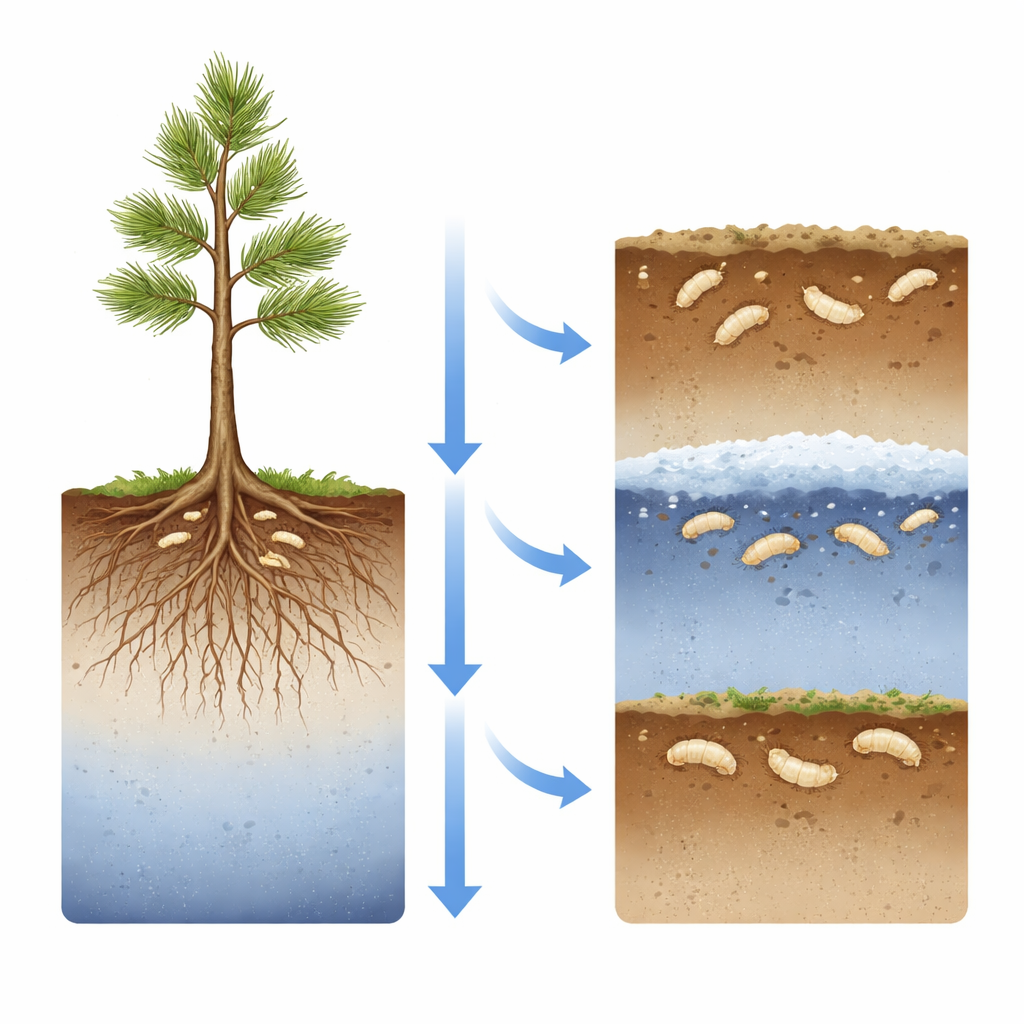
Life in a hidden winter shelter
Rather than staying under the bark high on the stem, fifth‑instar larvae of this beetle migrate in late autumn down into the roots of sapling pines, creating a protected underground shelter called a hibernaculum. Over three winters, the team placed temperature loggers both in the stems and in these root shelters. They found that the hibernaculum stayed consistently warmer and less variable than the stem, even when outside air grew harshly cold. Temperatures in this refuge dipped lowest around mid‑winter, then rose again toward late winter. These distinct periods allowed the authors to define three “thermal thresholds”: late‑fall, mid‑winter, and late‑winter, each corresponding to a different phase in the larvae’s life cycle.
Autumn movement and feeding
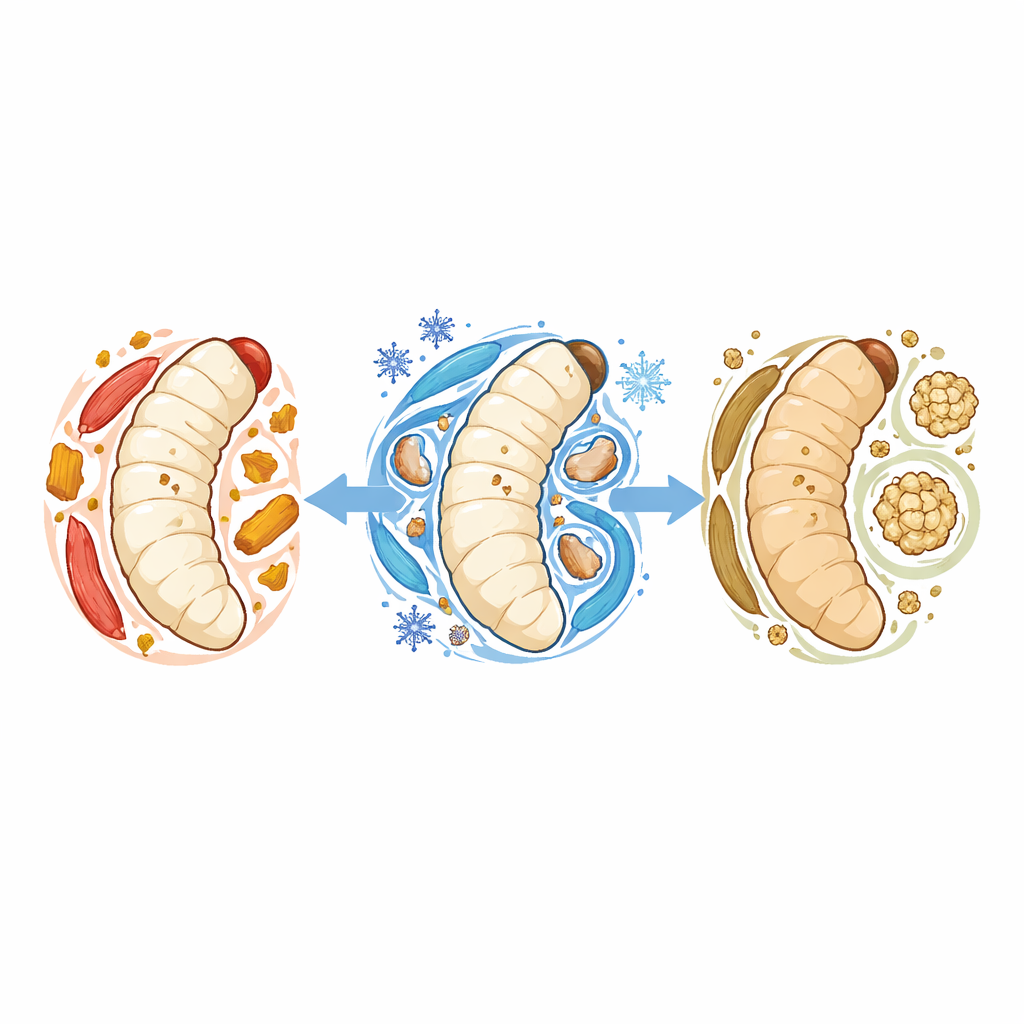
To understand what the larvae were doing at each phase, the researchers sequenced RNA—the molecules that reflect which genes are active—from larvae collected at the three thresholds. In late‑fall, many of the highly active genes were linked to movement, sensing the environment, and breaking down plant carbohydrates. This fits the visible behavior: larvae are tunneling downward from the stem into the roots, a journey that demands both energy and coordination. Gene activity suggested that larvae may detect temperature changes and chemical cues to guide this migration, and that specialized odor‑sensing proteins could help them gather in shared shelters. At the same time, changes in genes related to cell membranes and fats hinted that the larvae were already beginning to adjust their bodies in anticipation of colder conditions.
The deep chill and cold resistance
Mid‑winter, when the hibernaculum is coldest, brought a very different genetic profile. Here, genes involved in managing fats and sugars, protecting cell membranes, and producing small protective molecules were strongly expressed. These changes are consistent with a “cold‑hardy” state in which larvae avoid freezing by keeping their body fluids liquid and stable. Genes related to energy production from stored fats, recycling of sugars, and the possible buildup of glycerol—a well‑known antifreeze compound in insects—were all active. At the same time, stress‑response genes, especially those coding for heat shock proteins and antioxidant defenses, were turned on. These help repair or remove damaged proteins and neutralize reactive by‑products that build up when metabolism runs slowly in the cold, maintaining cellular health through the harshest weeks.
Preparing for transformation
By late‑winter, as temperatures begin to moderate, the larvae shift gears again. Gene activity shows a renewed emphasis on breaking down complex plant carbohydrates in the phloem and tapping into stored glycogen and fats. This energy fuels both movement—such as the muscle work needed to carve a pupal chamber in the roots—and the early steps of metamorphosis. Many of the active genes at this stage are linked to muscle structure, repair, and growth, as well as enzymes that digest plant cell walls. Together, these patterns suggest that larvae are simultaneously finishing their feeding, reshaping their bodies, and investing energy in building the chambers where they will soon pupate.
What this means for forests and future tools
In simple terms, the study shows that these bark beetle larvae do not just “wait out” winter; they pass through a carefully timed sequence of behaviors and internal adjustments tied to changing temperatures. First they move and feed to reach a safer underground shelter, then they reinforce their cells to resist cold, and finally they re‑activate feeding and movement to prepare for becoming pupae and, later, adults. By pinpointing the genes and processes involved at each step, the work offers a molecular roadmap of winter survival. Such detailed knowledge could one day be used to disrupt key stages—such as cold protection or metamorphosis—with highly specific genetic tools, helping protect vulnerable pine forests without broad, non‑selective interventions.
Citation: Becerril, M., Zúñiga, G., Torres-Banda, V. et al. Temperature changes reveal different transcriptional responses in the larvae of the bark beetle Dendroctonus rhizophagus during the cold season. Sci Rep 16, 10286 (2026). https://doi.org/10.1038/s41598-026-40764-4
Keywords: bark beetle larvae, insect cold tolerance, forest pests, overwintering biology, transcriptomics