Clear Sky Science · en
7SK-enriched exosomes suppress the cancer phenotypes in human lung cancer cells: insights from 2D and microfluidic 3D in vitro models
Why tiny couriers inside our bodies matter
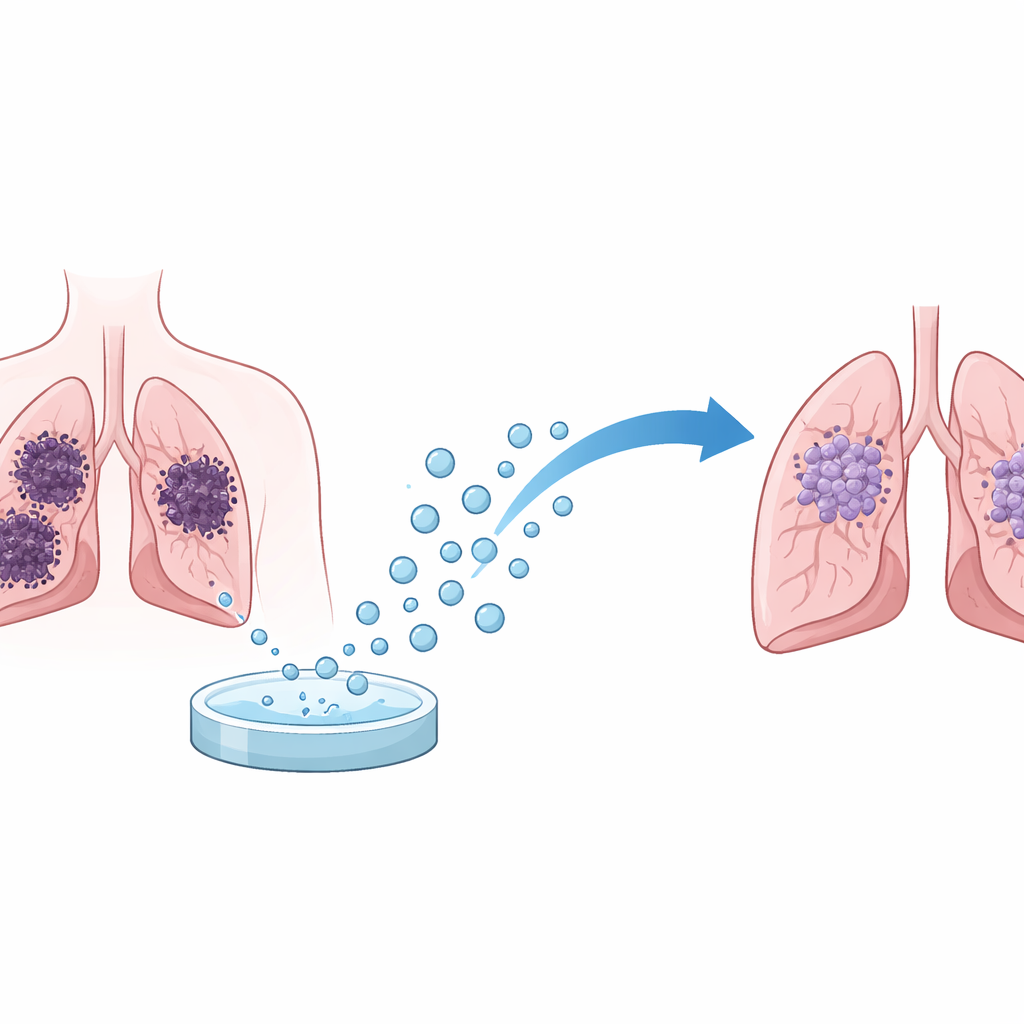
Lung cancer is still the world’s deadliest cancer, in part because tumors often resist current drugs and spread to new tissues. This study explores a surprising ally in the fight: microscopic bubbles that cells naturally release, called exosomes, loaded with a special RNA molecule named 7SK. By using these natural couriers to deliver 7SK into lung cancer cells grown in the lab, the researchers asked a simple but powerful question: can we re‑program cancer cells to slow down, stop spreading, and die, without heavily damaging healthy cells?
A natural message with a quieting effect
Every cell reads genes to decide when to grow, divide, or stay put. 7SK is a long RNA molecule that does not make a protein but instead helps control how other genes are switched on and off. Earlier work hinted that when 7SK levels drop, some cancers become more aggressive. Here, the team focused on non‑small‑cell lung cancer, the most common form of lung cancer, to test whether boosting 7SK could push tumor cells in the opposite direction. Rather than forcing cells to permanently overproduce 7SK with viruses or DNA constructs, they chose a route that resembles the body’s own communication system: packaging lab‑made 7SK into exosomes released from umbilical cord–derived stem cells and then feeding these “7SK‑rich” exosomes to lung cancer cells.
Tiny bubbles carrying a potent cargo
The researchers first confirmed that the stem‑cell‑derived exosomes looked and behaved as expected: they were small, round particles with intact membranes and a narrow size range. Using fluorescent dyes, they showed that lung cancer cells readily swallowed these labeled exosomes in both flat (2D) dishes and more realistic three‑dimensional (3D) mini‑tumors grown in a collagen gel and microfluidic device. When the exosomes were loaded with 7SK, the amount of 7SK inside the cancer cells rose sharply, proving that the cargo had been successfully delivered by this natural transport system.
Slowing growth and movement in flat cultures
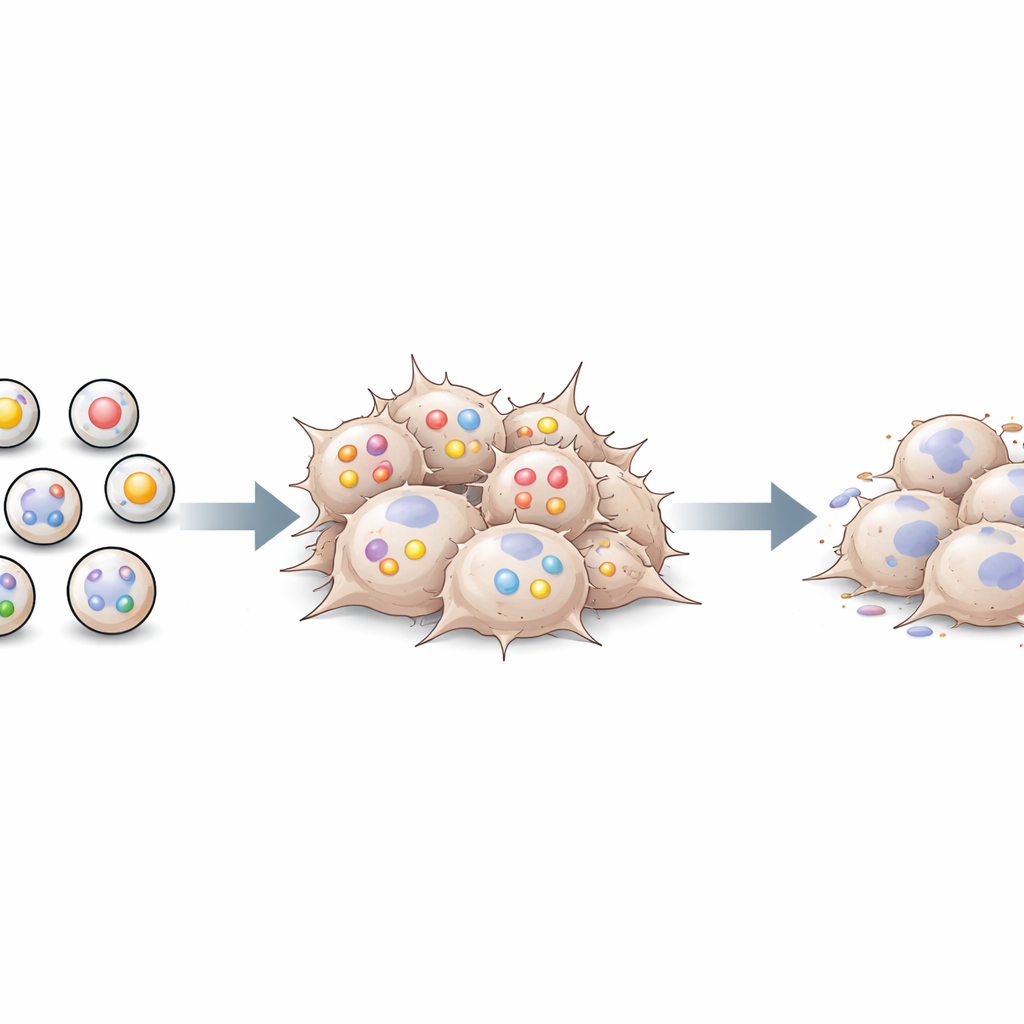
Once the cancer cells had taken up 7SK‑rich exosomes, their behavior changed in several important ways. The cells’ ability to survive and multiply dropped over the course of hours to days, as shown by standard viability tests and direct cell counts. Markers of programmed cell death increased, including activation of key enzymes and shifts in the balance between pro‑death and pro‑survival genes. At the same time, the cells became less able to move and invade. In wound‑healing and transwell assays, treated cells were slower to crawl into empty space or cross barriers, and gene activity shifted away from a state associated with loose, mobile, invasion‑prone cells and toward a more stuck‑down, less migratory state.
Putting tumor behavior to the test in 3D
Because real tumors grow as 3D clusters, not flat sheets, the team turned to spheroids—compact balls of lung cancer cells—and housed them in a microfluidic chip that mimics conditions inside the body. When exposed to 7SK‑loaded exosomes, these spheroids stayed smaller, spread out less into the surrounding gel, and showed more dead cells than untreated spheroids or those receiving empty exosomes. In other words, in a setting that better resembles an early tumor embedded in lung tissue, the 7SK cargo still reduced growth and the first steps of metastatic escape.
What this could mean for future lung cancer care
Altogether, the experiments suggest that sending extra 7SK into lung cancer cells via exosomes can dial down key cancer traits—uncontrolled growth, survival, and aggressive spread—while leaving normal lung cells largely unharmed at the early time points tested. This work is still at an early, lab‑only stage, and the authors stress that more detailed studies in additional cell types and animal models are needed to clarify how 7SK works inside lung tumors and how safe such a therapy would be. Still, the findings point toward an intriguing future strategy: harnessing the body’s own nanoscale couriers to deliver regulatory RNAs that gently nudge cancer cells away from malignancy rather than blasting them with broadly toxic drugs.
Citation: Aghamiri, S., Ajoudanian, M., Farhadi, S. et al. 7SK-enriched exosomes suppress the cancer phenotypes in human lung cancer cells: insights from 2D and microfluidic 3D in vitro models. Sci Rep 16, 10789 (2026). https://doi.org/10.1038/s41598-026-40761-7
Keywords: lung cancer, exosomes, long noncoding RNA, RNA therapy, microfluidic tumor models