Clear Sky Science · en
Non-thermal atmospheric pressure plasma inactivation of Paenibacillus larvae, the causative agent of American foulbrood in honeybees (Apis mellifera)
Why bee health matters to all of us
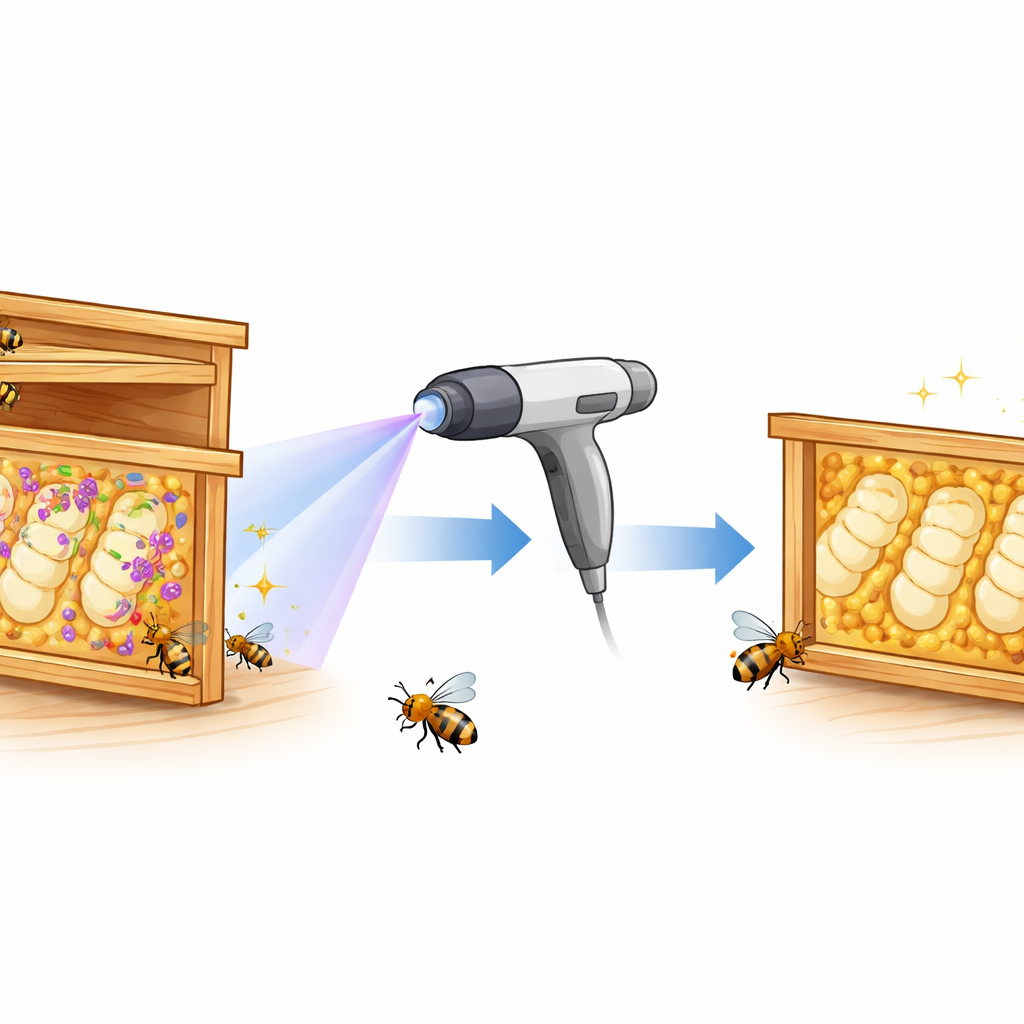
Honeybees do far more than make honey: they pollinate many of the fruits, nuts, and vegetables that end up on our plates. One of the most devastating diseases threatening these bees is American foulbrood, which kills developing larvae and can wipe out whole colonies. Because the bacterium behind this disease forms extremely tough spores, beekeepers often must burn infected hives to stop its spread. This study explores a new, chemical-free tool—non-thermal atmospheric-pressure plasma, sometimes called “cold plasma”—to see whether it can weaken this bacterium and help protect bee colonies.
A stubborn hive disease
American foulbrood is caused by a bacterium called Paenibacillus larvae. Young bee larvae become infected when they eat spores mixed into their food. Once inside the gut, the spores wake up, multiply, and eventually invade the larva’s body, killing it. The dead larva dries into a tough, rope-like scale packed with millions of new spores that can remain infectious on hive equipment for decades. Current control methods include antibiotics and, in many places, destruction of entire colonies. Antibiotics do not kill spores, can leave residues in honey, and may favor drug‑resistant strains, so there is a strong push to find safer, sustainable alternatives.
What cold plasma brings to the table
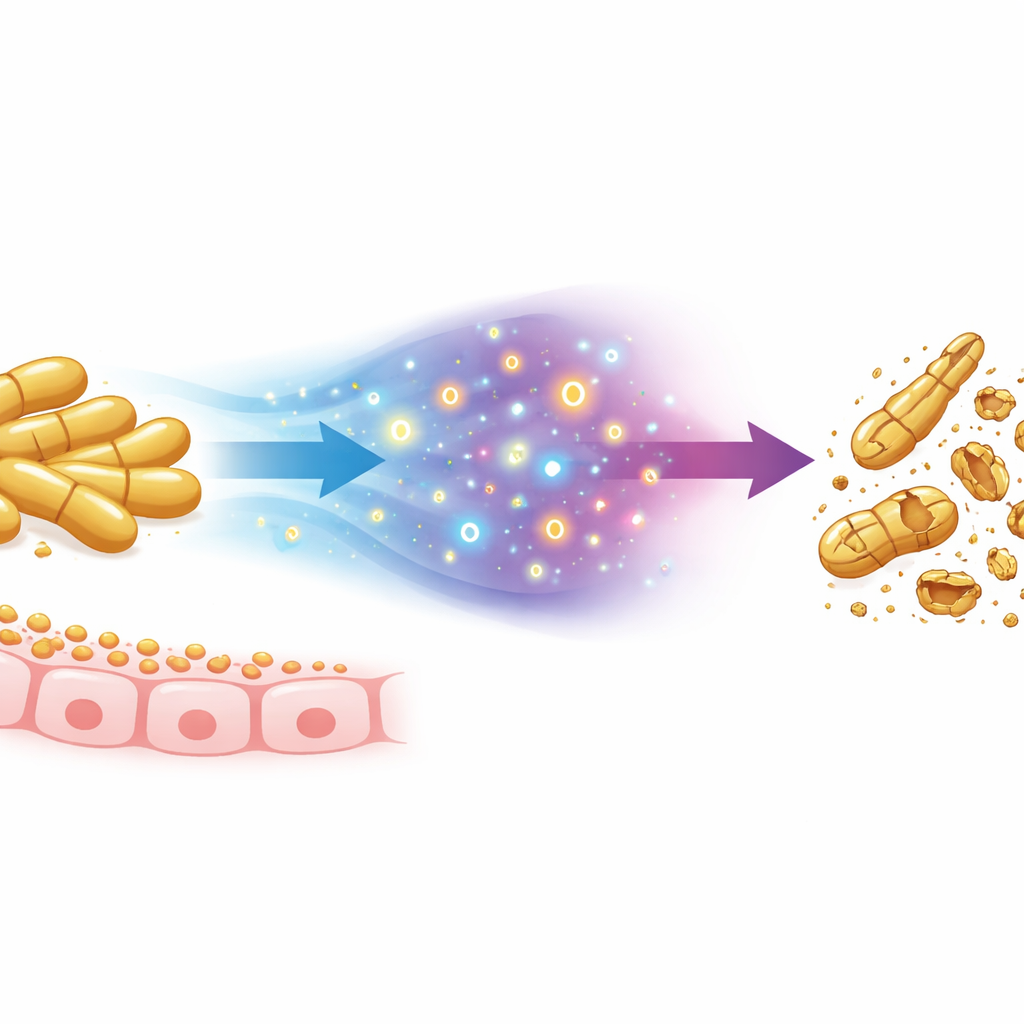
Plasma is sometimes called the fourth state of matter—a gas in which some particles are charged. In this work, the researchers used a small jet that creates plasma from either air or argon gas at room temperature, gentle enough for heat‑sensitive materials. This kind of plasma is rich in highly reactive forms of oxygen and nitrogen, along with charged particles and a bit of ultraviolet light. Together, these components can attack the outer surface of microbes, damage their proteins and genetic material, and eventually cause them to die. The team first confirmed that their air and argon plasmas produced many of these reactive species, then tested how well they could stop P. larvae from growing under controlled laboratory conditions.
Putting the bacteria under plasma
When P. larvae was grown on agar plates and exposed directly to the plasma jet, both air and argon treatments carved out clear bacteria‑free zones, showing strong growth suppression. Air plasma created the largest clearings, especially at longer exposure times. In liquid suspensions of the bacteria, both gases again reduced the number of living cells, with longer exposures increasing the effect; here, argon plasma gave the biggest drop in viable counts after ten minutes. Microscopy and biochemical tests revealed what was happening to the cells: plasma‑treated bacteria leaked DNA and proteins, lit up as “dead” in a live/dead stain, and showed rough, dented, and collapsed surfaces under the electron microscope. These changes point to severe damage to the bacterial envelope and insides.
Testing the approach on real bee larvae
To see whether these laboratory effects mattered in a living host, the scientists fed laboratory‑reared honeybee larvae with food laced either with untreated bacteria or with bacteria that had been pre‑exposed to air or argon plasma. Larvae given untreated P. larvae carried the highest bacterial loads, confirming successful infection. Those fed air‑plasma‑treated bacteria had no detectable P. larvae, and those given argon‑treated bacteria had fewer bacteria than the fully infected controls. Despite this clear reduction in bacterial burden, survival curves over seven days looked similar across all groups, including uninfected controls. In other words, under the specific conditions of this experiment, weakening the bacteria did not yet translate into noticeably better short‑term survival for the larvae.
What this means for future hive protection
Overall, the study shows that cold plasma can significantly damage and reduce the viability of the bacterium that causes American foulbrood, both in petri dishes and in bacteria fed to honeybee larvae. Air plasma was especially effective on solid surfaces, while argon plasma showed strong effects in liquid, underscoring that the gas type and treatment setup matter. However, because larval survival did not improve in the short term, further refinements are needed—particularly methods that reliably inactivate the hardy spores and reduce bacterial virulence factors. If these challenges can be met and field‑scale devices developed, non‑thermal plasma could become a rapid, residue‑free disinfection tool for hive equipment, offering beekeepers a way to fight a notorious disease without relying solely on antibiotics or colony destruction.
Citation: Boonmee, T., Sinpoo, C., Nakpla, S. et al. Non-thermal atmospheric pressure plasma inactivation of Paenibacillus larvae, the causative agent of American foulbrood in honeybees (Apis mellifera). Sci Rep 16, 11139 (2026). https://doi.org/10.1038/s41598-026-40749-3
Keywords: honeybee disease, American foulbrood, cold plasma, Paenibacillus larvae, bee health