Clear Sky Science · en
Water line biofilm regrowth dynamics in six wean-to-finish farms post peracetic acid water line cleaning and disinfection
Why barn water pipes matter
For pigs, clean water is just as vital as good feed, yet what happens inside the barn’s water pipes is largely hidden from view. Over time, slimy layers of microbes, called biofilms, can build up inside these pipes, sheltering germs, narrowing the flow of water, and quietly undermining herd health. This study explored whether a commonly used disinfectant, peracetic acid, can be relied on to clear out these biofilms in real-world pig barns—and, crucially, how long any cleaning benefit actually lasts.
Hidden slime in everyday plumbing
Modern swine farms often rely on private wells and long, branching water lines to deliver drinking water to thousands of animals. These systems create ideal conditions for biofilms to form: minerals and rough pipe surfaces give microbes a foothold, slow-moving water and dead-end lines allow stagnation, and medicines or electrolytes added to the water can serve as extra nutrients. Once established, communities of bacteria produce a sticky matrix that clings to the pipe interior, making them harder to remove and potentially turning water lines into long-term reservoirs of unwanted microbes.
A real-world cleaning trial
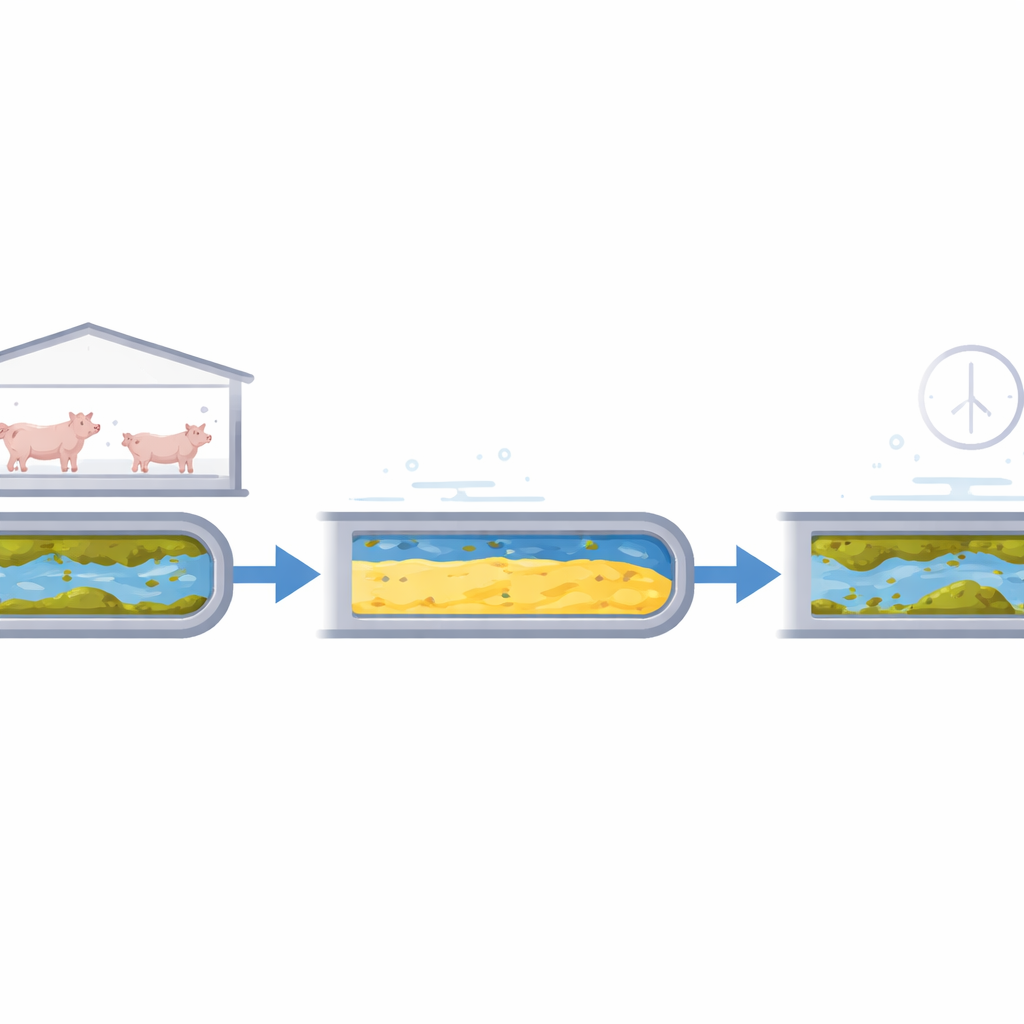
To see how well a one-time cleaning works in practice, the researchers studied six commercial wean-to-finish pig farms in Iowa that used untreated well water. They installed short, removable sections of plastic pipe—"coupons"—into the main water lines months before the trial, allowing natural biofilms to grow under everyday farm conditions. The farms then performed a terminal cleaning using a 0.78% solution of peracetic acid, a strong disinfectant that can also help dissolve mineral deposits, and let it sit in the lines for at least 24 hours while barns were empty between pig groups.
Measuring the clean-up and the comeback
Before treatment and at multiple points over the next 11 weeks, the team removed coupon sections and carefully scraped out the material inside. In the laboratory they counted how many living bacteria were present under both oxygen-rich and oxygen-poor conditions, summarizing the results as colony-forming units per milliliter. Immediately after flushing the peracetic acid out, bacterial levels in the biofilm dropped by more than a thousandfold on average, a statistically strong reduction across most farms. This confirmed that the one-time treatment was very effective at knocking down the resident microbial communities, at least in the short term.
The rapid return of biofilms
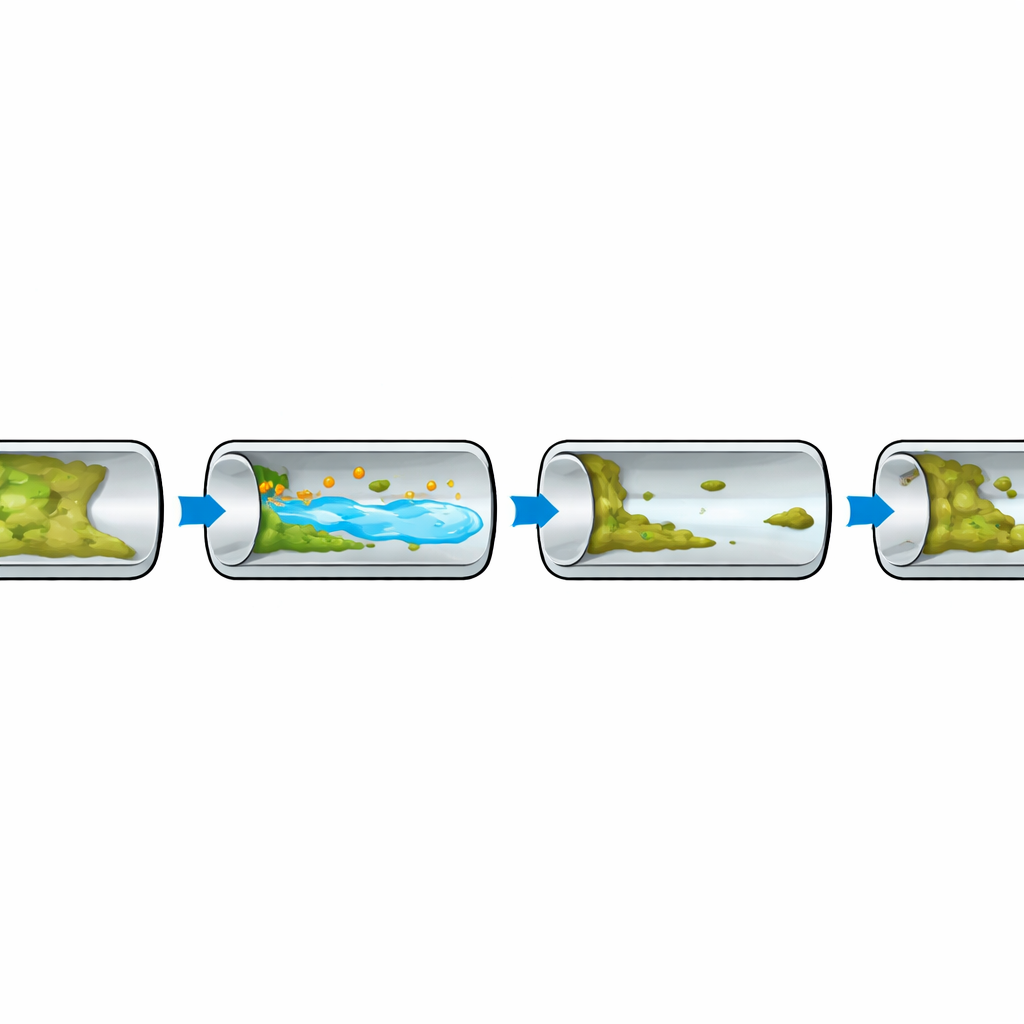
However, when the same lines were checked just three and five days later, bacterial levels in the biofilm had already climbed back to amounts that were indistinguishable from the pre-cleaning state. At later checks—one to eight weeks after treatment—biofilm levels often exceeded the original amounts and remained high toward the end of the study. These patterns fit what is known about biofilms: even if much of the material is stripped away, tiny pockets can survive, and protected microbes quickly recolonize surfaces once water starts flowing again. Differences among farms suggested that local factors such as water chemistry, the thickness of the original biofilm, and how well the disinfectant moved through the system all influenced how strong and lasting the cleaning effect was.
What this means for farm practice
The findings carry a clear message for swine producers and veterinarians: a single deep cleaning with peracetic acid can sharply reduce biofilm in water lines, but the relief is brief. Within days, biofilms regrow to previous levels, and over weeks they may become even more established. As a result, relying on one-time treatments between groups of pigs is unlikely to provide long-term protection against waterborne microbes. Instead, this work supports the idea that water systems should be managed as living ecosystems, using regular monitoring and ongoing disinfection or other control strategies. By revealing how quickly biofilms bounce back, the study lays the groundwork for designing more continuous and effective water line management programs that better safeguard both animal health and farm productivity.
Citation: Doughan, G.E., Walthart, B.K., Petersen, M.B. et al. Water line biofilm regrowth dynamics in six wean-to-finish farms post peracetic acid water line cleaning and disinfection. Sci Rep 16, 9921 (2026). https://doi.org/10.1038/s41598-026-40725-x
Keywords: swine water quality, biofilm regrowth, peracetic acid cleaning, livestock drinking water, barn plumbing hygiene