Clear Sky Science · en
25-Hydroxyvitamin D3 promotes slow-twitch fiber type transition in skeletal muscle
Why a Vitamin Pill Could Change How Muscles Work
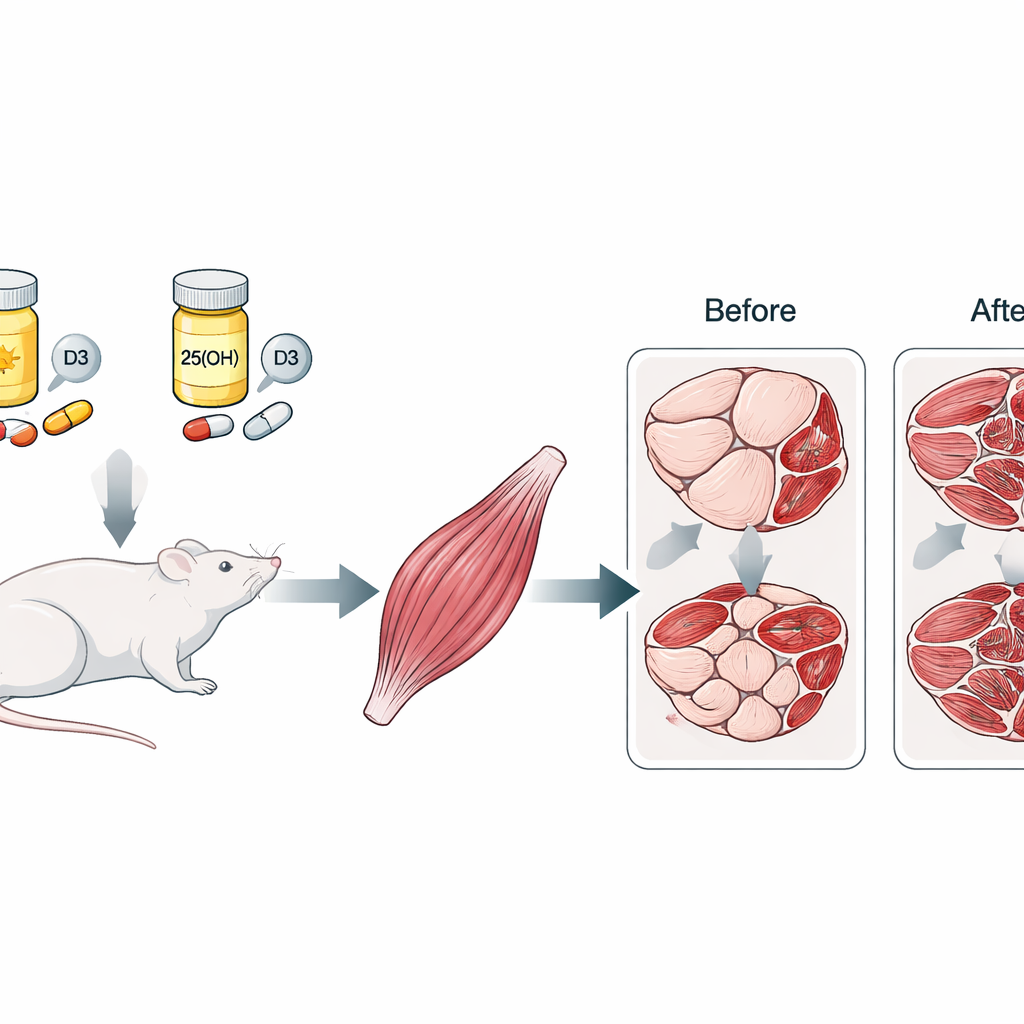
Vitamin D is best known for helping our bones, but it also quietly shapes how our muscles function. This study asks a deceptively simple question with big implications for aging, fitness, and weakness: does a particular form of vitamin D, called 25-hydroxyvitamin D3, tune muscles toward more “endurance” fibers than the standard vitamin D3 supplement? Using young rats as a model, the researchers show that this form not only boosts blood vitamin D levels more efficiently, but also nudges leg muscles toward slow, fatigue‑resistant fibers that rely heavily on oxygen.
Two Versions of the Same Nutrient
Vitamin D3, the familiar form in many supplements, is actually a starting material. The body must first convert it in the liver into 25-hydroxyvitamin D3, which then circulates in the blood and serves as the main yardstick of vitamin D status. A second step in the kidney makes the fully active hormone. The twist is that 25-hydroxyvitamin D3 can also be eaten directly and is handled differently by the body: it is more water‑friendly, less likely to get trapped in fat tissue, and produces higher blood levels for the same intake. Earlier work hinted that both forms might influence muscle size and strength, but it was unclear whether they could shift the balance between fast, power‑oriented fibers and slow, endurance‑oriented fibers.
Designing a Fair Test in Growing Muscles
To compare the two forms head‑to‑head, the team raised young male rats on a vitamin D‑free diet for four weeks, pushing all but the control animals into deficiency. Then, for another four weeks, different groups received either varying doses of vitamin D3 or a single dose of 25-hydroxyvitamin D3 in their food, while one group stayed deficient. The researchers tracked body weight, food intake, body fat and lean mass, blood calcium and phosphorus, and bone density. Surprisingly, even clear vitamin D deficiency for eight weeks did not stunt growth or alter body composition in these young animals. The main visible changes emerged not in how big the muscles were, but in how they were built on the inside.
Rewiring Muscle Fibers from Fast to Slow
In the biceps femoris, a large muscle in the back of the thigh that normally contains mostly fast, powerful fibers, the scientists stained thin sections to count fiber types. Rats that remained deficient in vitamin D had the fewest slow‑twitch (type I) fibers. Reintroducing vitamin D3 at several doses restored slow fibers to about the same fraction seen in the always‑adequate control group. In contrast, giving 25-hydroxyvitamin D3 at a moderate dose pushed the muscle further: slow fibers rose to roughly double the share seen in control animals, while the fastest, type IIb fibers declined. Notably, overall muscle size and the average cross‑sectional area of individual fibers did not change, meaning the internal mix of fibers shifted without simple growth or shrinkage.
More Mitochondria and Busy Cell Signals
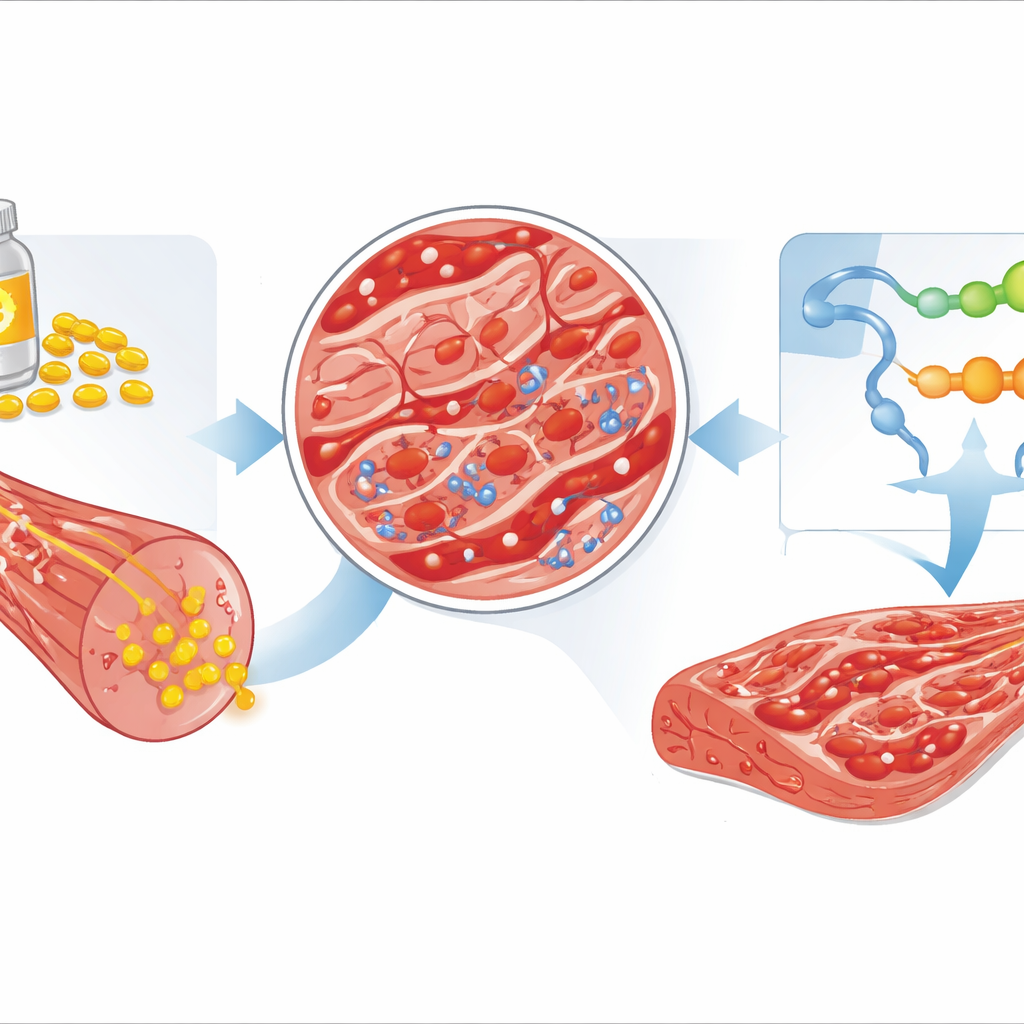
The slow fibers favored by 25-hydroxyvitamin D3 are rich in mitochondria, the tiny power plants that use oxygen to generate energy. The researchers found that mitochondrial DNA copy number, a proxy for how many mitochondria are present, was highest in rats given 25-hydroxyvitamin D3, matching the increase in slow fibers. Blood measurements showed that this form of the vitamin raised circulating 25-hydroxyvitamin D to higher levels than even the top dose of vitamin D3. When the team examined gene activity across the muscle, both forms of vitamin D boosted genes linked to contraction and to slow‑twitch traits. Yet 25-hydroxyvitamin D3 produced extra changes: stronger activation of genes tied to new blood vessel growth and to calcium‑dependent signaling cascades, such as ERK pathways and nitric oxide production, all known to encourage oxidative, endurance‑type muscle.
What This Means for Everyday Health
For a layperson, the takeaway is that not all vitamin D supplements act identically on muscle. In growing rats recovering from early vitamin D lack, the form that is usually measured in blood tests—25-hydroxyvitamin D3—proved more effective than regular vitamin D3 at raising vitamin D status and steering a key leg muscle toward slow, endurance‑oriented fibers packed with mitochondria. These fibers are more resistant to fatigue and wasting, which could matter for conditions like age‑related muscle loss or chronic weakness. While human trials are still needed, the study suggests that formulations based on 25-hydroxyvitamin D3 may offer a promising strategy to support muscle quality, not just bone health, by quietly rewiring how our muscles are put together from the inside.
Citation: Park, M.Y., Kim, DY., Seok, MK. et al. 25-Hydroxyvitamin D3 promotes slow-twitch fiber type transition in skeletal muscle. Sci Rep 16, 13294 (2026). https://doi.org/10.1038/s41598-026-40724-y
Keywords: vitamin D, skeletal muscle, slow-twitch fibers, mitochondria, nutritional supplementation