Clear Sky Science · en
Effective degradation of Reactive Blue 21 and Reactive Red 195 by copper(II) oxide nanoparticles biosynthesized by pistachio hulls extract
Turning Waste into a Water Cleaner
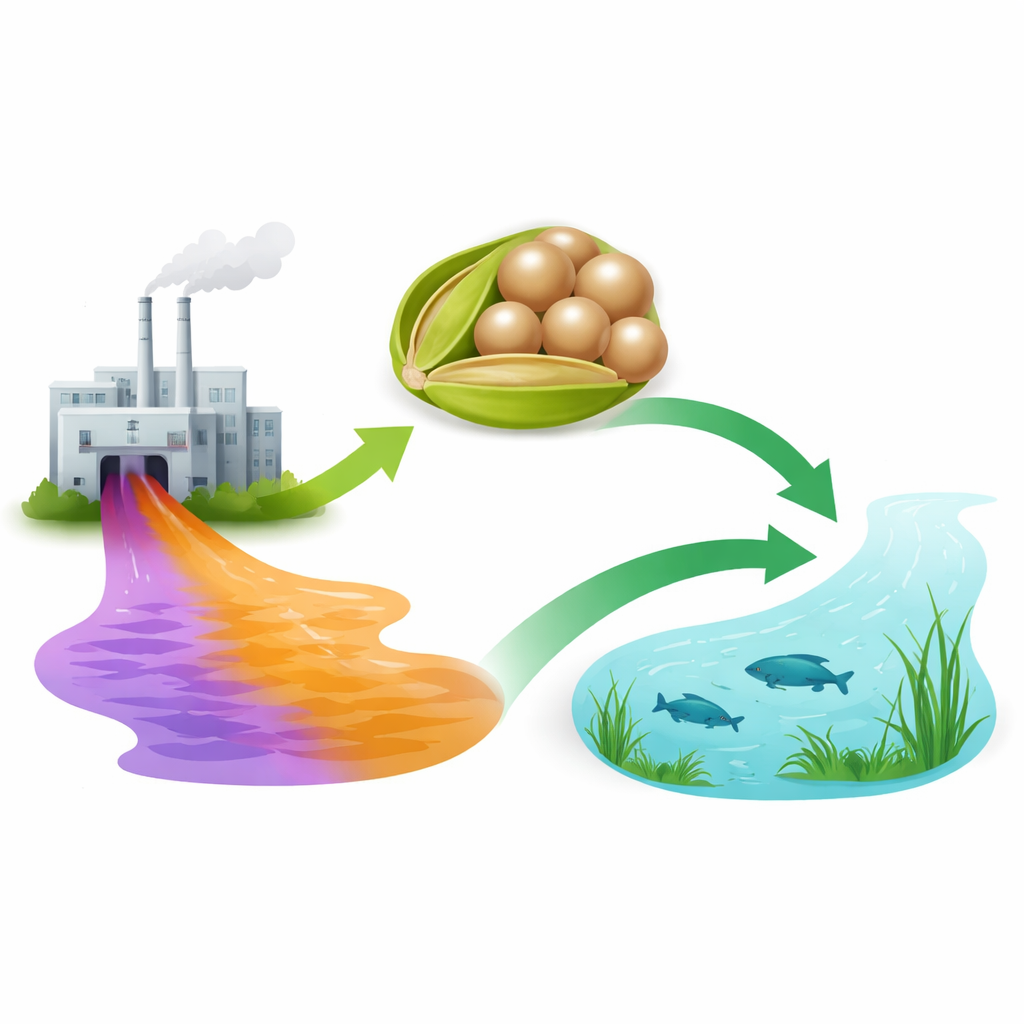
Colorful clothes and fabrics come at a hidden cost: many of the dyes that make them bright and long‑lasting are very hard to remove from wastewater and can harm rivers, lakes, and even human health. This study explores an inventive way to tackle that problem by turning an agricultural waste product—pistachio hulls—into tiny particles of copper oxide that can use light to break down stubborn textile dyes in water. It shows how a local waste stream can be converted into a practical tool for cleaner water.
Why Bright Dyes Are a Dark Problem
Modern textile dyes such as Reactive Blue 21 and Reactive Red 195 are engineered to cling tightly to fabrics and resist fading from sunlight, washing, and chemicals. Those same properties make them persist in the environment when dye‑laden wastewater is released into rivers and treatment plants. The dyes block light, reducing photosynthesis in aquatic plants, and some of their breakdown products can be toxic or even cancer‑linked. Conventional treatment methods may only transfer these pollutants from water to another material rather than destroying them. That has pushed researchers to look for ways to completely dismantle dye molecules instead of simply moving them around.
Light‑Driven Cleanup with Tiny Helpers
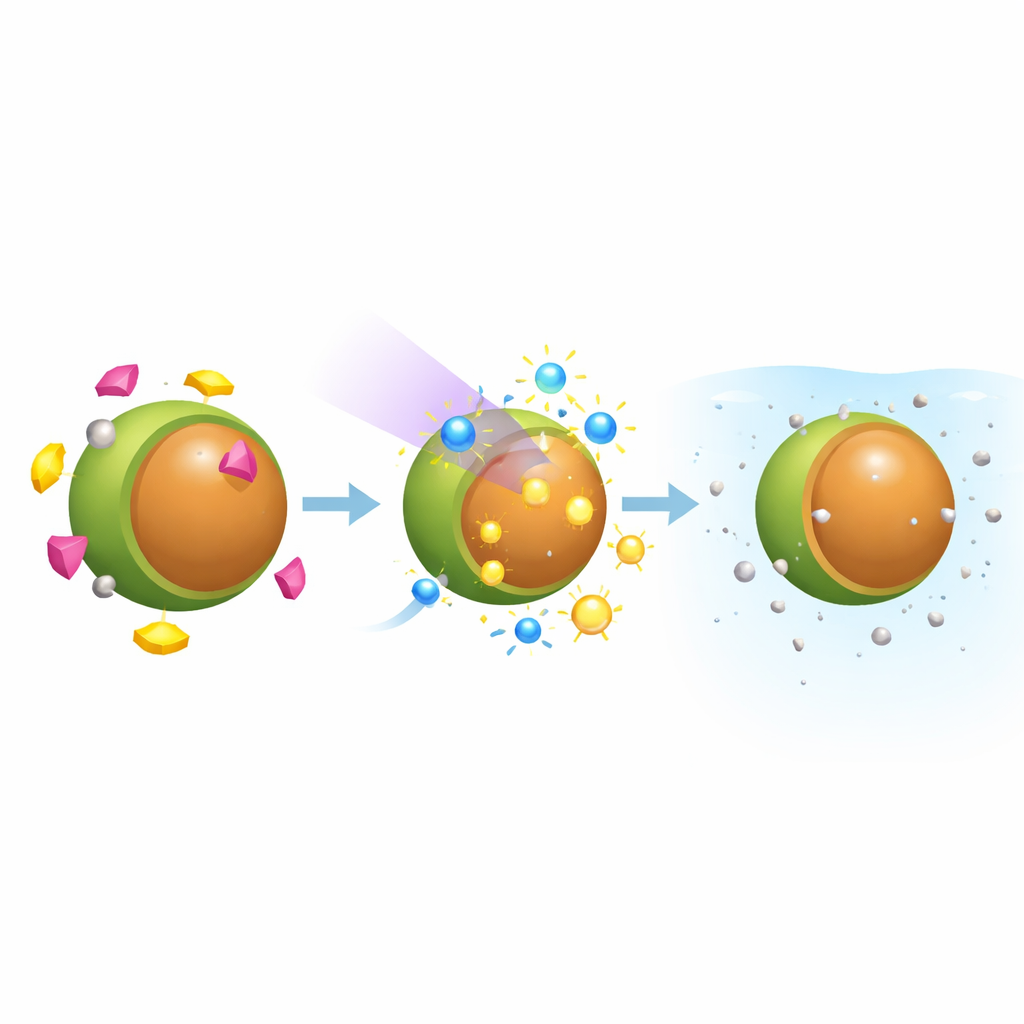
One promising approach is photocatalysis, in which a solid material absorbs light and uses that energy to trigger powerful reactions in nearby pollutants. When light of the right energy hits a semiconductor such as copper oxide, electrons are shaken loose, leaving behind positively charged gaps. These charges migrate to the surface and help form highly reactive oxygen‑based particles that can attack complex dye molecules, chopping them into smaller, safer fragments and eventually into carbon dioxide, water, and mineral salts. The challenge is to make these light‑responsive particles in a way that is both effective and environmentally friendly.
Making Nanoparticles from Pistachio Leftovers
The researchers focused on copper oxide nanoparticles—spheres only about one ten‑thousandth the width of a human hair—and chose pistachio hulls, an abundant by‑product from Iran’s large pistachio industry, as a natural source of helpful plant chemicals. They prepared a simple water extract from dried, ground hulls and mixed it with a warm solution of a common copper salt. Compounds in the extract, including natural antioxidants, acted as gentle “reducers,” turning dissolved copper into solid copper oxide, and as “caps,” coating the new particles so they did not clump together. A series of laboratory tests confirmed that the resulting particles were mostly spherical, crystalline copper oxide with an average size around 90 nanometers and a fairly uniform size distribution—features that are important for reliable performance.
Putting the Tiny Cleaners to Work
To see how well these green‑made nanoparticles could clean water, the team added small amounts of them to water containing either Reactive Blue 21, Reactive Red 195, or a mix of both dyes. After an initial period in the dark to let the dyes settle onto the particle surfaces, they shone ultraviolet light on the mixtures while gently stirring and regularly measuring how much color remained. Over three hours of light exposure, the nanoparticles broke down about 83 percent of the blue dye and 75 percent of the red dye when each was tested alone. In the mixed‑dye solution, the cleaning was slightly less efficient—about 69 percent removal for the blue and 60 percent for the red—because the two kinds of dye had to compete for space on the particle surfaces and for the reactive oxygen species generated during illumination.
How the Breakdown Happens
At the heart of the process is the way light energizes the nanoparticles. When ultraviolet light strikes the copper oxide, it lifts electrons to a higher‑energy state and leaves behind positive sites. These charges interact with oxygen and water in the surrounding liquid, creating fast‑acting radicals that attack the dyes. For the red dye, which belongs to the azo family, this means cutting the double‑bonded nitrogen link that gives the dye its color, then opening up its ring‑shaped structures. Over time, these pieces are further oxidized into smaller acids and salts and, eventually, into simple molecules like carbon dioxide and water. Because the pistachio‑derived coating helps keep the nanoparticles dispersed and exposes lots of surface area, the reactions can proceed efficiently, and the particles can keep working cycle after cycle.
A Simple Idea with Double Benefits
In plain terms, this work shows that leftovers from a major crop can be repurposed into a light‑activated powder that strips color from polluted water and actually destroys the dye molecules. By using plant extracts instead of harsh chemicals to make the nanoparticles, the method reduces both energy use and toxic by‑products. While the study was carried out under ultraviolet light and in controlled laboratory conditions, it points toward a future in which agricultural waste helps power local solutions for textile pollution, offering a cleaner path for both water and farming communities.
Citation: Hosseini, S.M.S., Maghool, M.A. & Eghbali, H. Effective degradation of Reactive Blue 21 and Reactive Red 195 by copper(II) oxide nanoparticles biosynthesized by pistachio hulls extract. Sci Rep 16, 10287 (2026). https://doi.org/10.1038/s41598-026-40721-1
Keywords: textile dye wastewater, photocatalytic degradation, copper oxide nanoparticles, green nanoparticle synthesis, pistachio hull waste