Clear Sky Science · en
The stray cat exposure to parabens in highly urbanized environment
City Cats as Clues to Hidden Chemicals
Most people meet stray cats as quick shadows on city streets, but this study shows they may also be silent messengers about the chemicals we all live with. The researchers focused on parabens—preservatives widely used in cosmetics, food, and household products that end up in the air, water, dust, and soil. By measuring these compounds in the cats’ hair, the team turned everyday street animals in Bishkek, the highly polluted capital of Kyrgyzstan, into living recorders of long-term chemical exposure that may mirror the risks faced by city residents.
What Parabens Are and Why They Matter
Parabens are a family of preservatives added to shampoos, creams, makeup, foods, and many other goods to stop mold and yeast from growing. Because they are produced in huge quantities and break down slowly, they now contaminate rivers, seas, soil, air, and even remote regions like Antarctica. For years they were considered harmless, but growing evidence links them to hormone disruption and possible problems in the nervous, reproductive, heart, and immune systems, as well as to cancer and metabolic diseases. Both people and animals can absorb parabens through food, water, breathing, and skin contact, and traces have been found in blood, urine, milk, and various organs.
Why Stray Cats Are Useful Street Reporters
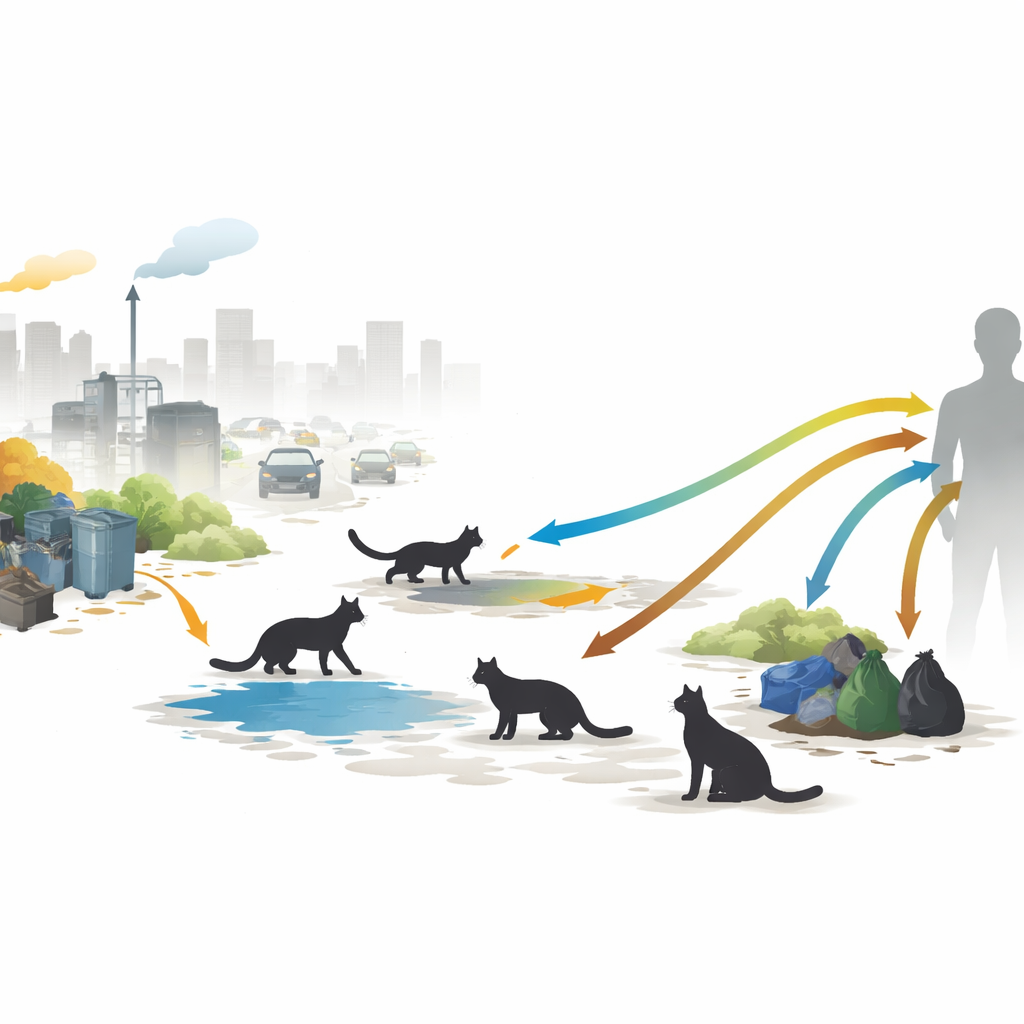
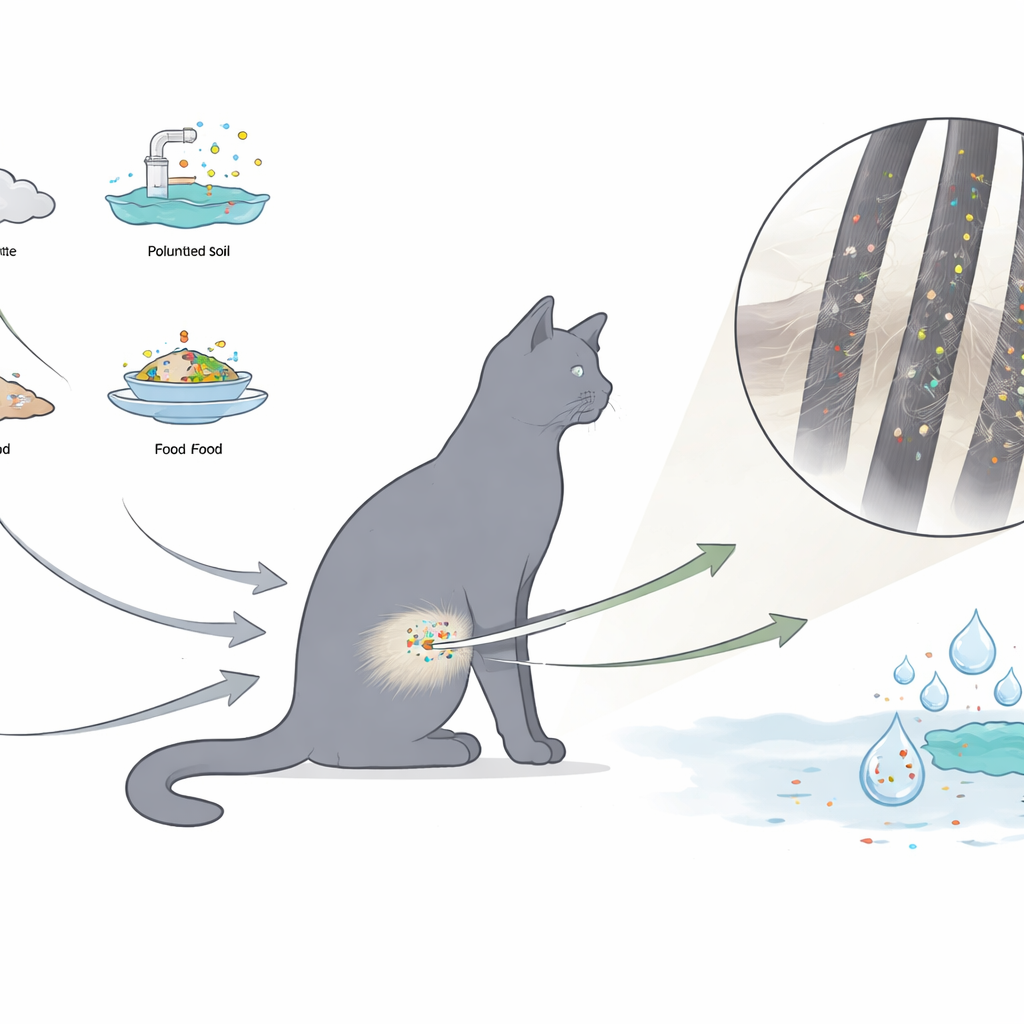
Scientists often use animals that share our environment as early-warning systems for pollution. Cats and dogs are good candidates because they live close to humans, are small enough to be heavily exposed to dust and soil, and tend to show health effects sooner than people. Stray animals go a step further: they spend all their time outdoors, sleeping near roads, rummaging through garbage, drinking from puddles, and eating food waste or small urban prey. This makes them especially sensitive to contamination in the open city environment. Unlike blood or urine, which reflect only recent exposure, hair grows slowly and locks in chemicals over weeks or months, so a small sample can reveal a longer history of contact with pollutants.
What the Researchers Found in Bishkek’s Cats
The team collected abdominal hair from one hundred female stray cats captured for sterilization in Bishkek, a city known for heavy air pollution and intense traffic and industrial activity. Using sensitive laboratory methods, they looked for five common parabens: methylparaben, ethylparaben, propylparaben, butylparaben, and benzylparaben. All five were present in the overall set of samples, and only one cat had levels below detection for every compound. Methylparaben dominated, appearing in 99 percent of cats at much higher amounts than the others. Propylparaben and ethylparaben were also widespread, while butylparaben showed up in about half the animals and benzylparaben only rarely. The concentrations varied widely from cat to cat, suggesting very different daily routines, feeding habits, and micro-environments across the city.
Patterns Linked to Age and Shared Sources
When the researchers compared the pollutants across individual cats, they found that animals with high levels of one common paraben usually had high levels of the others. This pattern points to shared environmental sources—such as the same dusty streets, garbage sites, or water bodies—rather than isolated, one-off exposures. They also grouped the cats by approximate age. The oldest group, roughly two and a half to four years old, carried the highest average levels of most parabens in their hair, significantly above those in the youngest animals for some compounds. The reasons are not completely clear, but may involve age-related changes in metabolism, hormones, activity, or behavior that alter how much pollution the animals encounter or retain over time.
What This Means for People Who Share the Same Streets
To a lay reader, the core message is straightforward: if stray cats in Bishkek have hair loaded with parabens, then the city environment itself is heavily contaminated with these preservatives. Because people breathe the same air, walk on the same dusty pavements, and drink water from the same general area, the cats’ exposure warns of possible long-term risks to human health as well. The study shows that hair analysis in free-roaming animals can provide a simple, non-invasive way to track citywide pollution by chemicals that act on the body’s hormone systems. While the exact health effects in both animals and humans still need careful study, these findings argue for closer monitoring of parabens in urban environments and for treating street animals not just as strays, but as important indicators of the invisible chemical world around us.
Citation: Gonkowski, S., Tzatzarakis, M., Kadyralieva, N. et al. The stray cat exposure to parabens in highly urbanized environment. Sci Rep 16, 11293 (2026). https://doi.org/10.1038/s41598-026-40707-z
Keywords: parabens, stray cats, urban pollution, endocrine disruptors, biomonitoring