Clear Sky Science · en
Utilizing l-arginine as an eco-friendly absorbent for hydrogen sulfide mitigation in produced water
Why cleaning this industrial water matters
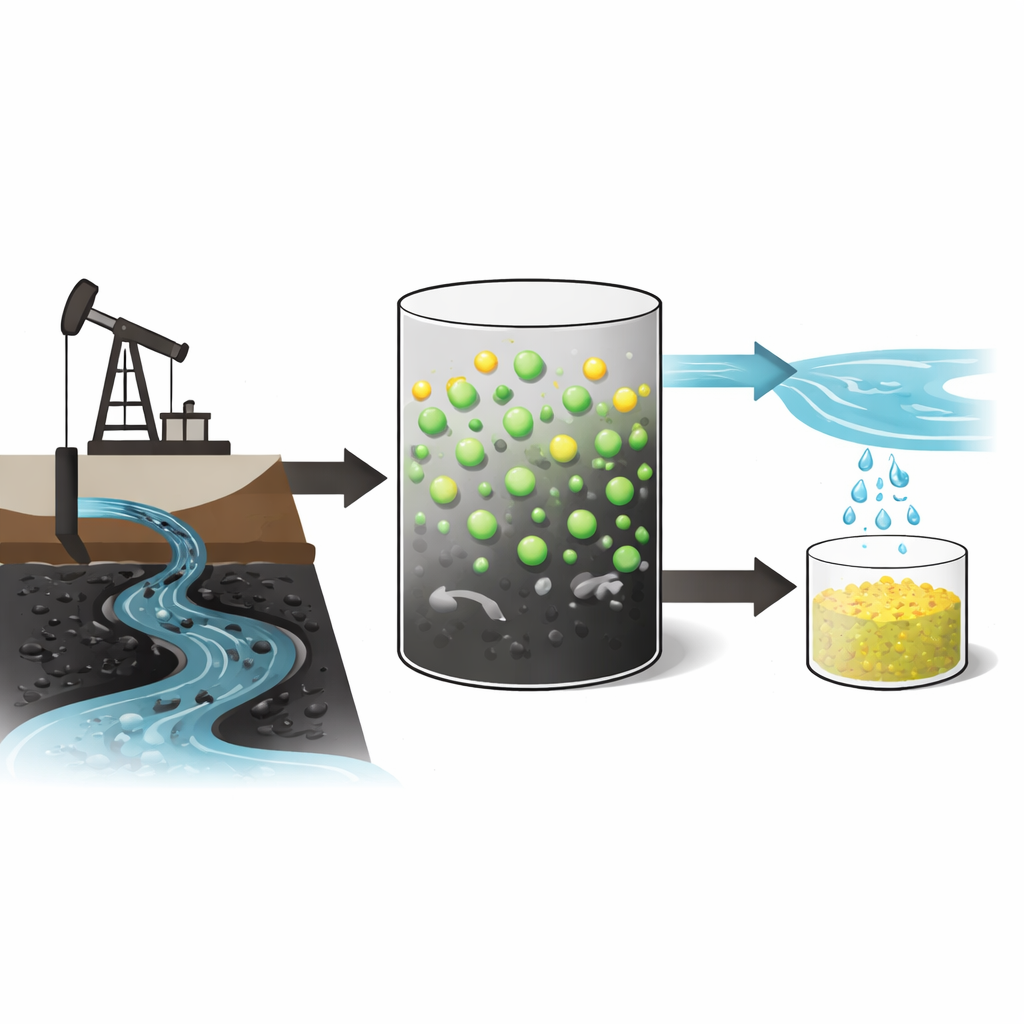
Modern oil and gas wells bring up far more water than oil. Much of this "produced water" is laced with hydrogen sulfide, a poisonous gas that smells like rotten eggs, corrodes equipment, and harms people and the environment even at low levels. Companies typically rely on strong synthetic chemicals to strip this gas out before the water is reused or disposed of. This study explores whether a naturally occurring building block of proteins, the amino acid l-arginine, can serve as a safer, ecofriendly way to clean this dirty water while still matching the performance of industry-standard treatments.
The problem with sour industrial water
Oil and gas operations around the world generate hundreds of millions of barrels of produced water every day. This water contains high levels of dissolved salts, leftover oil, and gases, including hydrogen sulfide. Hydrogen sulfide is not only extremely toxic to workers and nearby communities, it also attacks steel pipes and tanks, causing leaks, blockages, and costly failures. When burned with fuel, it forms sulfur oxides that contribute to acid rain and air pollution. Many treatment methods exist—such as air stripping, membranes, oxidation, biological processes, and solid filters—but each has drawbacks like high cost, complex operation, or the creation of secondary waste. Liquid chemical "scavengers" that react with hydrogen sulfide are widely used, but common ones based on triazine molecules can be harsh and raise environmental and safety concerns.
A greener helper from biology
Amino acids are small, biodegradable molecules best known as the building blocks of proteins. They also carry chemical groups that can latch onto acidic gases such as carbon dioxide and hydrogen sulfide. Among them, l-arginine stands out because it has several nitrogen-rich sites that can accept protons, making it strongly basic in water and particularly reactive toward acidic gases. The authors suggest that this bio-derived molecule could act as a gentle but powerful scavenger for hydrogen sulfide in produced water, offering a more sustainable alternative to conventional petrochemical treatments. Before testing its performance, they confirmed l-arginine’s purity and stability using standard laboratory tools to check its structure, bonding groups, and behavior when heated, ensuring that any changes observed in experiments would be due to its interaction with hydrogen sulfide, not impurities.
Testing how well it scrubs out the toxic gas
The researchers dissolved l-arginine in both pure deionized water and a carefully prepared synthetic produced water containing typical salts like sodium, calcium, and magnesium chlorides. They tested four low concentrations, from 0.1 to 1.0 percent by weight, and compared the results against a commercial triazine scavenger at the same dosage. In sealed cells, they contacted each solution with a gas mixture containing about 1,000 parts per million of hydrogen sulfide, stirred it for an hour at either room temperature (25 °C) or a warmer 50 °C, and measured how much gas remained. Even the lowest l-arginine dose sharply raised the water’s pH into the mildly caustic range and removed almost all of the hydrogen sulfide, cutting it from 990 ppm down to 4–6 ppm in both water types. Higher l-arginine concentrations drove the gas level below the instrument’s detection limit, effectively achieving complete removal. Performance remained high even in salty produced water and at elevated temperature, and closely matched or exceeded the commercial triazine solution under the same conditions.
How this natural molecule does the job
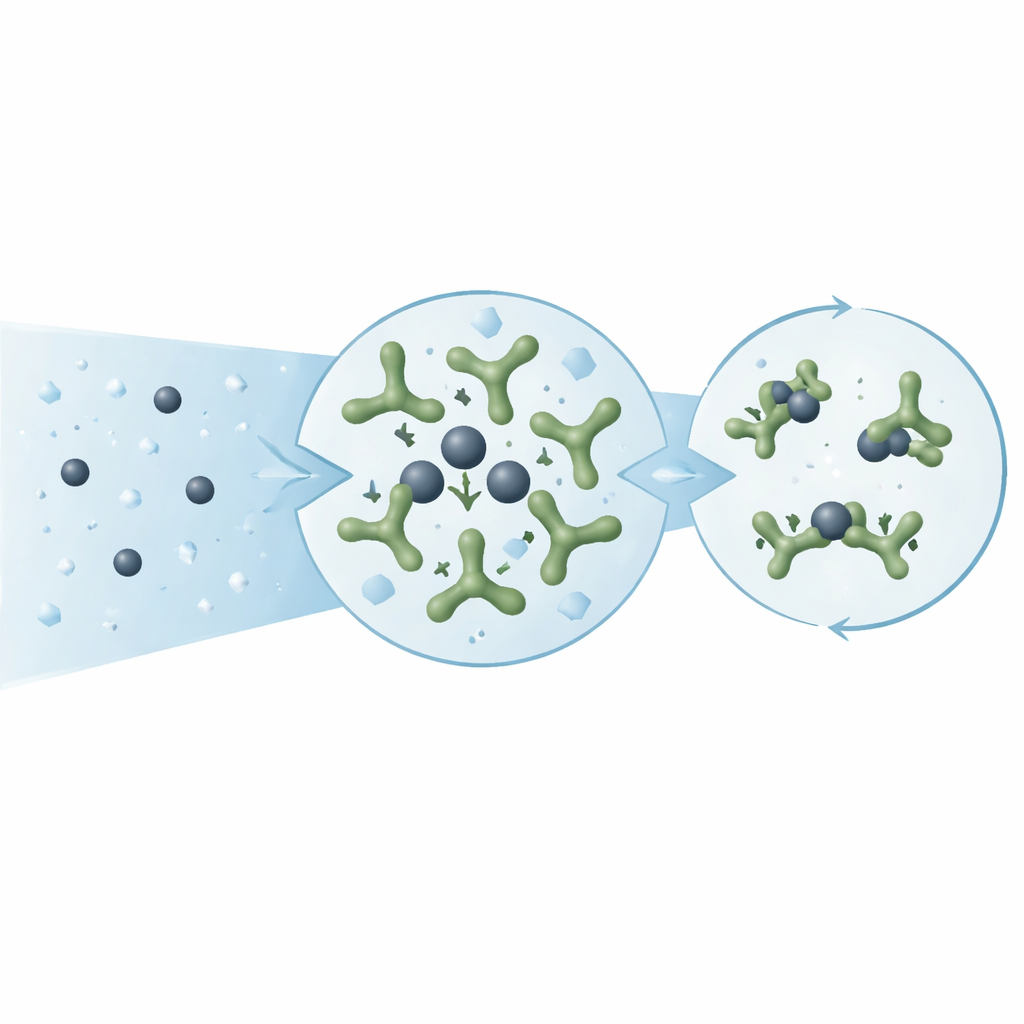
l-arginine works mainly through simple acid–base chemistry. When dissolved, its strongly basic nitrogen groups grab protons from hydrogen sulfide, converting the gas into nonvolatile ionic forms that stay locked in the liquid instead of escaping as toxic fumes. In briny water, additional pathways such as formation of poorly soluble sulfur-containing salts can further trap the gas. The study also tracked performance over time by monitoring hydrogen sulfide for up to four hours in produced water containing 0.1 percent l-arginine. More than 99 percent of the gas was removed within half an hour, and levels dropped below detection within two hours and stayed there, showing that the capture is both rapid and durable. Unlike some traditional solvents, l-arginine is biodegradable, non-toxic, and has low volatility, meaning it is less likely to evaporate or form harmful by-products.
What this means for cleaner energy operations
To a non-specialist, the main message is that a naturally occurring amino acid can clean hydrogen sulfide from challenging industrial wastewater just as effectively as established synthetic chemicals, but with a friendlier environmental profile. At low doses, l-arginine reliably strips out nearly all of the toxic gas, works in salty conditions, and stays effective as temperature changes. While it is currently more expensive than standard solvents and its regeneration and large-scale use still need to be tested in real facilities, this work shows that biology-inspired molecules can offer powerful tools for making fossil-fuel operations safer and cleaner. With further development, l-arginine or related compounds could help reduce the hazards of produced water treatment and support more sustainable management of one of the industry’s largest waste streams.
Citation: Ahmed, A., Elkatatny, S., Sharfan, I.B. et al. Utilizing l-arginine as an eco-friendly absorbent for hydrogen sulfide mitigation in produced water. Sci Rep 16, 12601 (2026). https://doi.org/10.1038/s41598-026-40705-1
Keywords: produced water, hydrogen sulfide, green absorbent, l-arginine, oil and gas wastewater