Clear Sky Science · en
Escape behaviors are transiently modulated after acutely induced epileptic seizures in larval zebrafish
Why a tiny fish can teach us about epilepsy
Epilepsy affects millions of people and often brings more than just seizures: problems with thinking, mood, and everyday functioning are common. Many patients still do not respond well to today’s medicines, and finding better treatments is slow and costly. This study uses an unlikely helper—the transparent larval zebrafish—to show that the moments and hours after a seizure leave a measurable “fingerprint” on behavior. By tracking how these small fish react to sudden startling taps, the authors reveal a fast, practical way to screen potential anti-seizure drugs and to spot their unwanted side effects on the brain.
From calm swimming to stormy brain activity
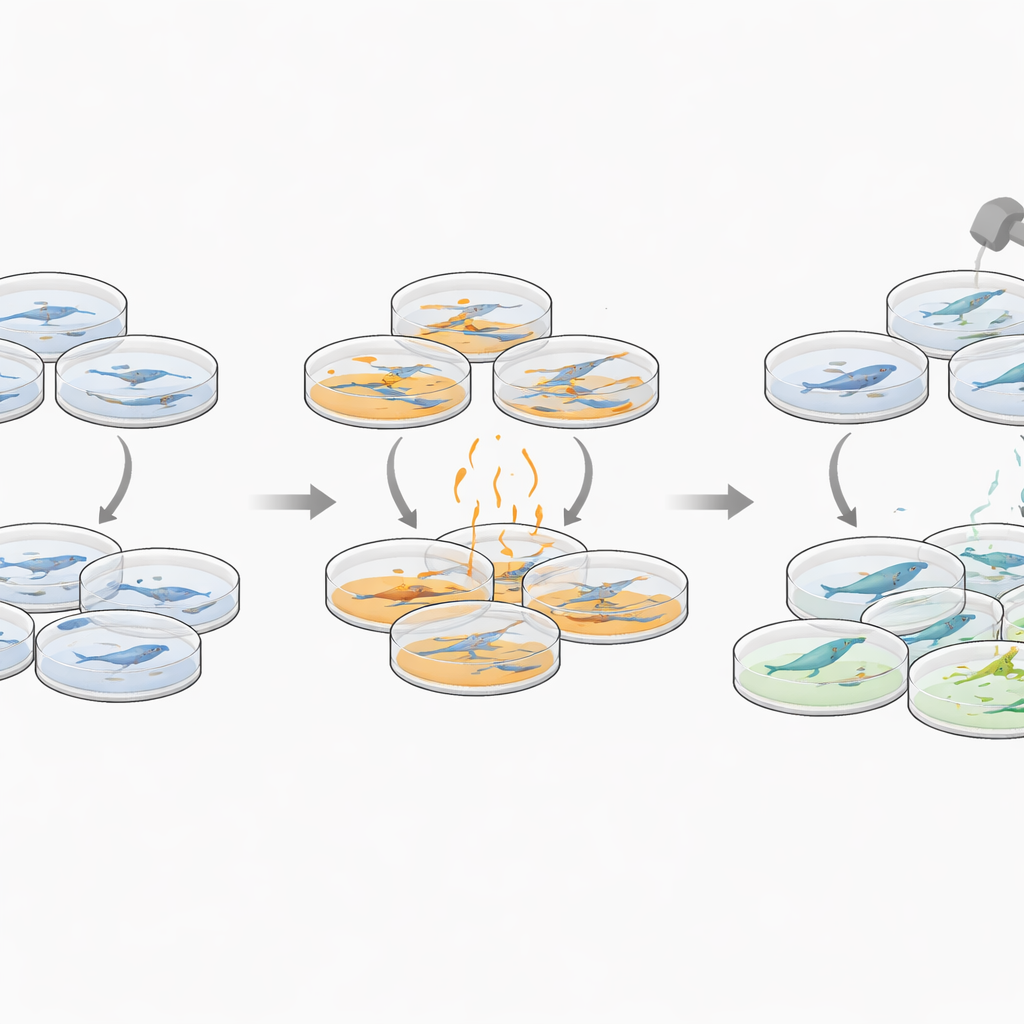
Researchers first triggered seizure-like activity in 6-day-old zebrafish larvae using a chemical called pentylenetetrazole (PTZ), which disrupts the balance between excitation and inhibition in the brain. Individual larvae were placed in tiny wells and filmed for an hour while they swam freely. Compared to untreated controls, fish exposed to PTZ swam much farther and faster, with activity peaking about 20 minutes after high-dose exposure. This burst of frantic motion mirrors the abnormal, synchronized brain activity that marks a seizure in people, and confirms that the zebrafish model faithfully captures key features of epilepsy-like events.
What happens after the seizure stops
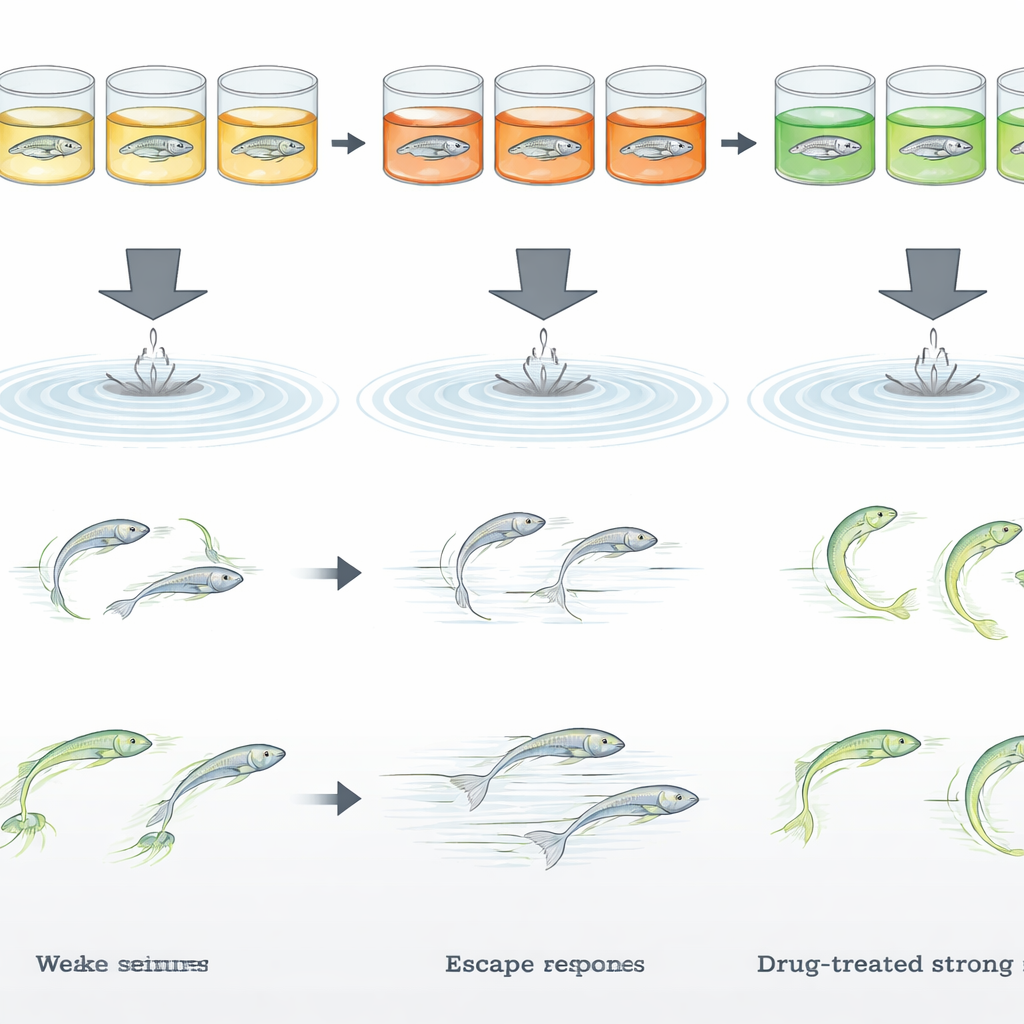
Once the seizure-inducing chemical was washed away, the team focused on what came next. They tested a basic survival reflex—the rapid escape response to a sudden tap on the dish, which normally makes a zebrafish flick into a characteristic C-shaped bend and dart away. For several hours after strong seizures, larvae barely responded: only a small fraction showed any escape movement at all, and the fastest, most reliable form of the response was especially reduced. This post-seizure “quieting” was not seen in control fish that had never seized, even though all groups experienced the same handling steps, indicating that the seizures themselves left the nervous system temporarily less able to turn a loud stimulus into a quick action.
Stronger seizures, deeper and longer-lasting impact
The researchers then asked whether weaker seizures would leave a milder mark. They repeated the experiments with a lower dose of PTZ, which produced more gradual and somewhat less intense abnormal swimming. These fish still showed fewer escape responses in the first hours after the seizure, but the deficit was smaller and recovery was faster—typically within three hours instead of six. In other words, the stronger the seizure, the more escape behavior was suppressed and the longer it took to bounce back. This graded effect suggests that measuring post-seizure escape responses could serve as a sensitive readout of seizure severity.
Separating helpful drug effects from hidden costs
To see whether the new behavioral measure could guide drug testing, the team turned to valproic acid, a long-used anti-epileptic medicine. When zebrafish larvae were pre-treated with this drug, PTZ triggered much less excessive swimming, confirming that seizures were dampened. Importantly, these treated fish also showed far less loss of escape responses after seizures; their post-seizure reactions looked closer to normal. However, valproic acid came with a catch: even without any seizures, drug-exposed fish were less likely to perform escape responses at all. That means the drug itself can blunt a key survival reflex, hinting at possible side effects on neural circuits that transform sensory input into movement—effects that ordinary seizure-behavior readouts might miss.
What this means for future epilepsy treatments
This work shows that seizures in larval zebrafish leave a short-lived but pronounced shadow on behavior: for several hours, the animals are much less able to execute a rapid escape from danger, and the depth and duration of this problem reflect how strong the seizure was. By pairing standard seizure readouts with a simple, stimulus-evoked test, researchers can more specifically identify drugs that both calm seizures and preserve basic brain functions—and can more easily flag compounds that hide their costs behind apparently successful seizure control. Ultimately, this refined zebrafish assay could speed the search for safer, more effective epilepsy treatments while also shedding light on how seizures temporarily reshape the working of the brain.
Citation: Eldar, Y., Ben Sadeh, E., Lavy, N. et al. Escape behaviors are transiently modulated after acutely induced epileptic seizures in larval zebrafish. Sci Rep 16, 13898 (2026). https://doi.org/10.1038/s41598-026-40684-3
Keywords: epilepsy, zebrafish, seizures, drug screening, escape behavior