Clear Sky Science · en
Silicon wafers outperform batteries: efficiency heterogeneity and policy effects in China’s photovoltaic industry
Why Solar Factories Matter to Everyday Life
Solar power is often pictured as shining panels on rooftops, but behind those panels sits a sprawling industry of factories that turn raw materials into clean electricity. This paper peels back the curtain on China’s solar manufacturing giants and asks a deceptively simple question: which parts of the solar supply chain are using their resources most wisely, and how do government policies help or hurt? The answers matter for anyone who cares about affordable clean power, since hidden inefficiencies today can slow climate progress and raise electricity costs tomorrow.
Following the Journey from Sand to Sunlight
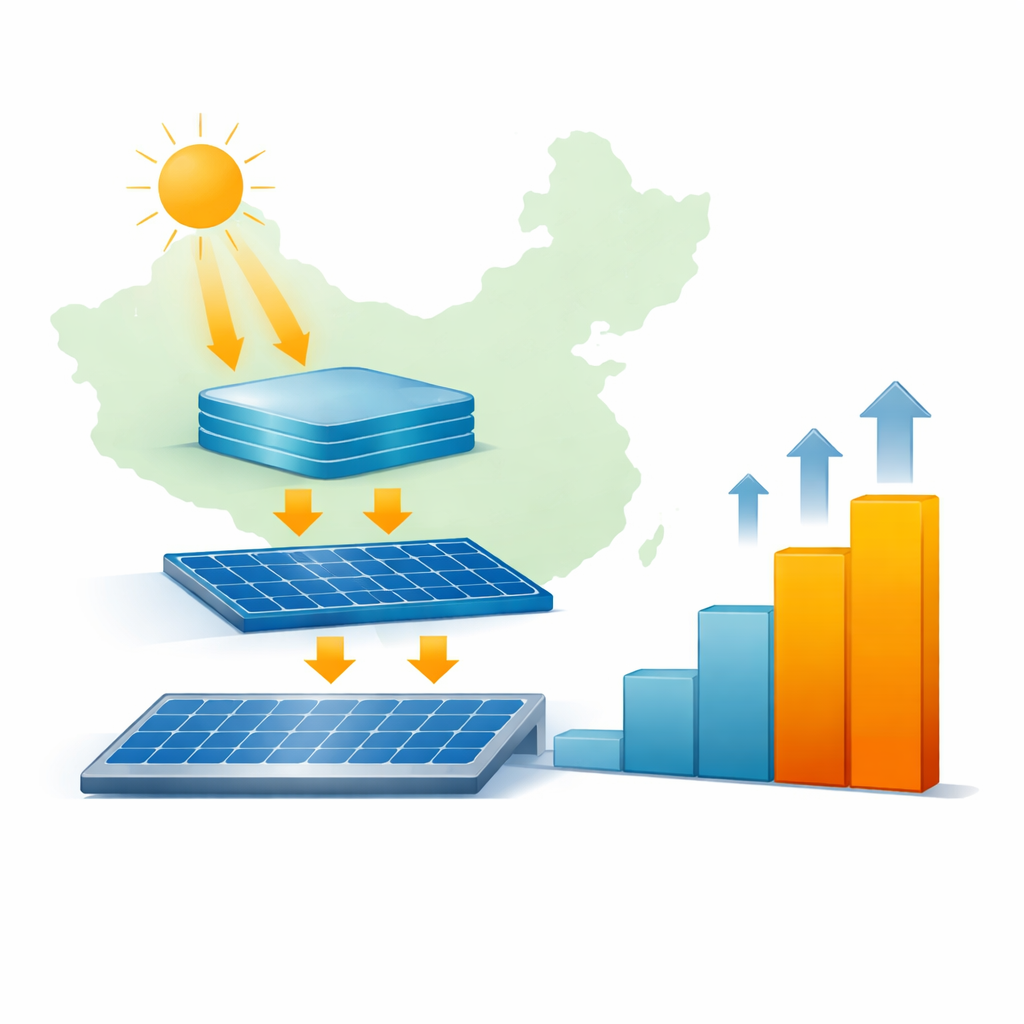
China now dominates the global solar landscape. By the end of 2023, the country’s solar capacity had soared more than twentyfold in just a decade, with panels generating hundreds of billions of kilowatt-hours of electricity each year. That boom rests on a three-step industrial chain: silicon wafers made from purified sand, solar cells (often called “batteries” in industry jargon) that convert light to electricity, and assembled modules that end up in power plants and on roofs. Rather than treating this chain as one seamless machine, the authors examine 37 publicly listed Chinese solar companies from 2018 to 2023 to see how efficiently each segment turns inputs like factories, equipment, staff, and research budgets into outputs such as revenue, share price, and sustainability scores.
Where Silicon Shines and Batteries Struggle
Using a benchmarking technique that compares many companies over multiple years, the study finds that the industry’s overall efficiency climbed from about one‑third of the best possible performance in 2018 to nearly half by 2023, an average rise of roughly 8% per year. But this improvement is uneven. Firms that make silicon wafers sit comfortably ahead of the pack: they benefit from large scale, tight cost control, and technical know‑how that is hard for newcomers to copy. Module makers, who assemble finished panels, show moderate and sometimes volatile performance because they live closest to end‑market price battles. The real laggards are cell manufacturers in the middle of the chain. Squeezed between powerful silicon suppliers upstream and aggressive module buyers downstream, they face constant pressure on prices just as they must invest heavily to keep up with fast‑changing cell technologies.
How Policy and Power Use Tilt the Playing Field
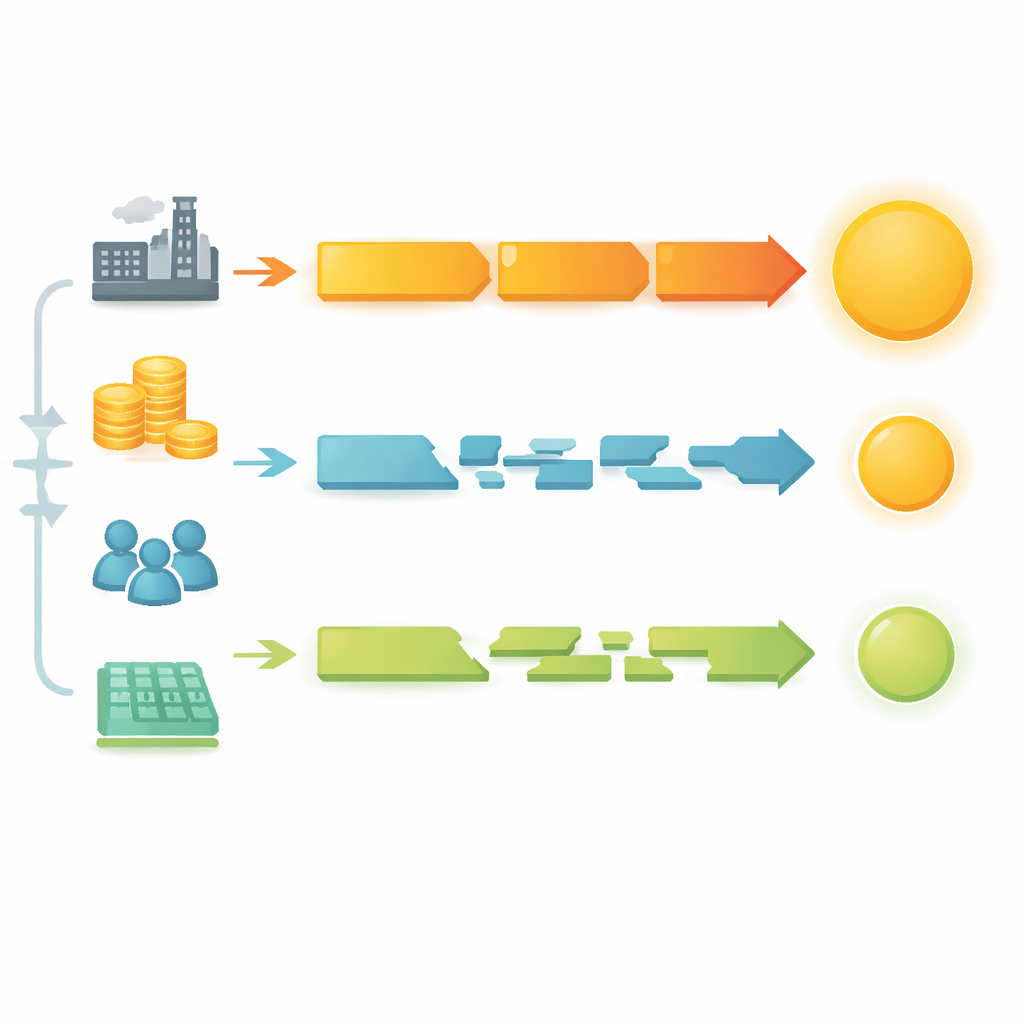
The authors then look beyond factory walls to see how local economic conditions and government actions shape efficiency. Companies based in richer provinces, with higher regional income, tend to perform better: they benefit from stronger industrial clusters, better infrastructure, and deeper pools of skilled workers. Areas that already host a lot of installed solar capacity also see higher firm efficiency, suggesting that learning by doing and large project pipelines help spread fixed costs and encourage technological upgrades. Surprisingly, two factors push in the opposite direction. Provinces with very high overall electricity use are linked to lower solar efficiency, likely because older coal‑heavy grids struggle to absorb variable solar output without waste. Even more counter‑intuitive, higher direct subsidies for firms are associated with worse efficiency: easy money appears to tempt some companies into chasing size over smart investment, reinforcing overcapacity and dulling their hunger to innovate.
Looking Ahead: Growing, But Not Evenly
To peer into the near future, the study combines its efficiency results with a simple machine‑learning model that uses trends in regional income, power demand, solar build‑out, and subsidies. The forecast suggests that China’s solar manufacturers will, on average, continue to get better at turning resources into value through 2027. Yet the mix will shift. Battery‑cell makers are expected to improve rapidly as new technologies take hold, and could catch up with or even surpass wafer and module firms on some efficiency measures. At the same time, gaps between leading and lagging companies within each segment are likely to widen, especially where policy support remains blunt and grids remain slow to adapt.
What This Means for Cleaner Power
For a lay reader, the core message is straightforward: not all pieces of the solar industry are pulling their weight equally, and policies meant to accelerate clean energy can sometimes backfire. China’s success in scaling up solar has been remarkable, but the study warns that leaning too heavily on subsidies and sheer expansion risks locking crucial mid‑chain firms into a low‑innovation rut. Smarter support that rewards genuine technological progress, better grid planning to absorb solar output, and closer coordination across the silicon–cell–module chain could unlock more electricity from every factory and every yuan invested. In plain terms, if the right lessons are learned, future solar panels could deliver more clean power for less money, speeding the transition away from fossil fuels.
Citation: Li, Wq., Liu, Hl., Liu, Xy. et al. Silicon wafers outperform batteries: efficiency heterogeneity and policy effects in China’s photovoltaic industry. Sci Rep 16, 12118 (2026). https://doi.org/10.1038/s41598-026-40680-7
Keywords: solar photovoltaics, renewable energy policy, industrial efficiency, China energy transition, solar value chain