Clear Sky Science · en
Identifying the hub genes in macrophage infiltration and verifying of the role of VSIG4 in IgA nephropathy
Why this kidney research matters
IgA nephropathy is a common kidney disease that can quietly progress for years before people notice symptoms, yet it is a major cause of chronic kidney failure worldwide. Doctors currently need to take a piece of kidney tissue with a biopsy to confirm the diagnosis, an invasive test that carries some risk and cannot easily be repeated. This study looks for a signal in the immune system that might explain how the disease worsens and, crucially, offers a way to detect it with a simple urine test instead of a needle.
The body’s cleaners and a kidney disease
Our kidneys are constantly exposed to the body’s immune defenses, including macrophages—large “clean‑up” cells that swallow debris and help control inflammation. In IgA nephropathy, clumps of a mis-made antibody called IgA lodge in the kidney’s filters, triggering inflammation and scarring. Earlier work suggested that certain types of macrophages, especially a subtype known as M2, gather in the kidneys of people with this disease and are linked to worse outcomes. The authors set out to find which genes in kidney tissue track with this macrophage buildup and might drive disease progression.
Mining big data to find key immune signals
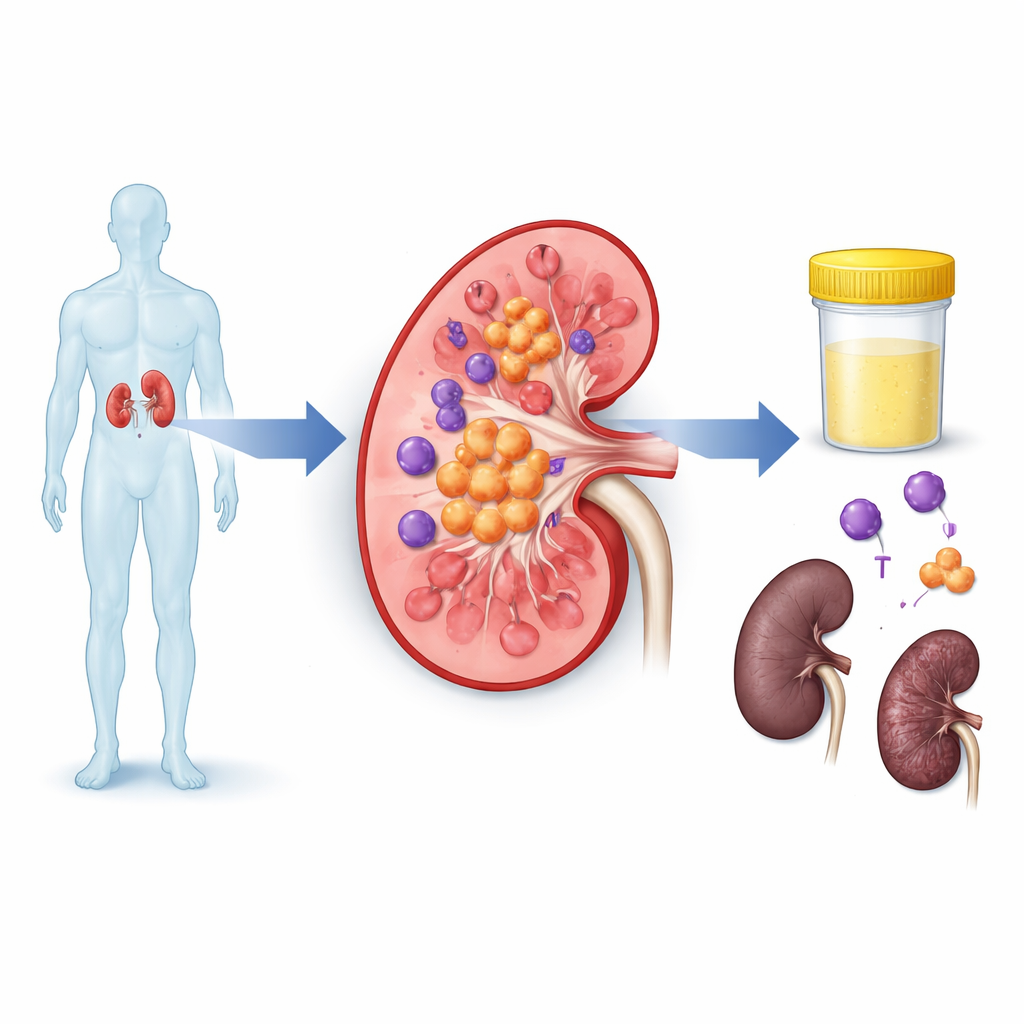
The team first turned to public gene-expression databases, which record which genes are turned on or off in kidney biopsy samples. By combining two large datasets of patients with IgA nephropathy and healthy controls, they pinpointed 153 genes whose activity levels differed between the two groups. Many of these genes clustered in pathways related to the complement system—a set of blood proteins that amplify immune responses—and to blood clotting and inflammation. Using advanced statistical tools to link gene activity with estimates of the types of immune cells present, they focused on genes most strongly associated with M2 macrophages. Three stood out as central “hub” genes: C1QA, C1QB, and a less-studied gene called VSIG4, which showed the tightest link to kidney function.
From computer predictions to living kidneys
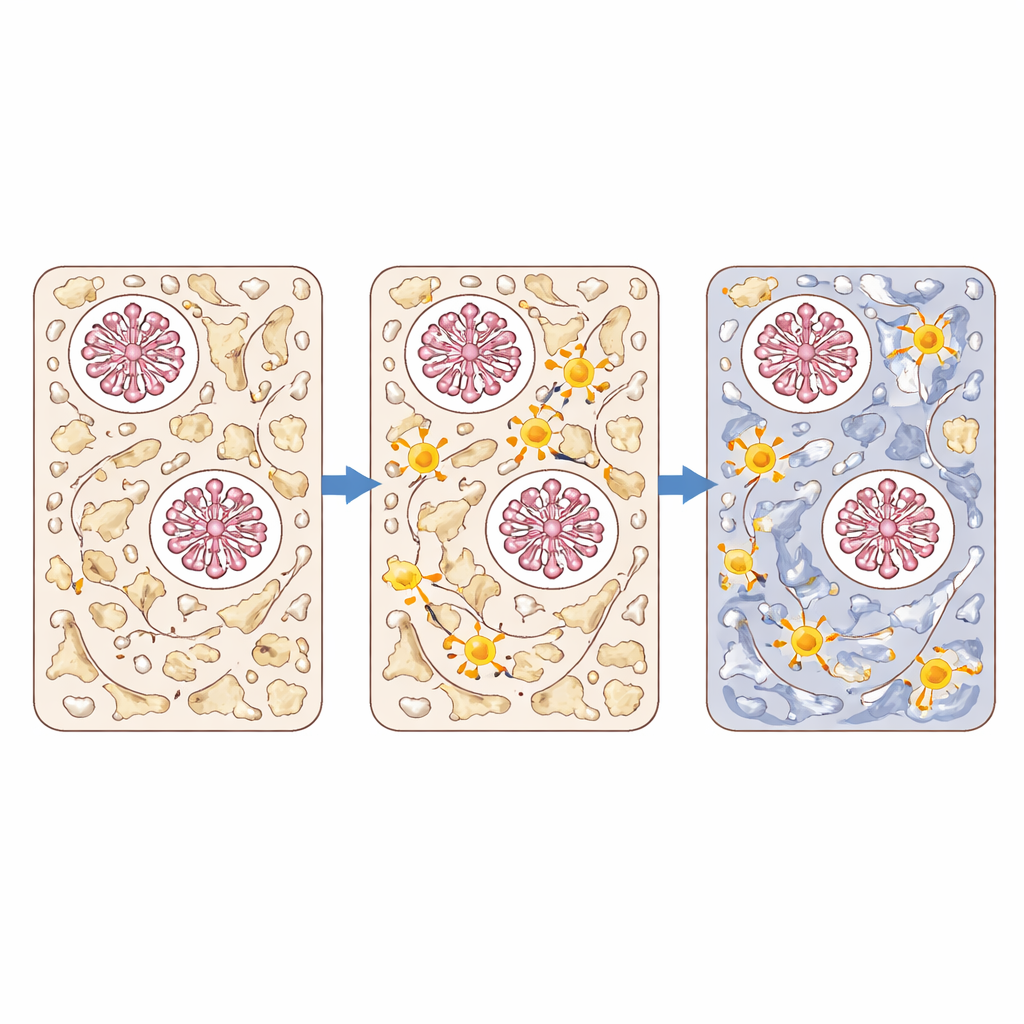
To test whether these statistical findings matched real biology, the researchers created a rat model of IgA nephropathy. Over several weeks they induced the disease and then examined the animals’ kidneys and blood. In affected rats, VSIG4 levels were clearly higher in kidney tissue and in the bloodstream than in healthy rats, and the amount of VSIG4 rose as the disease advanced. Microscopy showed that VSIG4 protein was mainly found in the kidney’s interstitial spaces between tubules, in the same areas occupied by macrophages, supporting the idea that VSIG4 marks a specific macrophage state involved in the disease process.
A urine marker linked to damage
The most clinically exciting part of the study involved 107 patients with biopsy-proven IgA nephropathy and 55 healthy volunteers. The authors measured VSIG4 in spot urine samples and adjusted the values for urine concentration. Patients with IgA nephropathy had substantially higher urinary VSIG4 than healthy controls, and those with poorer kidney filtration had the highest levels. Higher urinary VSIG4 tracked with worse kidney function (lower estimated filtration rate), higher blood creatinine, more protein leakage in the urine, and more scarring and shrinkage of kidney tissue on biopsy. When the team drew a diagnostic curve, urinary VSIG4 distinguished patients from healthy people with reasonably good accuracy, suggesting it could serve as a noninvasive marker of the disease.
What this could mean for patients
Taken together, the work paints a picture in which a specific macrophage-associated gene, VSIG4, is switched on in inflamed kidneys affected by IgA nephropathy and spills into the urine as damage accumulates. For patients, this raises the possibility of monitoring disease activity and progression with a simple urine test, reducing reliance on repeat biopsies. While more research is needed to prove exactly how VSIG4-expressing macrophages contribute to scarring—and to test the marker in larger, diverse groups—this study positions VSIG4 as both a promising early warning signal and a potential target for future therapies aimed at calming harmful kidney inflammation.
Citation: Tang, L., Xu, Y., Nong, Z. et al. Identifying the hub genes in macrophage infiltration and verifying of the role of VSIG4 in IgA nephropathy. Sci Rep 16, 10211 (2026). https://doi.org/10.1038/s41598-026-40679-0
Keywords: IgA nephropathy, kidney disease, macrophages, biomarkers, VSIG4