Clear Sky Science · en
Behavioral attenuation of marble burying and digging mirrors evoked and non-evoked phenotypes in the endometriosis mouse model
Why everyday mouse habits matter for women’s pain
Chronic pelvic pain from endometriosis can be so draining that it affects work, relationships, and mental health, yet doctors still struggle to measure this pain accurately or to predict which treatments will help. This study uses something surprisingly simple—how mice dig, bury marbles, burrow, and explore—to build a richer picture of pain-like states in a mouse model of endometriosis. By watching what mice choose to do when left alone, instead of only how they react when poked or heated, the researchers hope to create animal tests that better mirror what patients actually feel.
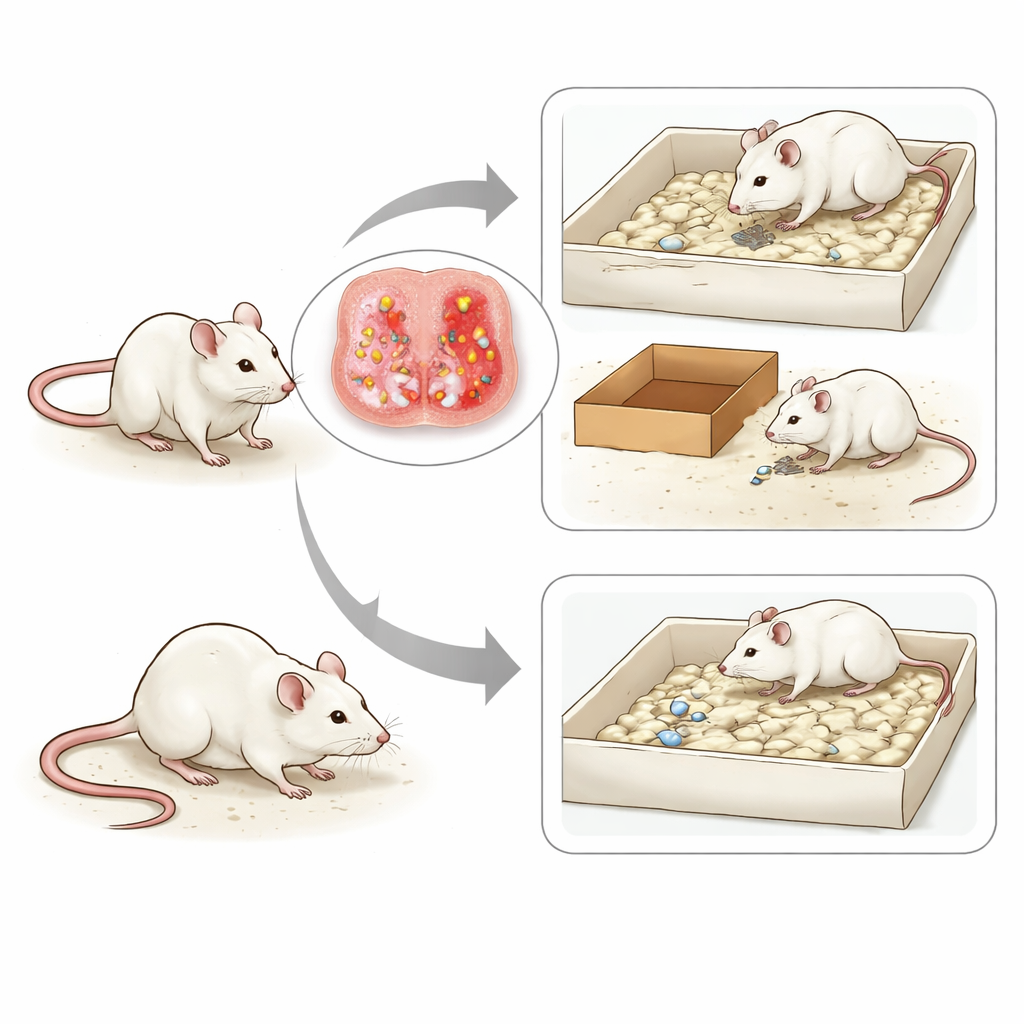
Building a mouse stand‑in for endometriosis
To mimic endometriosis, the team used female C57BL/6J mice and transferred tiny pieces of uterine tissue from donor animals into the abdominal cavity of estrogen‑primed recipient mice. This tissue attached to organs such as the fat pad, intestine, and peritoneum and grew into lesions resembling those found in people with endometriosis. The researchers confirmed successful disease induction in most animals by examining tissue slices under the microscope, measuring higher levels of a specific immune cell type (M2 macrophages) in the abdominal fluid, and detecting increased estrogen in the blood—features all consistent with an active, hormone‑dependent disease.
Watching natural behavior instead of only reflexes
Traditional pain tests in animals rely on provoking a quick response, such as withdrawing from a hot surface or a mechanical poke. While useful, these “evoked” tests miss the quieter ways pain reshapes daily life—less motivation, more rest, and changes in grooming or exploration. To tackle this, the researchers combined standard evoked tests with a battery of “non‑evoked” assessments that simply record what mice do when left to their own devices. These included marble burying (how many marbles a mouse covers with bedding), spontaneous digging in loose bedding, burrowing food out of a filled tube, self‑grooming after a sucrose spray, open‑field exploration, time spent in the open versus closed arms of an elevated plus maze, and bouts of licking the abdominal area.
Subtle habits reveal a loss of drive and rising anxiety
Across several of these natural behaviors, mice with endometriosis‑like lesions behaved differently from healthy controls. They buried fewer marbles and showed far fewer digging episodes, even though the time it took them to start digging was similar. Their ability and drive to burrow were blunted: both overnight and short‑term burrow scores dropped, and mice entered the burrow tube less often. Self‑care also shifted. Total grooming episodes fell, but licking focused on the abdomen increased sharply, hinting at ongoing pelvic discomfort. In open‑field and elevated‑plus‑maze tests, the endometriosis mice moved more slowly, froze more often, avoided the center and open arms, and spent more time hugging the periphery and closed arms—strong signs of heightened anxiety and reduced exploratory drive.
Linking natural behavior to pain sensitivity
The same mice also showed clear signs of heightened sensitivity when tested with classic reflex‑based assays. They reacted more quickly to mechanical pressure on the abdomen (Von Frey test) and to heat applied to the paws or tail (hot plate and tail flick tests), indicating mechanical and thermal hyperalgesia. Importantly, the natural behaviors were not random: poorer marble burying and digging tended to go hand‑in‑hand with less burrowing, less time in the center of the open field, less time in the open arms of the maze, and more abdominal licking. These non‑evoked measures also correlated positively with evoked pain tests—for example, mice that dug more tended to show longer reaction times to painful stimuli—suggesting that reduced digging and marble burying reflect a more pain‑like, anxious state. Interestingly, these behavior changes were only weakly linked to how many lesions each mouse carried, echoing clinical observations that lesion load does not neatly predict pain severity in patients.
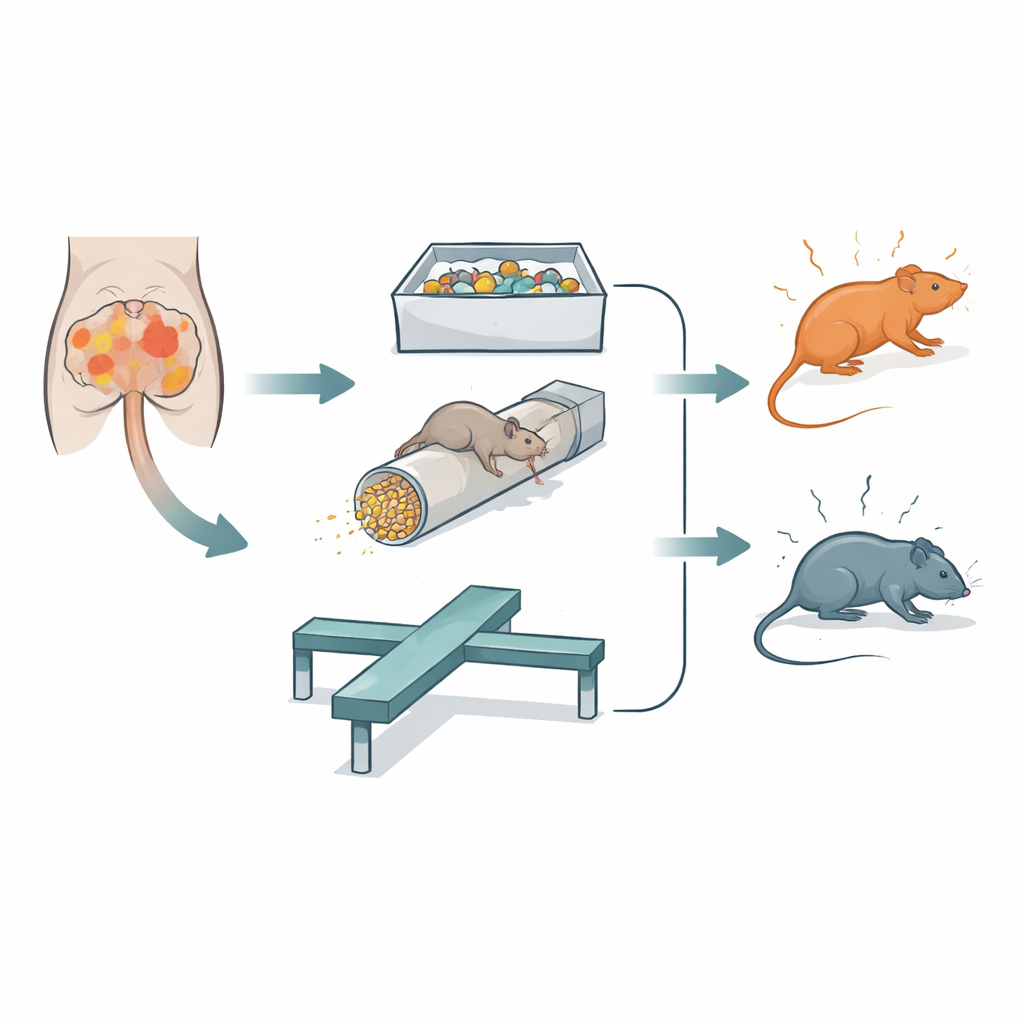
What this means for understanding endometriosis pain
To a layperson, the study’s message is that pain is not just a reflex; it is written into everyday habits. In this mouse model of endometriosis, animals with disease‑like lesions moved less, explored less, dug and burrowed less, groomed themselves differently, and showed more anxiety and sensitivity to touch and heat. By treating these natural, stimulus‑free behaviors as key readouts—alongside standard pain tests—the authors argue that researchers can get closer to the lived experience of chronic pelvic pain. This richer behavioral toolkit could make preclinical studies more predictive of what will actually help patients and supports using simple, ethologically grounded measures like marble burying and digging as valuable complements to traditional pain assays.
Citation: Deshpande, S., Barik, R., Hande, A. et al. Behavioral attenuation of marble burying and digging mirrors evoked and non-evoked phenotypes in the endometriosis mouse model. Sci Rep 16, 10007 (2026). https://doi.org/10.1038/s41598-026-40662-9
Keywords: endometriosis pain, mouse behavior, marble burying, digging assay, chronic pelvic pain