Clear Sky Science · en
Cascaded regulatory network composed of small RNAs involves in the symbiosis of Panax notoginseng and fungus Acremonium sp. D212
Why this plant–fungus partnership matters
Panax notoginseng is a prized medicinal plant used for centuries to treat bleeding, heart problems, and pain. In farmers’ fields and forest understories, its roots quietly host friendly fungi that help the plant grow and stay healthy. This study explores one such ally, the fungus Acremonium sp. D212, and uncovers an unexpected way the partners “talk” to each other: by sending tiny RNA messages across kingdom boundaries. The work shows how light color—white, red, or blue—reshapes this molecular conversation and may ultimately influence how well the plant grows and produces valuable compounds.
Hidden partners in the roots
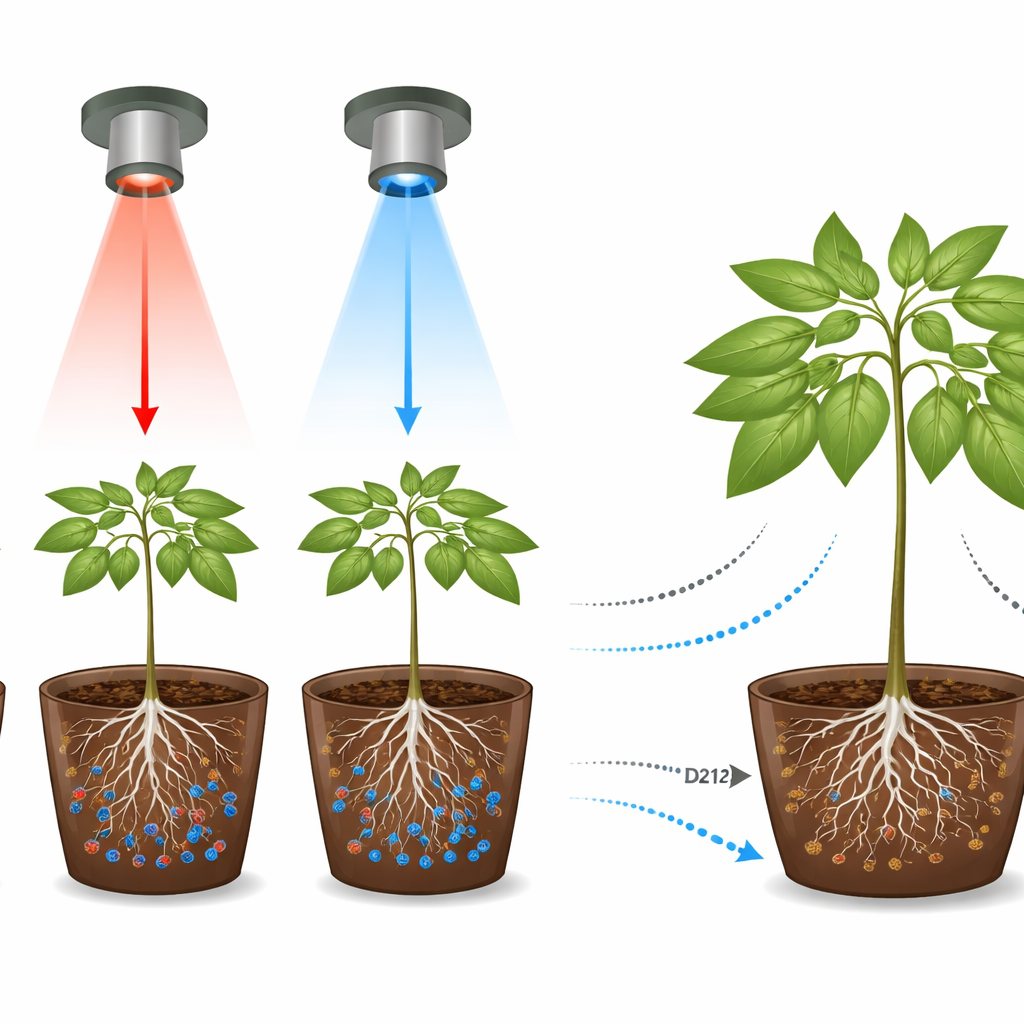
The researchers first confirmed that P. notoginseng and Acremonium sp. D212 form a stable, symptom-free partnership. Using tissue-cultured seedlings grown in glass jars, they exposed plants to white, red, or blue light, with or without the fungus. Under all lights, the inoculated plants stayed healthy, showing that this fungus behaves as a helpful guest rather than a pathogen. However, how closely the fungus colonized the roots depended on light: colonization dropped under red light but increased under blue light compared with white. The fungus itself also changed its growth pattern and spore production in response to different colors of light, indicating that the physical relationship between plant and fungus is highly sensitive to the surrounding light environment.
Reading the plant’s genetic response
To see how the plant’s internal programs responded to its fungal partner, the team compared gene activity in P. notoginseng stems grown under each light, with and without Acremonium. Thousands of plant genes changed their activity when the fungus was present, and the sets of affected genes differed with light color. Under white light, many basic metabolic and biosynthetic processes were dialed down, while genes involved in calcium transport and certain fatty acid reactions became more active. Red light emphasized genes linked to the handling of nitrogen and the movement of molecules between the nucleus and the rest of the cell. Blue light stood out by boosting genes involved in the plant hormone auxin, pigment handling, and water transport. Key genes tied to jasmonic acid and saponin production—important for defense and the plant’s medicinal properties—shifted in different directions depending on the light, hinting that light and fungus together reshape the plant’s chemistry.
Tiny RNA messages from fungus to plant
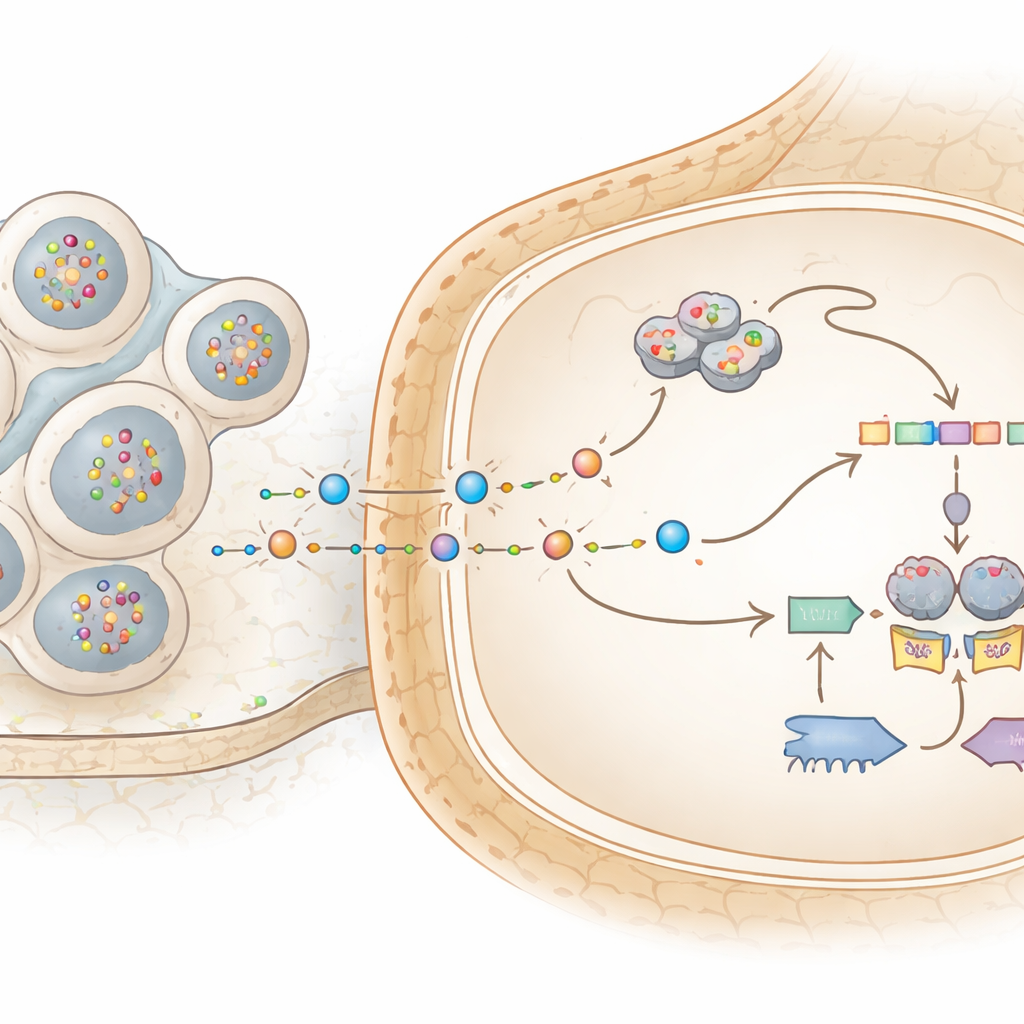
Looking for a molecular “language” between partners, the scientists sequenced small RNAs—short stretches of genetic material that can silence genes. They discovered that a substantial fraction of small RNAs found in inoculated plants did not belong to P. notoginseng at all, but instead matched the fungus. Fourteen fungal microRNAs were detected inside plant tissues under at least one light condition, with more abundant transfer under red and blue light than under white. These fungal RNAs tended to target plant genes related to membranes and transport processes, especially in root surfaces where exchange with the soil and fungus occurs. Experiments measuring gene activity confirmed that when these fungal microRNAs were present, many of their predicted plant targets were turned down, demonstrating that the fungus can directly tune the plant’s genes.
A cascading network of RNA signals
The story did not end with the first wave of fungal microRNAs. In many cases, when a fungal microRNA sliced a plant RNA, the cut piece became the starting point for a second class of small RNAs known as phasiRNAs. The team cataloged thousands of these phased RNAs in P. notoginseng, arising from hundreds of genomic locations. A subset could be traced back to cleavage by fungal microRNAs. These phasiRNAs in turn targeted yet more plant genes, again enriched for membrane and transport functions and, notably, genes involved in hormones such as auxin, abscisic acid, and ethylene. The abundance of these secondary RNAs changed with both light color and fungal presence: 21-nucleotide phasiRNAs rose particularly under red light with the fungus, while 24-nucleotide forms were strongly shaped by blue light. Laboratory tests using synthetic microRNAs and phasiRNAs applied directly to leaves showed that each class could reduce the activity of its predicted plant targets, confirming that these tiny molecules form a working regulatory chain.
What this means for a healing root
Taken together, the results outline a layered communication network in which the fungus sends microRNAs into P. notoginseng, those microRNAs silence key plant RNAs and trigger phasiRNAs, and this cascade collectively reshapes plant gene activity. Light color modulates every step, altering fungal colonization, small RNA transfer, and which plant pathways are most affected. For a layperson, the takeaway is that this medicinal root does not work alone: its friendly fungus helps fine-tune how the plant transports nutrients and hormones, potentially affecting growth and the production of healing compounds. By decoding this RNA-based dialogue, scientists gain a roadmap for future work aimed at using helpful fungi and tailored light conditions to improve the yield and quality of P. notoginseng in a precise and sustainable way.
Citation: Yao, B., Zhu, H., He, X. et al. Cascaded regulatory network composed of small RNAs involves in the symbiosis of Panax notoginseng and fungus Acremonium sp. D212. Sci Rep 16, 11477 (2026). https://doi.org/10.1038/s41598-026-40644-x
Keywords: Panax notoginseng, endophytic fungus, small RNA signaling, plant–microbe symbiosis, light-dependent regulation