Clear Sky Science · en
Potential urine NMR Metabolomic signatures for early diagnosis of paediatric tuberculosis
Why a urine test for kids with tuberculosis matters
Tuberculosis remains one of the world’s deadliest infections, and children are especially vulnerable. Yet diagnosing TB in kids is notoriously difficult because their symptoms are vague and current tests often require uncomfortable procedures like inserting tubes into the stomach or lungs to collect samples. This study explores whether a simple urine test, analyzed with powerful magnetic technology, could help doctors tell apart children with active TB disease, those merely infected with the TB germ, and healthy children—potentially reducing the need for invasive testing.
Looking for chemical traces in a simple sample
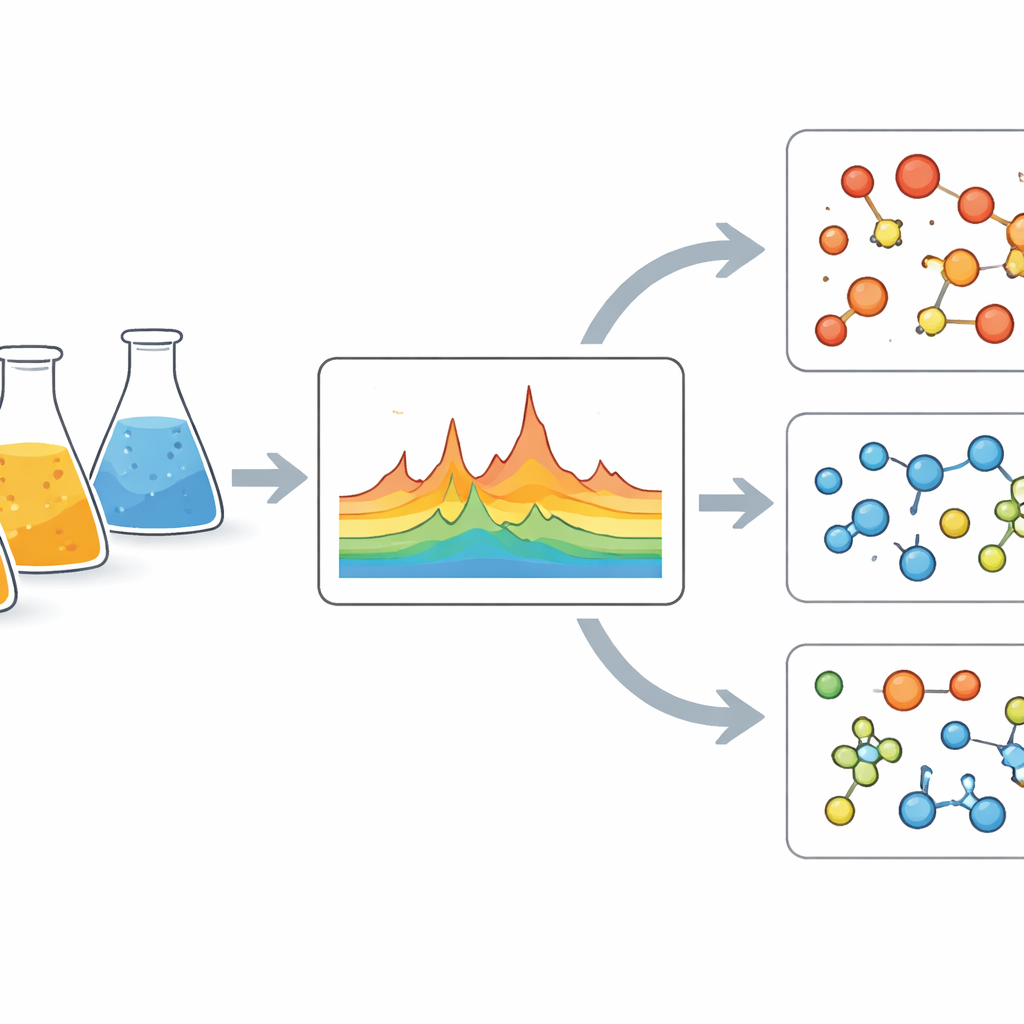
The researchers focused on metabolomics, the study of the small molecules that circulate through our bodies as cells use and produce energy. Illness can subtly reshape this chemical landscape, leaving behind a fingerprint in easily collected fluids such as urine. Using high-resolution proton nuclear magnetic resonance (1H NMR) spectroscopy, a technique that reads out patterns of these molecules, the team analyzed urine from 101 children enrolled in a Spanish pediatric TB network. The children fell into three main groups: those with TB disease, those with TB infection but no illness, and healthy controls. The aim was to see whether their urine fingerprints differed in consistent ways.

Sorting children by disease state using patterns, not single signals
Instead of relying on one molecule at a time, the scientists used statistical tools that examine many signals together, searching for patterns that best separate the groups. After removing a few outlier samples, they built models to compare TB disease with healthy children, confirmed TB with healthy children, and confirmed TB with TB infection. Several of these models performed well: they correctly distinguished confirmed TB from infection and from healthy children in at least 70% of cases, with some comparisons approaching or exceeding 90% sensitivity, meaning few true cases were missed. This suggests that the combined pattern of urine chemicals carries real information about the child’s TB status.
Distinct chemical fingerprints in sick, infected, and healthy children
When the team dug into which molecules drove these differences, clear trends emerged. Children with TB disease showed higher levels of the amino acid phenylalanine and several unidentified signals, while a suite of energy- and nitrogen‑related compounds, including citrate, hippurate, lactate, glutamate, glycine, and others, tended to be lower than in healthy peers. These changes point to altered fuel use and protein breakdown during active disease. In contrast, children who were infected but not sick had higher levels of isoleucine, N‑acetylglutamine, glutamine, creatinine, and 2‑hydroxyvalerate, hinting at a different metabolic response that may reflect the body’s attempt to contain the infection without full‑blown illness. The strongest and most reliable separation was seen between confirmed TB disease and simple infection, a distinction routine immune tests cannot currently make.
Promise as a gentle screening tool, not a stand‑alone answer
Despite these encouraging signals, the urine test did not reach the very high specificity required to serve as a definitive yes‑or‑no TB diagnosis on its own. Some healthy or merely infected children still showed patterns that resembled disease. However, the method did meet or exceed World Health Organization targets for screening tests, which are intended to flag children who most need further microbiological testing. Because urine collection is painless, fast, and does not require specialized staff, a metabolomics‑based test could be especially valuable in young children and in settings where advanced facilities are scarce.
What this could mean for children with suspected TB
In plain terms, this work shows that TB leaves a recognizable chemical footprint in a child’s urine, distinct from both healthy children and those who are only infected but not yet ill. While the approach is not precise enough to replace current gold‑standard tests, it holds real promise as an early triage tool: a way to quickly and non‑invasively identify which children are more likely to have active TB and should undergo confirmatory testing. With further refinement, larger studies, and simpler instruments, such urine‑based profiles could help doctors start treatment sooner and spare many children from stressful, invasive procedures.
Citation: López-Suárez, A., Comella-del-Barrio, P., Alonso-Moreno, P. et al. Potential urine NMR Metabolomic signatures for early diagnosis of paediatric tuberculosis. Sci Rep 16, 10209 (2026). https://doi.org/10.1038/s41598-026-40619-y
Keywords: pediatric tuberculosis, urine metabolomics, NMR spectroscopy, noninvasive diagnostics, biomarkers