Clear Sky Science · en
Artificial intelligence integrated WeChat social media adoption for collaborative learning engagement among university students
Why smart chat apps matter for students
Across university campuses in China, many students already live inside WeChat for chatting, sharing videos, and organizing their lives. Now an artificial intelligence assistant called Yuanbao is being built into WeChat, promising to turn casual chats into powerful study sessions. This article asks a simple but crucial question: under what conditions are students actually willing to use this AI‑enhanced social media for serious learning, not just socializing? The answer matters for anyone interested in how everyday apps can boost education instead of distracting from it.

From chat tool to study companion
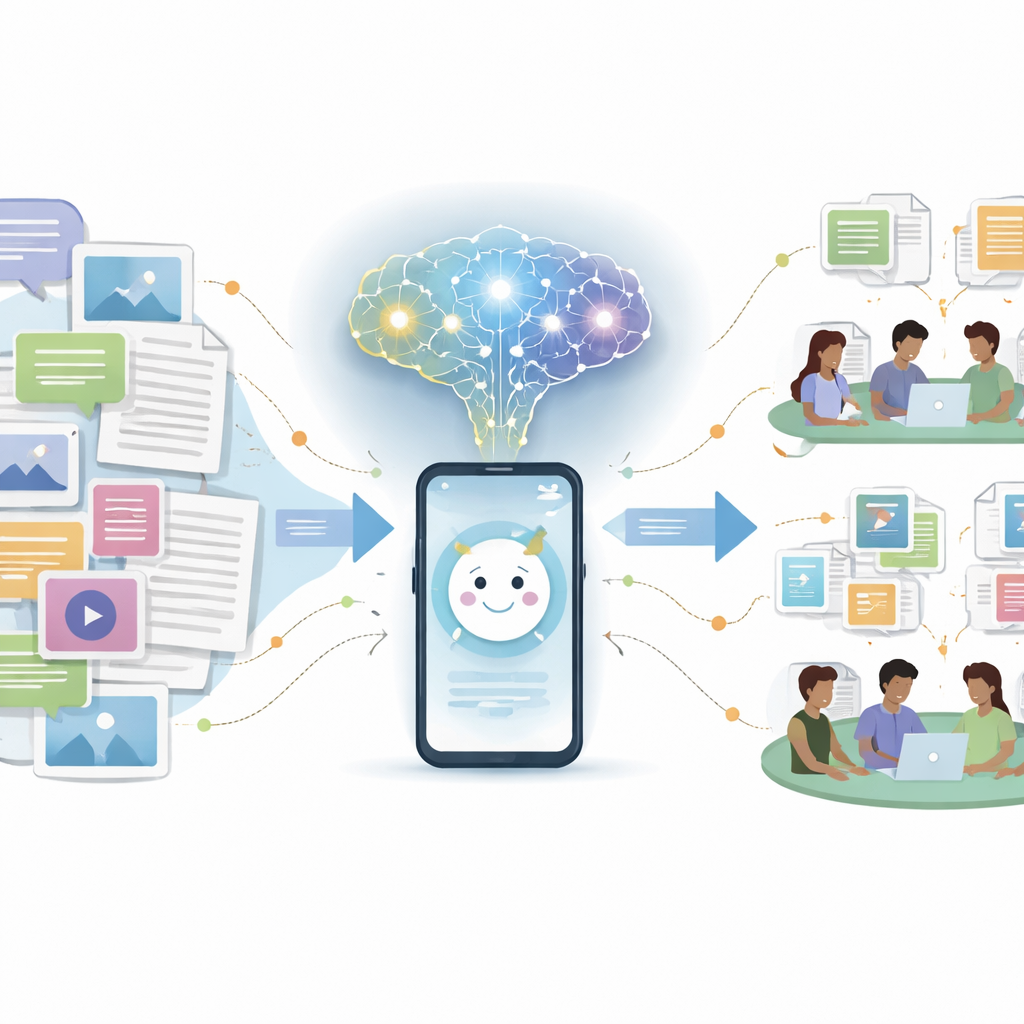
The authors explain how social media has moved far beyond entertainment. Platforms like WeChat already support group discussions, quick questions to classmates, and easy sharing of lecture notes and videos. By adding AI, WeChat–Yuanbao becomes more than a messaging app: it can summarize long documents, translate group chats, suggest resources, and help organize group work. For students, this means they can ask the AI to explain a tough concept seen in a short video, get instant translations in multilingual teams, or have the system recommend relevant readings without leaving the app they use every day.
How the study was set up
To understand what drives students to embrace this AI‑integrated environment, the researchers extended the well‑known Technology Acceptance Model, which usually focuses on whether people find a tool useful and easy to use. They added four social and practical ingredients that are central to study life: collaborative learning (working with peers toward shared goals), social support (emotional and informational help from friends and classmates), resource sharing (swapping notes, links, and files), and facilitating conditions (having good internet, devices, and institutional backing). They then surveyed 440 university students in central China, all active WeChat users, and analyzed the results with advanced statistical modeling.
What actually encourages students to adopt AI chat for learning
The results show that the social side of learning is a major engine of adoption. Students are more likely to use AI‑integrated WeChat when it clearly helps them work together in groups, get support from others, and share learning materials smoothly. Practical factors also matter: when students feel they have reliable access to Wi‑Fi, affordable data, suitable devices, and some support from their university, they are more inclined to treat WeChat–Yuanbao as a serious study tool. These same conditions also make the system feel more helpful and easier to handle overall.
When simplicity beats raw power
An interesting twist appears in how students judge usefulness and simplicity. Finding the system easy to use not only directly boosts willingness to adopt it but also strengthens the positive effects of collaboration, social support, and resource sharing. In other words, if the AI features feel smooth and natural inside the familiar WeChat interface, all the social benefits of working and sharing together are amplified. Usefulness behaves differently. While it reinforces the impact of social support and resource sharing, it does not change how much collaborative learning drives adoption. The desire to work with classmates seems strong enough on its own, regardless of how powerful the tool is perceived to be. Even more surprisingly, students who rated the AI as highly useful showed a slight tendency to hold back from adopting it, possibly because they worried about privacy, data tracking, or over‑reliance on automated help.
What this means for future classrooms
To a lay reader, the take‑home message is straightforward: AI‑enhanced social media can genuinely support better learning when it helps students connect, share, and feel supported, and when the experience is simple and trustworthy. Universities that want to harness tools like WeChat–Yuanbao should therefore focus less on advertising how powerful the AI is and more on making it easy, safe, and socially rewarding to use. If done thoughtfully, the same app students already rely on for daily conversation can become a quiet but effective partner in their education, strengthening group work, easing access to resources, and building supportive learning communities.
Citation: Mensah, I.K., Khan, M.K. Artificial intelligence integrated WeChat social media adoption for collaborative learning engagement among university students. Sci Rep 16, 13850 (2026). https://doi.org/10.1038/s41598-026-40611-6
Keywords: AI in social media, WeChat Yuanbao, collaborative learning, university students, technology acceptance