Clear Sky Science · en
Kaolin particle film reduces drought stress in grapevines and regulates photosynthesis and antioxidant capacity
Keeping Grapes Alive When Water Runs Low
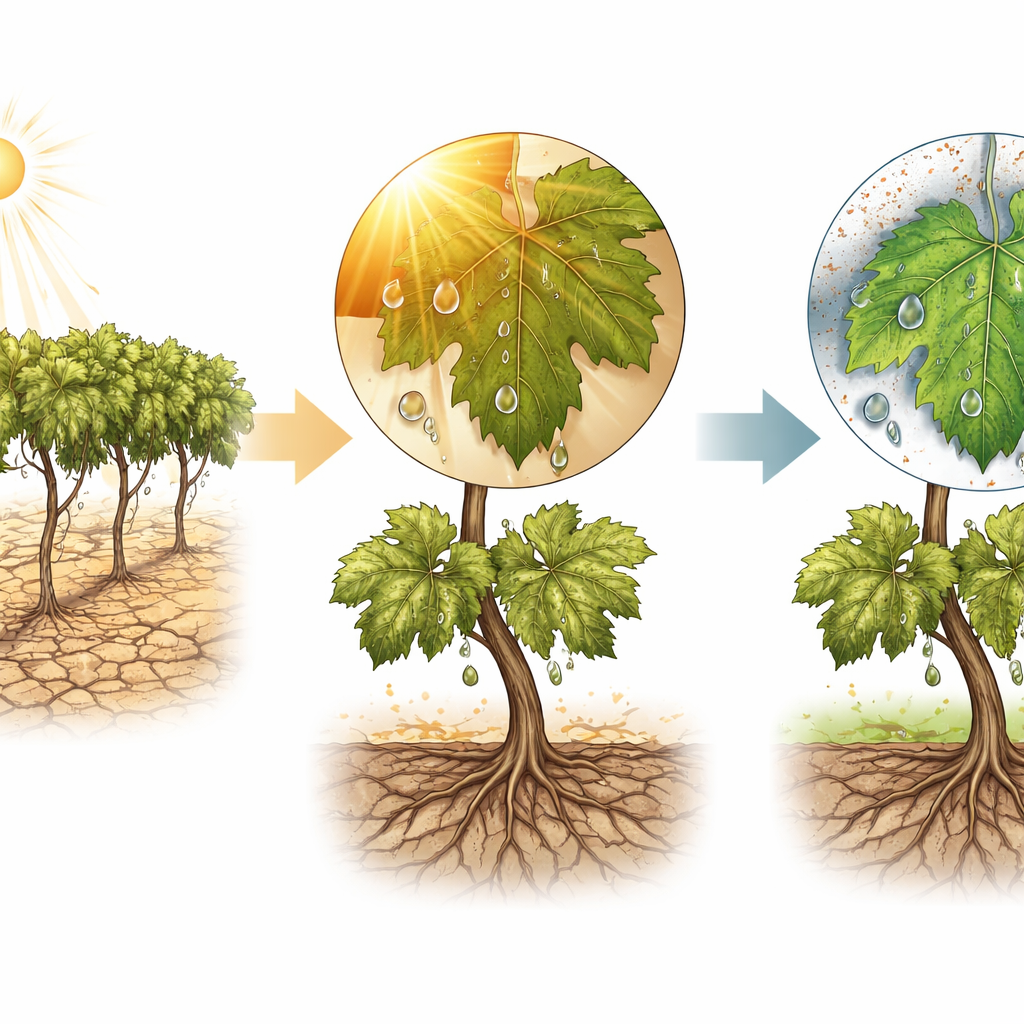
As climate change brings hotter, drier weather, many famous wine regions are struggling to keep grapevines healthy with less water. This study explores a surprisingly simple aid: a thin, white film made from kaolin, a common clay. Sprayed onto grape leaves, this film may help vines stay greener, lose less water, and better endure long dry spells without relying on extra chemicals or heavy irrigation.
A Simple Clay Coat for Thirsty Vines
The researchers worked with young Cabernet Sauvignon grapevines grown in a carefully controlled greenhouse. They compared three situations: plants that were well watered, plants exposed to a steadily intensifying drought, and droughted plants whose leaves were coated with a kaolin particle film. Over 17 days, they tracked how dry the soil became, how wilted the vines looked, how much water remained in the leaves, and how well the plants were able to carry out photosynthesis, the process that turns sunlight into sugars.
Water Loss Slows, Leaves Stay Plumper
As expected, vines without the clay coating suffered as the soil dried. Their leaves wilted, their overall drought damage score rose, and the water content inside their leaves steadily dropped. Vines treated with the kaolin film faced the same level of soil dryness, yet their leaves stayed noticeably better hydrated. The clay-coated plants showed a lower drought damage index and higher leaf water content, meaning their tissues held onto precious moisture longer even though no extra irrigation was provided.
Helping Photosynthesis Without Overworking Defenses
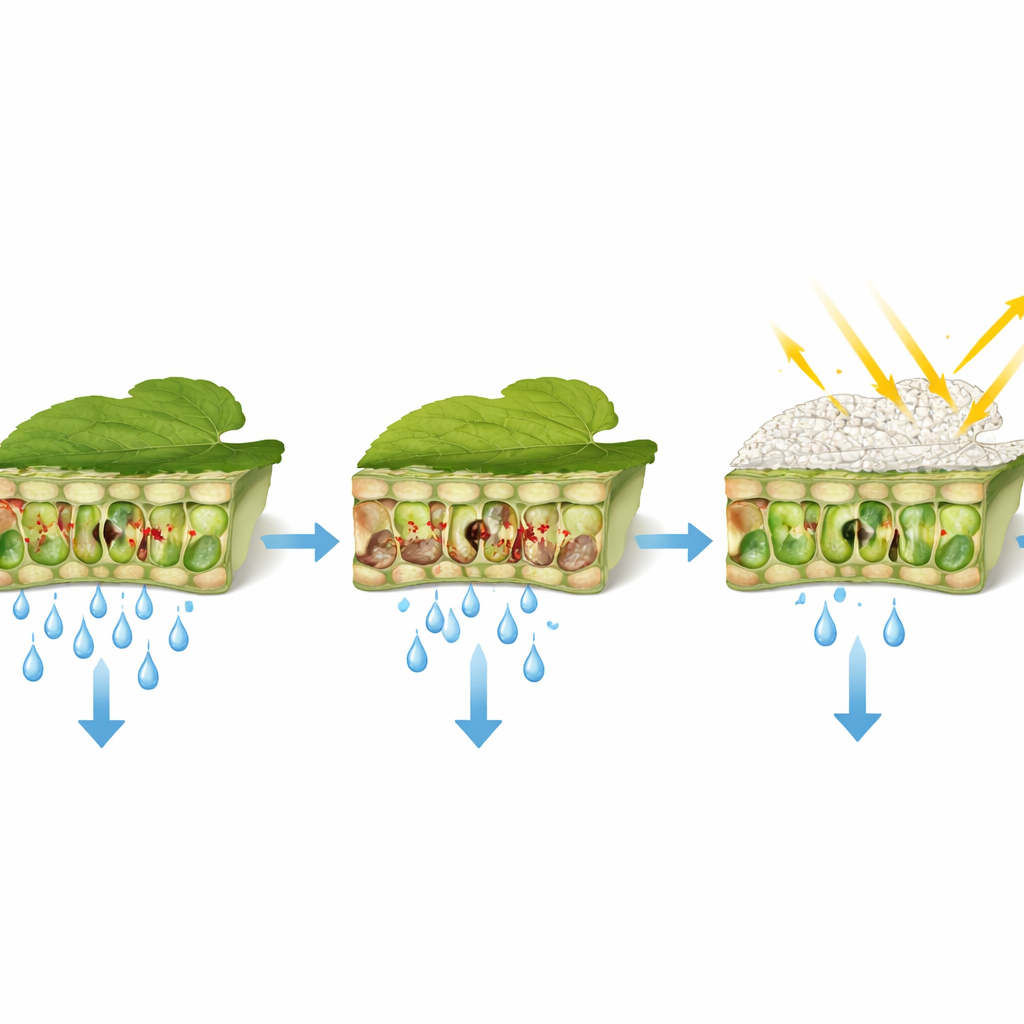
Drought usually makes plants close tiny pores on their leaves to reduce water loss, which in turn cuts the supply of carbon dioxide needed for photosynthesis. In the uncoated vines, photosynthesis fell so far that the plants began to consume more energy than they produced, and their green pigment levels dropped sharply. With the kaolin film, the pores in the leaves partly tightened and water loss declined, but the coated vines still managed to keep their photosynthesis higher and their chlorophyll closer to normal. Inside the leaves, harmful oxygen by-products—chemical signs of stress—built up less in coated plants than in bare ones during the early and middle stages of drought.
Physical Shield Rather Than Chemical Alarm
Plants under drought commonly ramp up internal defense systems, producing protective enzymes, antioxidant molecules, and small compounds that help balance water in cells. In this experiment, vines facing drought alone showed strong activation of these emergency responses, especially during the mid-phase of stress. In contrast, kaolin-coated vines generally displayed lower levels of these defense markers, only rising later as drought peaked. That pattern suggests the clay film did not work by triggering an internal chemical alarm. Instead, by simply reducing water loss at the leaf surface, it kept stress milder so the plants did not need to push their defenses as hard and could maintain more normal metabolism for longer.
What This Means for Growers
Overall, the study shows that a thin coating of kaolin clay can help grapevines weather drought by acting like a physical shield that slows evaporation, keeps leaves better hydrated, and supports photosynthesis, rather than by stimulating complex biochemical reactions. For growers in arid and semi-arid regions, this points to a low-toxicity, easy-to-apply tool that could complement careful irrigation and other practices. In plain terms, giving vines a light clay "sunscreen" may help them stay greener, healthier, and more productive when water is scarce.
Citation: Wang, Y., Cao, X., Wang, ZL. et al. Kaolin particle film reduces drought stress in grapevines and regulates photosynthesis and antioxidant capacity. Sci Rep 16, 10028 (2026). https://doi.org/10.1038/s41598-026-40602-7
Keywords: drought stress, grapevine, kaolin film, water use efficiency, photosynthesis