Clear Sky Science · en
Network pharmacology, molecular docking, and in vivo experiments reveal the effects of Polygonati Rhizoma on periodontitis
Why this matters for your mouth and body
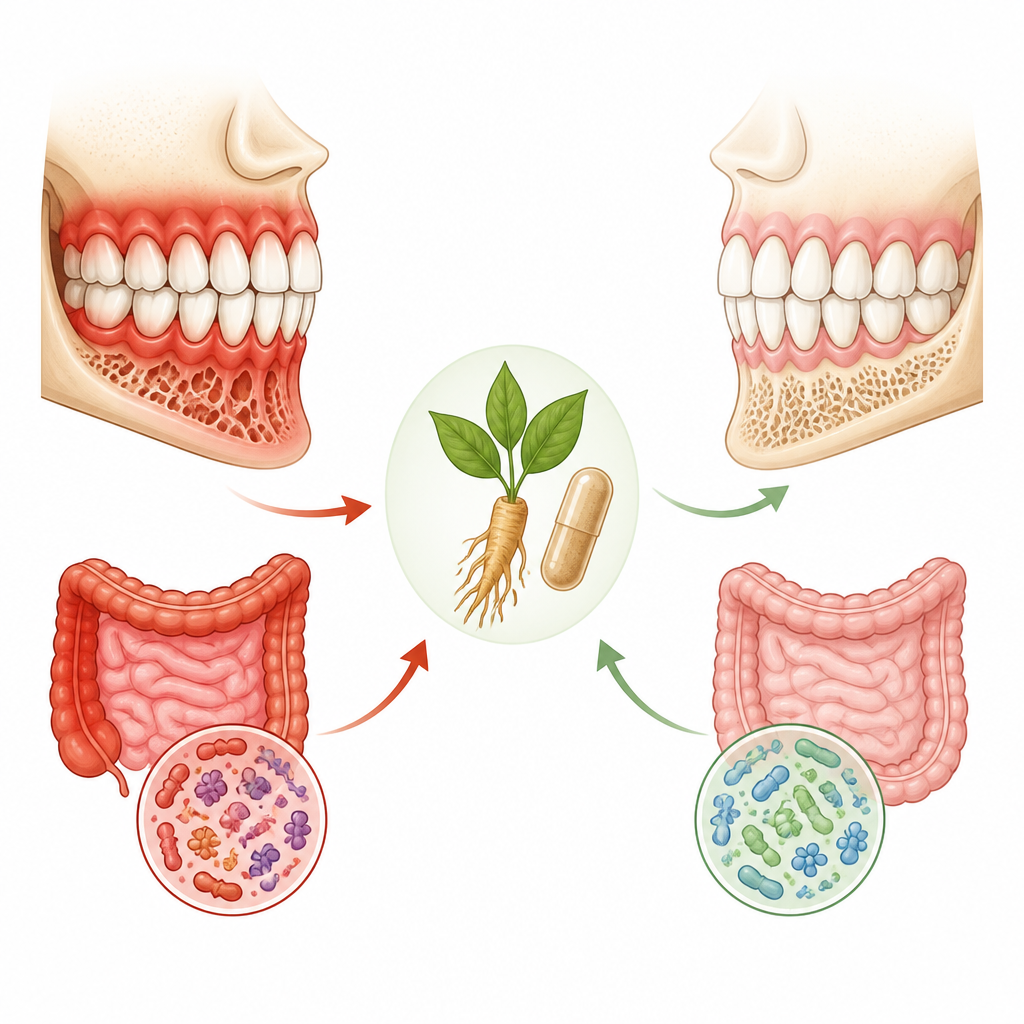
Gum disease is often thought of as a local problem in the mouth, but growing evidence shows it can disturb the whole body. This study looks at Polygonati Rhizoma, a traditional Chinese herb, to see whether it can protect teeth and bones around the teeth while also calming harmful inflammation and restoring a healthier gut. The work blends big data tools, computer simulations, and animal tests to trace how this plant may work from mouth to intestine and back again.
A common gum problem with wide effects
Periodontitis is a long lasting infection that damages the tissues holding teeth in place, including the bone of the jaw. It is common worldwide and can lead to loose teeth and tooth loss. The same inflammatory reactions that erode bone around teeth are linked with heart disease, diabetes, and other illnesses. Standard care, such as scraping away plaque and using antibiotics, often cannot fully stop the disease. Scientists are therefore searching for safer, more holistic treatments that can both control infection and rebalance the body’s response to it.
An old tonic herb under the microscope
Polygonati Rhizoma has long been used in Chinese medicine as a strengthening tonic. Modern lab work has shown that it can reduce inflammation, protect cells from damage, and influence bone building and breakdown. In this study, the researchers first used network pharmacology, a data driven way to match plant ingredients with human proteins and disease genes. They screened twelve active compounds from the herb and compared their predicted protein targets with more than two thousand genes tied to periodontitis. Eighty seven overlapping targets emerged, many involved in inflammation, cell survival, and tissue repair. Computer docking tests then modeled how key plant compounds might physically fit into these proteins, suggesting strong binding to molecules such as MMP9, PPARG, and ESR1 that help govern bone loss and inflammatory signals.
Testing the herb in a mouse model of gum disease
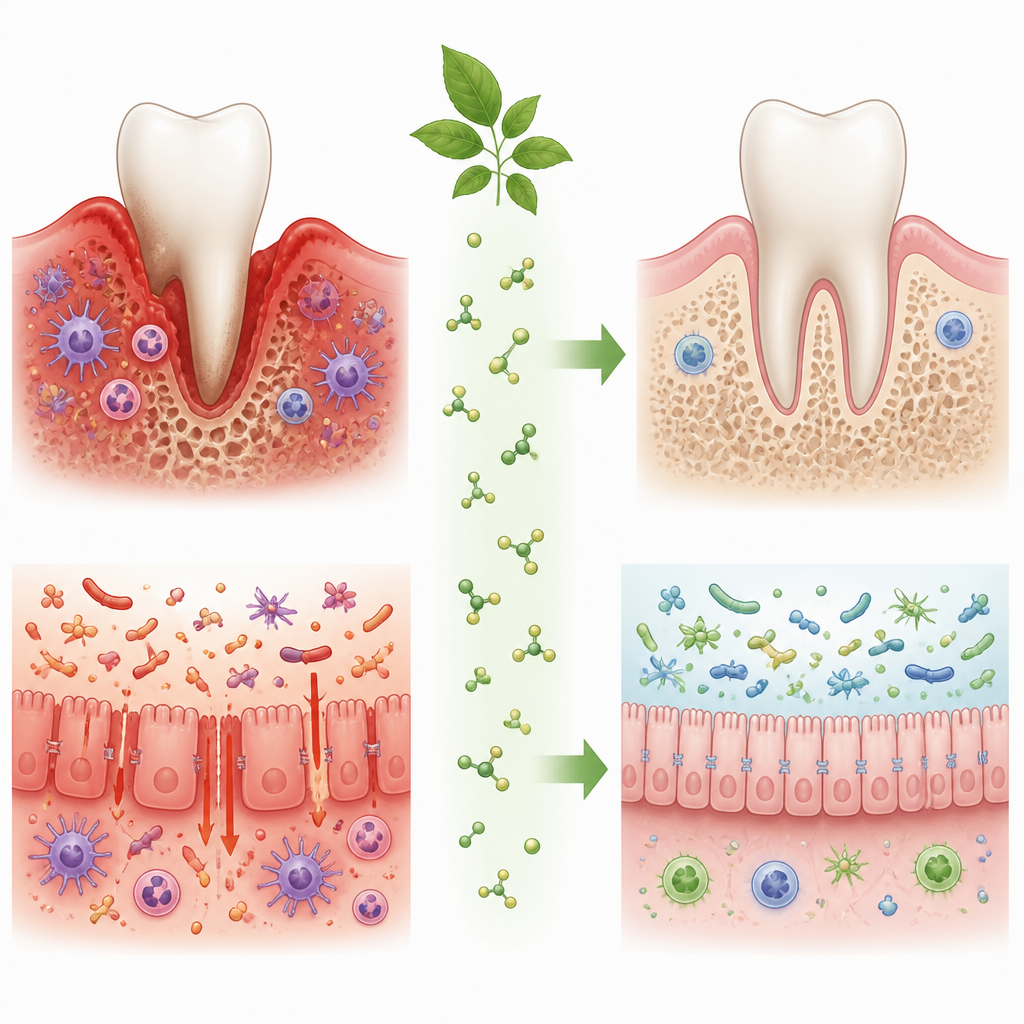
To see whether these predicted effects hold up in living organisms, the team induced periodontitis in mice by tying fine threads around their molars to trigger plaque buildup and bone erosion. One group received water, while another was given Polygonati Rhizoma by mouth every day for two weeks. The untreated periodontitis group lost weight, developed high levels of inflammatory messengers in their blood, and showed clear loss of bone around the teeth along with heavy immune cell invasion in the gums. In contrast, the treated mice gradually regained normal weight, had sharply lower levels of the inflammatory proteins IL 6 and TNF alpha, and displayed much healthier jawbone structure and less tissue damage under the microscope.
A surprising mouth–gut connection
The researchers also looked beyond the mouth to the liver and gut. Mice with untreated gum disease showed liver cell injury and disturbed structure of the intestinal lining, signs that local oral infection had spread systemic stress. Polygonati Rhizoma eased these changes, with liver cells and gut villi returning toward normal. By sequencing bacterial DNA in stool samples, the team found that the herb shifted the makeup of the gut microbiota. It increased certain species such as Prevotella and boosted predicted activity of ABC transporters, tiny pumps in microbes that move substances like toxins and nutrients across cell membranes. These shifts are thought to help reduce leakiness of the gut wall and lessen the flow of inflammatory triggers into the bloodstream, which in turn may help calm bone loss around teeth.
What this could mean for future care
Taken together, the findings suggest that Polygonati Rhizoma does more than just soothe sore gums. Its multiple ingredients appear to act on several protein targets and signaling routes at once, including PI3K/AKT, IL 17 and TNF, and HIF 1 pathways that control how strongly the body reacts to infection and how bone is broken down or rebuilt. In mice, these combined effects reduced inflammatory chemicals, protected jawbone, and improved gut and liver health. While the study does not yet prove that the herb will work the same way in people, it outlines a detailed map for future clinical trials and points to the mouth–gut axis as an important route for treating gum disease in a more whole body way.
Citation: Ren, Q., Li, X., Wang, J. et al. Network pharmacology, molecular docking, and in vivo experiments reveal the effects of Polygonati Rhizoma on periodontitis. Sci Rep 16, 15803 (2026). https://doi.org/10.1038/s41598-026-40597-1
Keywords: periodontitis, Polygonati Rhizoma, gum inflammation, gut microbiota, bone loss