Clear Sky Science · en
Decoding the dark genome reveals its organisation into modular disease networks
The Hidden Part of Our DNA
Much of modern genetics focuses on familiar genes whose roles in health and disease are well mapped. But more than a third of our protein-making genes sit in relative obscurity, with little known about what they do. This study asks a simple but important question: what if those "dark" genes quietly shape many common diseases we care about, from psoriasis and tuberculosis to heart attacks and diabetes? By piecing together huge public datasets, the authors show that this neglected section of our DNA is more connected to human illness than previously appreciated.
Unknown Genes in Everyday Illness
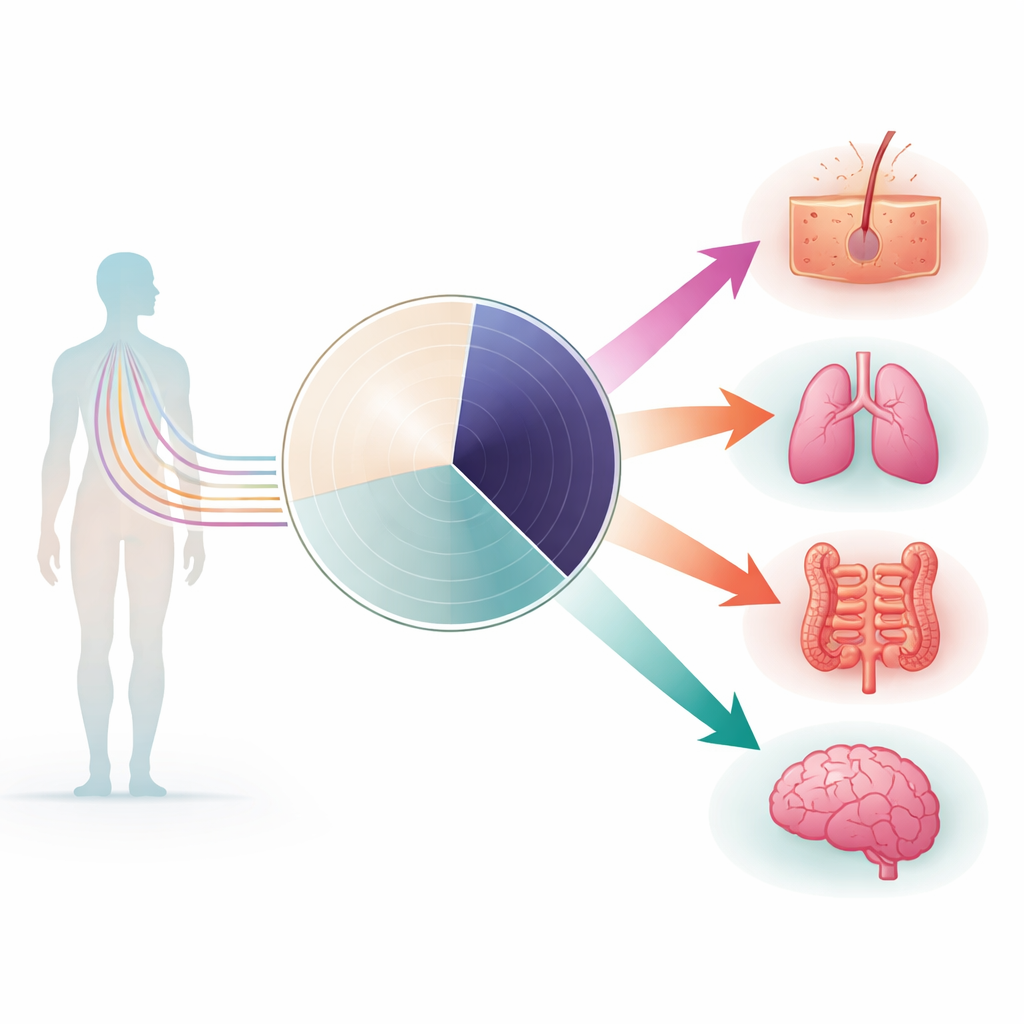
The authors start by comparing well-studied "light" genes with understudied "dark" genes across hundreds of genetic conditions. They confirm that dark genes are underrepresented in current disease catalogs, not because they are unimportant, but because they have rarely been examined. Even so, dark genes still show up in major complex illnesses, including inflammatory skin disease, bowel disease, and lung infections. In some rare inherited syndromes, the only known gene links come from this dark set. This contrast—few studies but many hints of importance—suggests that our picture of genetic disease is incomplete without them.
Building Maps of Disease Connections
To move beyond simple lists of genes, the team builds network maps that treat diseases and genes as nodes connected by shared links. When they project this information into a disease-centered network, most of the 557 traits examined fall into one giant web, indicating shared genetic roots. Psoriasis, tuberculosis, Crohn’s disease, and other inflammatory conditions cluster together because they share many dark genes. A complementary gene-centered network highlights dark genes that sit at crucial crossroads, acting as hubs or bridges between disease clusters. These hubs are attractive candidates for deeper study because they may influence several conditions at once.
Dark Genes Inside the Cell’s Power Stations
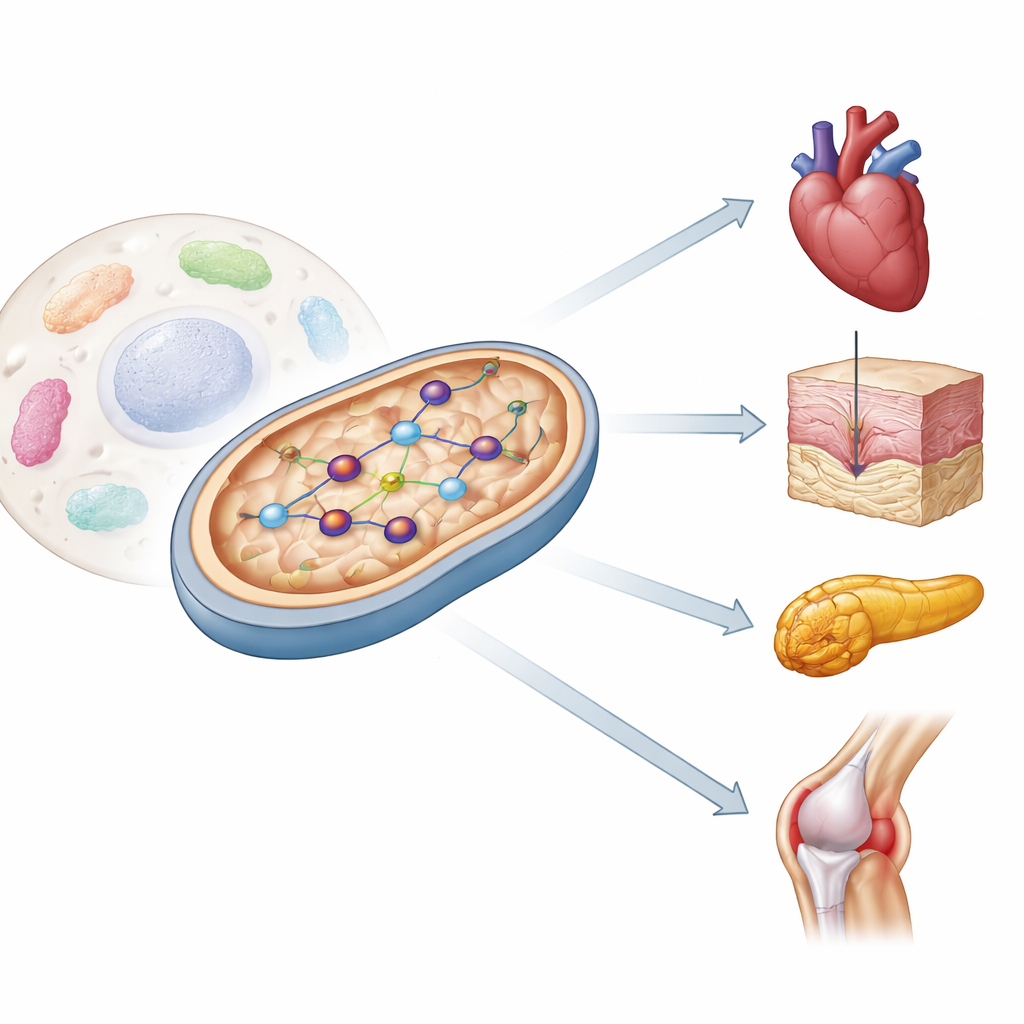
Among more than two thousand dark genes tied to disease, the authors identify sixteen that stand out as especially central. When they ask what these hub genes actually do inside cells, a clear pattern emerges: most of them are involved in building and running the protein-making machinery inside mitochondria, the cell’s energy factories. Enrichment analyses show that these hubs are linked to steps in mitochondrial protein production and to structures such as the inner mitochondrial membrane. In other words, a major slice of the dark genome’s disease influence appears to run through how well our cellular power stations function.
Gene Activity Varies by Tissue
The story does not stop at basic cell biology. Using large gene expression resources, the researchers show that these hub dark genes are not switched on uniformly across the body. Some are highly active in skeletal muscle, others in the brain, heart, or testis. Thousands of common genetic variants subtly tune their activity in specific tissues, and several of these variants are already linked to real-world conditions such as heart attacks, diabetes, and spinal disc problems. Looking more broadly, dark genes are overrepresented among those that are either active in just one tissue or not detected at all, hinting at many highly specialized roles that have yet to be explored.
Why This Matters for Future Treatments
Taken together, the results paint the dark genome not as biological junk but as a rich, structured landscape of genes that help wire together many different diseases, often through their roles in mitochondria and tissue-specific gene control. Because these genes are still largely untouched by existing drugs, they represent a deep reservoir of possible new targets. As experimental tools catch up—through genome editing, advanced cell models, and better profiling methods—systematic maps like the one in this study can guide researchers toward the most promising dark genes. Understanding and eventually targeting these hidden players could open new avenues for treating a wide range of genetic and complex diseases.
Citation: Kafita, D., Dzobo, K., Nkhoma, P. et al. Decoding the dark genome reveals its organisation into modular disease networks. Sci Rep 16, 10162 (2026). https://doi.org/10.1038/s41598-026-40553-z
Keywords: dark genome, mitochondrial function, genetic disease networks, gene regulation, therapeutic targets