Clear Sky Science · en
Rapid urbanization reduces genetic diversity and increases genetic differentiation of a lynx spider Oxyopes sertatus in central Taiwan
Why city growth matters for hidden wildlife
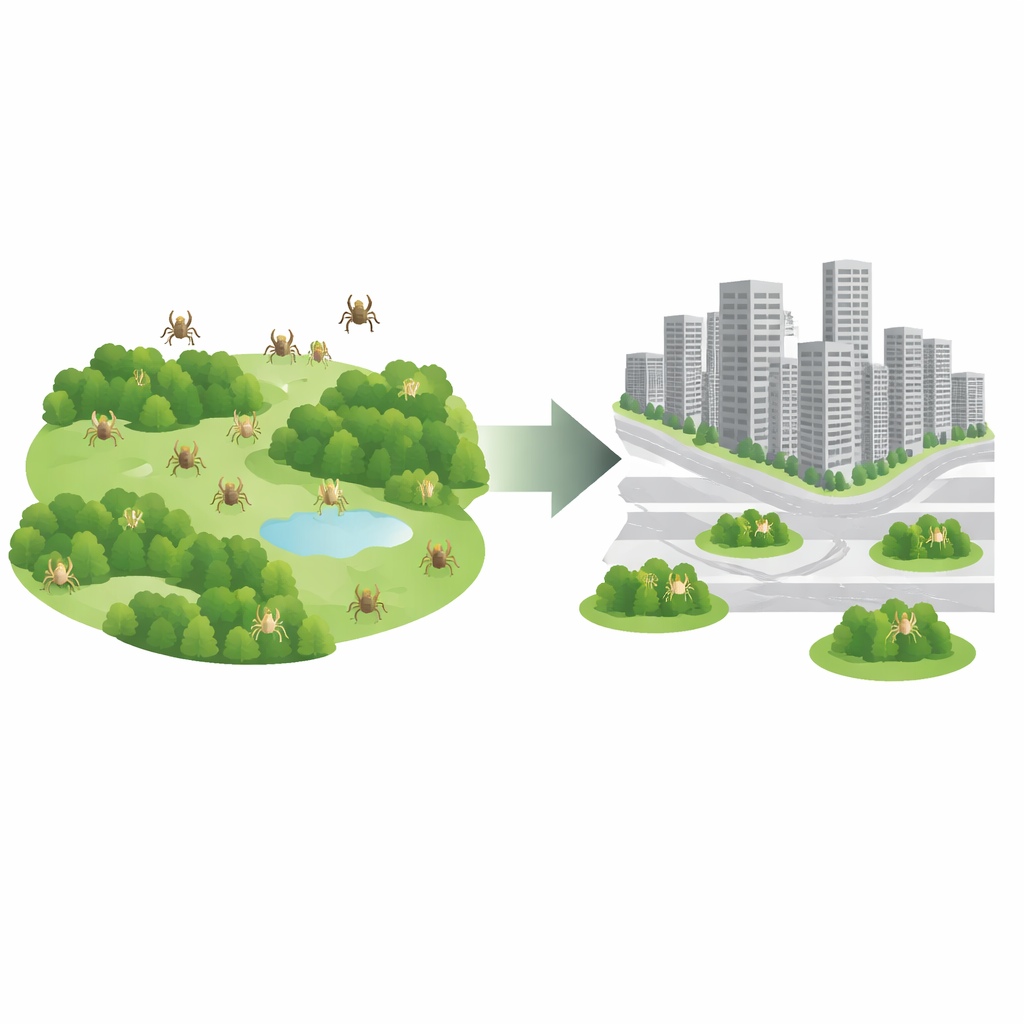
Modern cities are expanding faster than ever, often at the expense of fields, forests, and wetlands. While we see the most obvious impacts—fewer birds, less greenery—there are also quieter changes happening inside the DNA of small animals that share our neighborhoods. This study looks at a common lynx spider living in central Taiwan and asks a simple but far-reaching question: as towns and roads spread, do city-dwelling spiders lose the genetic variety they need to stay healthy and adapt to future change?
A small hunter in a changing landscape
The focus of the research is Oxyopes sertatus, a lynx spider that hunts on leaves and grass rather than building webs. It is widespread in Taiwan and is often seen in parks, gardens, and farmland, making it a good test case for how typical city growth affects everyday wildlife. The team collected 245 spiders from 17 locations across central Taiwan, ranging from dense city parks and campuses to more natural lowland forests and farms. Around each site, they mapped how much land was covered by buildings and roads versus forests, crops, grassland, water, and parks, at both a broader 4 km² “landscape” scale and a finer 0.25 km² “local” scale. A statistical method called principal component analysis turned these land patterns into a single score for each site, representing an urban-to-rural gradient.
Peering into the spiders’ genetic toolbox
To see how city life might alter the spiders’ genetic make-up, the researchers examined DNA in two ways. First, they sequenced a standard mitochondrial gene (COI) that is commonly used as a barcoding marker in animals and gives a broad sense of how much variation exists in a population. Second, they used genome-wide single nucleotide polymorphisms (SNPs) generated by RAD-seq, which scan thousands of positions across the genome and are especially sensitive to recent changes in population size and movement. Together, these approaches let the team measure how much genetic diversity each population holds and how distinct different sites are from one another.
City life shrinks diversity and separates populations
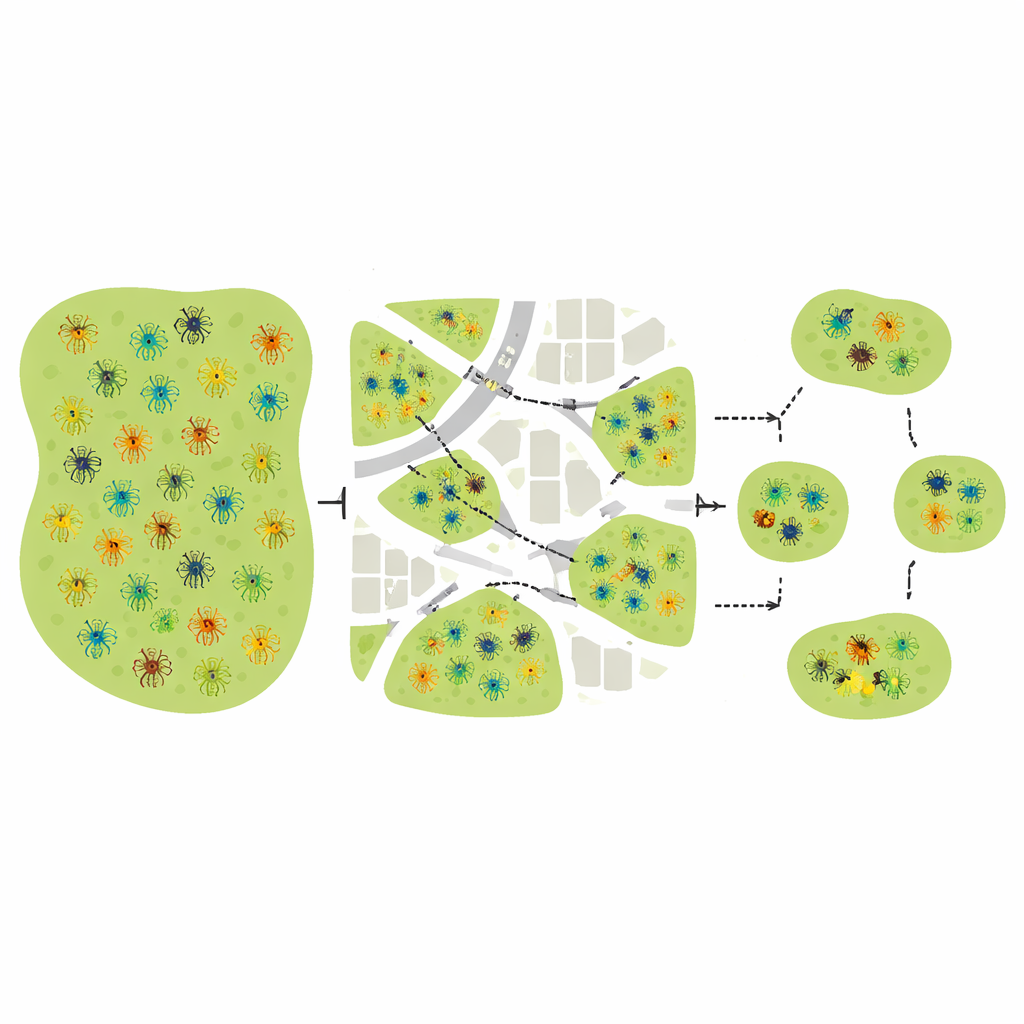
The clearest signal from the data is that genetic diversity declines as urban intensity increases. For the genome-wide SNPs, both the variety of gene versions (allelic richness) and the mix of those versions within individuals (observed heterozygosity) were significantly lower in more built-up landscapes, especially where buildings dominated. The mitochondrial data told a similar story: when the researchers used robust statistics that downplay outliers, nucleotide diversity in the COI gene also dropped with higher urban scores. In simple terms, spiders in heavily urban sites carried fewer genetic options than those in rural and semi-natural areas.
Cities act as barriers, but some movement remains
The team also compared how different populations diverged from one another. Both mitochondrial and genome-wide measures of genetic differentiation were higher among urban spiders than among non-urban ones, meaning city populations have become more distinct genetically. Yet, when the researchers used clustering tools that look for sharp breaks among groups, they did not find strong, clear-cut genetic clusters. Most spiders, whether from parks or forests, still formed one broad genetic group, with only a few non-urban sites standing out. This suggests that while buildings and roads now impede movement enough to increase separation, some dispersal—likely helped by spiderlings ballooning on silk—still connects populations over the relatively short history of rapid urban growth in central Taiwan.
What this means for city planning and future wildlife
The study shows that even a common and widespread spider can lose genetic diversity and become more isolated within just a few decades of intense urban development. For non-specialists, the takeaway is straightforward: when green spaces are small, scattered, and surrounded by concrete, city wildlife may persist in the short term but with a shrinking genetic toolbox, leaving them less able to cope with future stresses such as climate change or new pollutants. The authors argue that urban planning should treat parks, roadside vegetation, and waterways not only as amenities for people, but as connected habitats that allow animals like lynx spiders to move, interbreed, and maintain the genetic variation that underpins healthy and resilient urban ecosystems.
Citation: Lo, YY., Wei, C., Chen, WJ. et al. Rapid urbanization reduces genetic diversity and increases genetic differentiation of a lynx spider Oxyopes sertatus in central Taiwan. Sci Rep 16, 11037 (2026). https://doi.org/10.1038/s41598-026-40537-z
Keywords: urbanization, genetic diversity, spiders, habitat fragmentation, Taiwan